
What Closing Costs Are — and Why They Matter
Closing costs are the fees and prepaid expenses due on settlement day, separate from your down payment. For most buyers, they add up to 2% to 5% of the loan amount — a range wide enough to meaningfully affect your budget. On a $350,000 mortgage, that's $7,000 to $17,500 in cash you'll need to bring to closing.
These costs aren't arbitrary. They cover real services: title research, loan underwriting, government recording, and the prepaid insurance and tax reserves your lender requires. Understanding what each fee pays for helps you spot errors, compare lenders honestly, and know when pushing back is reasonable.
For a broader look at where closing sits in the overall timeline, see our step-by-step homebuying guide.
Closing Disclosure
A five-page federal form your lender must provide at least three business days before closing. It details your final loan terms, monthly payment, and all closing costs.
Escrow
A neutral account managed by a third party that holds funds for taxes and insurance. At closing, you typically fund an initial escrow reserve your lender uses to pay those bills on your behalf.
Title Insurance
A one-time premium that protects against financial loss from defects in the property's title — such as undisclosed liens or ownership disputes. Lender's coverage is typically required; owner's coverage is separate.
Origination Fee
A fee charged by the lender to cover the cost of processing and underwriting your mortgage. It's often expressed as a percentage of the loan amount and may be negotiable.
Seller Concession
An agreement in which the seller credits the buyer a dollar amount at closing to offset closing costs. Limits depend on loan type and down payment size.
Discount Points
Optional upfront payments to a lender in exchange for a reduced interest rate. One point costs 1% of the loan amount and permanently lowers your rate for the life of the loan.
A Line-by-Line Breakdown of Common Closing Fees
Closing disclosures can run three to five pages. Here are the categories you're most likely to encounter:
| Typical buyer closing cost range | 2%–5% of loan amount (Consumer Financial Protection Bureau general guidance) |
| Seller concession cap (FHA loans) | 6% of purchase price (FHA guidelines) |
| Appraisal fee range | $300–$700 (Industry average; varies by market and property type) |
| Closing Disclosure delivery deadline | 3 business days before closing (CFPB TRID rule) |
| Escrow reserve requirement | Typically 2–3 months of taxes and insurance (Lender-set; varies by institution and loan type) |
Lender Fees
- Origination fee: Charged by the lender to process and underwrite your loan. Often expressed as a percentage of the loan amount (commonly 0.5%–1%).
- Discount points: Optional prepaid interest that lowers your rate. One point equals 1% of the loan. This is a trade-off, not a required charge.
- Application/processing fee: Administrative fee covering initial loan processing. Amounts vary by lender and are sometimes negotiable.
Third-Party Service Fees
- Appraisal fee: Pays a licensed appraiser to confirm the property's market value. Typically $300–$700 and required by the lender.
- Title search and title insurance: The title search verifies the seller has clear ownership; lender's title insurance protects the lender if a title defect surfaces later. Owner's title insurance — which protects you — is separate and optional but strongly recommended.
- Settlement/closing fee: Paid to the title company or escrow officer managing the closing itself.
- Survey fee: Required in some states to confirm property boundaries. Not always mandatory.
Government and Recording Fees
- Recording fees: Paid to the local government to officially record the deed and mortgage in public records.
- Transfer taxes: Some states and municipalities charge a tax when real property changes hands. Rates vary widely by location.
Prepaids and Escrow Reserves
- Prepaid homeowners insurance: Your lender requires the first year's premium at closing.
- Prepaid mortgage interest: Interest accrued from your closing date through the end of that month.
- Escrow reserves: An upfront deposit (often 2–3 months of taxes and insurance) to seed your escrow account.
Who Pays What — Buyers, Sellers, and Room to Negotiate
The buyer typically pays the bulk of closing costs, but the seller isn't off the hook entirely. Sellers commonly pay real estate agent commissions and often cover transfer taxes, though customs vary by state and local market.
Seller concessions — where the seller agrees to credit the buyer a set amount toward closing costs — are a legitimate negotiating tool, particularly in a slower market. These concessions are capped by loan type: conventional loans generally allow 3%–9% of the purchase price depending on down payment size; FHA loans cap seller contributions at 6%.
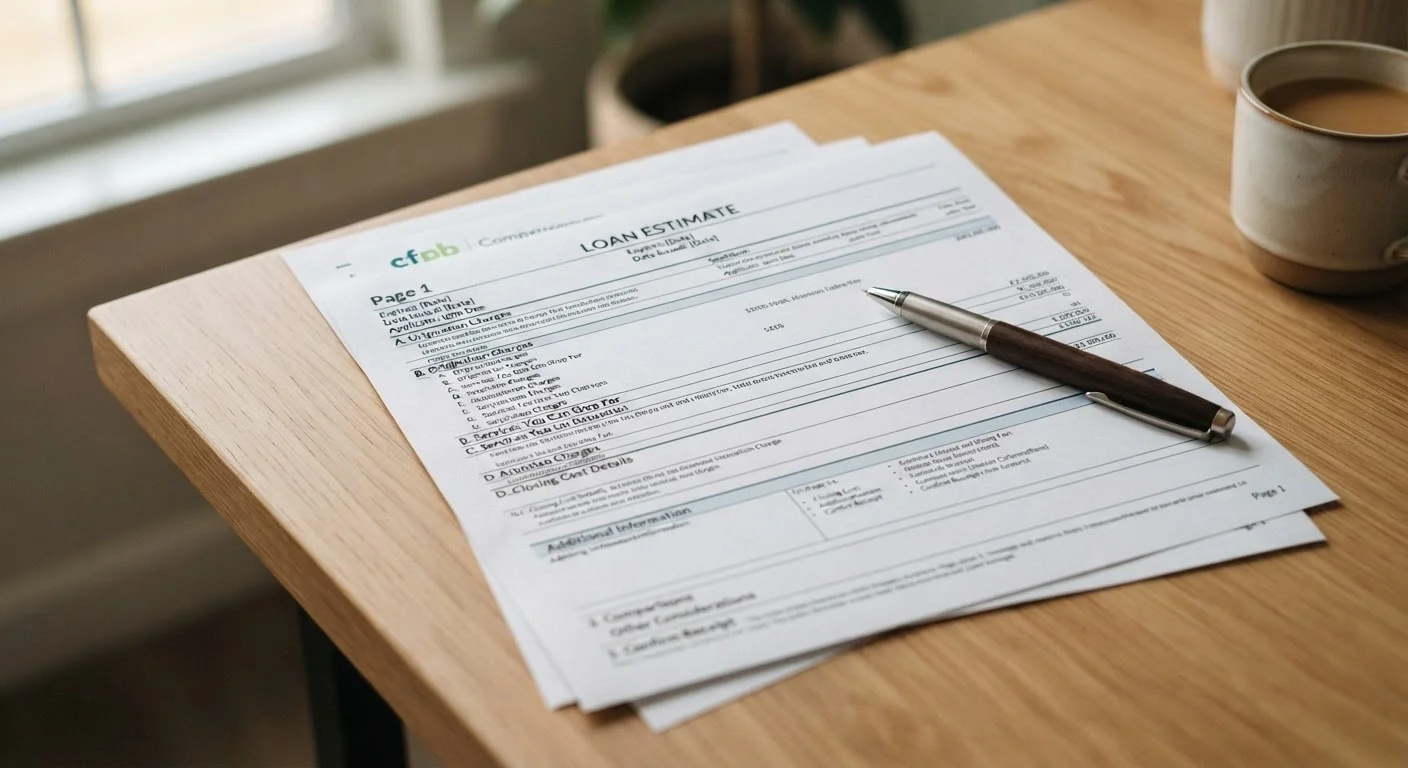
Some fees are negotiable in a practical sense — you can shop for your own title company, attorney, or settlement agent in most states, which can produce real savings. Lender fees vary significantly between institutions, which is one reason comparing Loan Estimates from multiple lenders is worthwhile. Our guide to reading a Loan Estimate explains exactly which numbers to focus on when making that comparison.
Other fees are fixed by law or third parties — government recording fees and transfer taxes, for example, aren't subject to negotiation.
This article provides general educational information about closing costs and is not a substitute for personalized advice from a licensed real estate attorney, financial adviser, or HUD-approved housing counselor familiar with your specific situation and local market.