
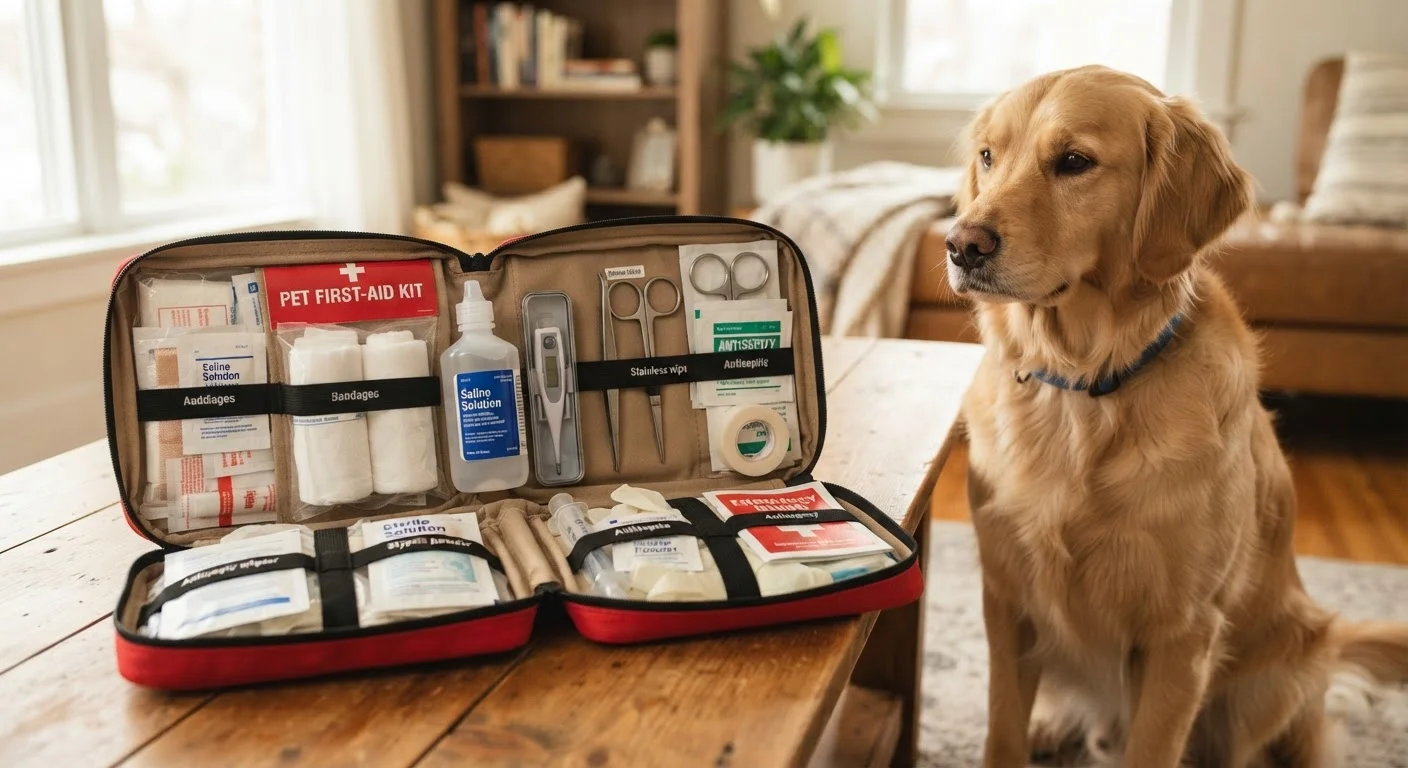
Why Every Pet Owner Needs a First-Aid Kit
Accidents don't wait for convenient hours. A dog can step on broken glass during a weekend hike, a cat might ingest something toxic while you're at work, or a small animal could sustain an injury long before your regular vet opens. Having a ready-to-use first-aid kit gives you the tools to stabilize your pet, reduce pain and stress, and buy critical time before professional care is available.
This isn't about replacing your veterinarian — it's about being prepared. Think of the kit the way you'd think of a human first-aid kit: you wouldn't attempt surgery with it, but you'd use it confidently to clean a cut or manage a sprain. The same principle applies here.
If you're a new pet owner getting settled in, see our guide on what to expect in your pet's first week at home — it covers many of the early safety considerations that pair well with having an emergency kit ready. And if you take your pet along on outdoor adventures, the tips here are equally relevant to first-time camping with your pet.
First Aid Is Not Veterinary Care
Everything in this kit is designed to stabilize your pet until you can reach a qualified veterinarian. Do not delay or skip professional care because a home treatment seems to be working. Internal injuries, poisoning, broken bones, and respiratory distress all require immediate veterinary attention. When in doubt, call your vet or an emergency animal hospital first.
What to Stock: The Complete Checklist
The items below are organized into logical groups. Not every pet will need every item — a reptile owner's kit will differ from a dog owner's — but the core categories apply broadly. Use this list to build your kit from scratch or audit what you already have.
Wound Care
Examination and Monitoring
Restraint and Safety
Instruments and Miscellaneous
Emergency Information
Store everything in a clearly labeled, waterproof container. A tackle box or a dedicated hard-sided case works well. Keep it somewhere accessible but out of reach of children and pets.
Tools and Resources You'll Need
Beyond supplies, a few key tools and contacts make your kit genuinely functional rather than just symbolic.
Waterproof storage container
Keeps all supplies organized, protected from moisture, and easy to grab in an emergency.
Digital rectal thermometer
Allows you to accurately measure your pet's core body temperature, a key indicator of fever or hypothermia.
ASPCA Animal Poison Control Center (888-426-4435)
Provides 24-hour expert guidance when a pet has ingested a potentially toxic substance.
Pet first-aid reference handbook
Gives step-by-step guidance for common emergencies so you don't have to rely on memory under pressure.
Tick removal tool
Designed to extract ticks cleanly without leaving mouthparts embedded in the skin.
What to Skip — and Why It Matters
Not everything in your human medicine cabinet is safe to share with a pet. Several common over-the-counter products are outright dangerous to animals, and using them in an emergency could make a bad situation worse.
- Ibuprofen and acetaminophen: Both are toxic to dogs and cats. Do not give these under any circumstances.
- Hydrogen peroxide (for wound cleaning): Though it may be listed in older pet first-aid guides, current veterinary guidance generally discourages its use on wounds because it can damage tissue. It may be used to induce vomiting only if directed by a veterinarian or poison control professional — never on your own initiative.
- Human antihistamines with xylitol or other additives: Plain diphenhydramine (Benadryl) is sometimes used for pets, but always confirm the correct dose and formulation with your vet before stocking it.
- Essential oils or herbal treatments: Many are toxic to pets, particularly cats.
Never Medicate Without Veterinary Guidance
Many human medications — including common pain relievers, antifungals, and decongestants — are toxic to pets at even small doses. Do not administer any medication, including 'natural' or herbal remedies, without first confirming it is safe and dose-appropriate for your specific animal with a licensed veterinarian. If you suspect poisoning, contact the ASPCA Animal Poison Control Center immediately rather than attempting home treatment.
Understanding your pet's individual needs also depends on the species you've chosen. Our article on the real time commitment behind common household pets touches on how species differences affect daily care — and that extends to emergency preparedness too.
Keeping Your Kit Current
A first-aid kit is only useful if it's stocked and up to date. Set a recurring reminder every six months to review everything inside. Check expiration dates on saline solution, antiseptic wipes, and any medications. Replace used or expired items promptly.
Also update your emergency contact sheet whenever you change vets or move. If you have pets in a household with young children, make sure adults know where the kit is stored and that children understand it is not a toy.
Finally, consider taking a pet first-aid course offered by organizations such as the American Red Cross or your local humane society. Knowing how to use your supplies correctly — including how to muzzle a dog safely or apply a pressure bandage — is just as important as having the items on hand.
This article is for general informational purposes only and does not constitute veterinary medical advice. Always contact a licensed veterinarian or emergency animal hospital for guidance specific to your pet's condition.