Why Species and Breed Choice Matters More Than You Think
The idea of raising a child alongside a pet is genuinely appealing — studies in developmental psychology consistently find that animal companionship can support empathy, responsibility, and emotional regulation in children. But that upside depends heavily on choosing an animal whose needs and temperament actually align with your family's daily reality.
A household with a two-year-old is a loud, unpredictable environment. Sudden noises, erratic movement, and enthusiastic grabbing are normal child behavior — but some animals find those same qualities profoundly stressful. Stress in animals doesn't always look like obvious aggression; it often surfaces as hiding, resource-guarding, or gradual behavioral deterioration. Understanding this dynamic upfront is more useful than any list of "family-friendly breeds."
Before selecting a species, it also helps to be honest about how much daily care each type of pet actually requires, and whether your schedule can realistically sustain that alongside parenting young children.
Prey drive
An instinctive urge in some animals — especially certain dog breeds — to chase, catch, or mouth moving objects. High prey drive can be a safety concern around small, fast-moving children.
Socialization window
A critical developmental period, typically in the first few months of life, when young animals are most receptive to learning that humans, children, and varied environments are safe. Poor socialization during this window often leads to fearful or reactive adult behavior.
Resource guarding
A behavior in which an animal becomes defensive or aggressive when a person or other animal approaches something it values, such as food, a toy, or a resting spot. Common in dogs and can pose a risk for young children.
Temperament assessment
A structured evaluation used by shelters and breeders to observe how an animal responds to specific situations — handling, noise, strangers — helping prospective owners predict how it will behave at home.
Dogs: Matching Temperament to a Busy Family Home
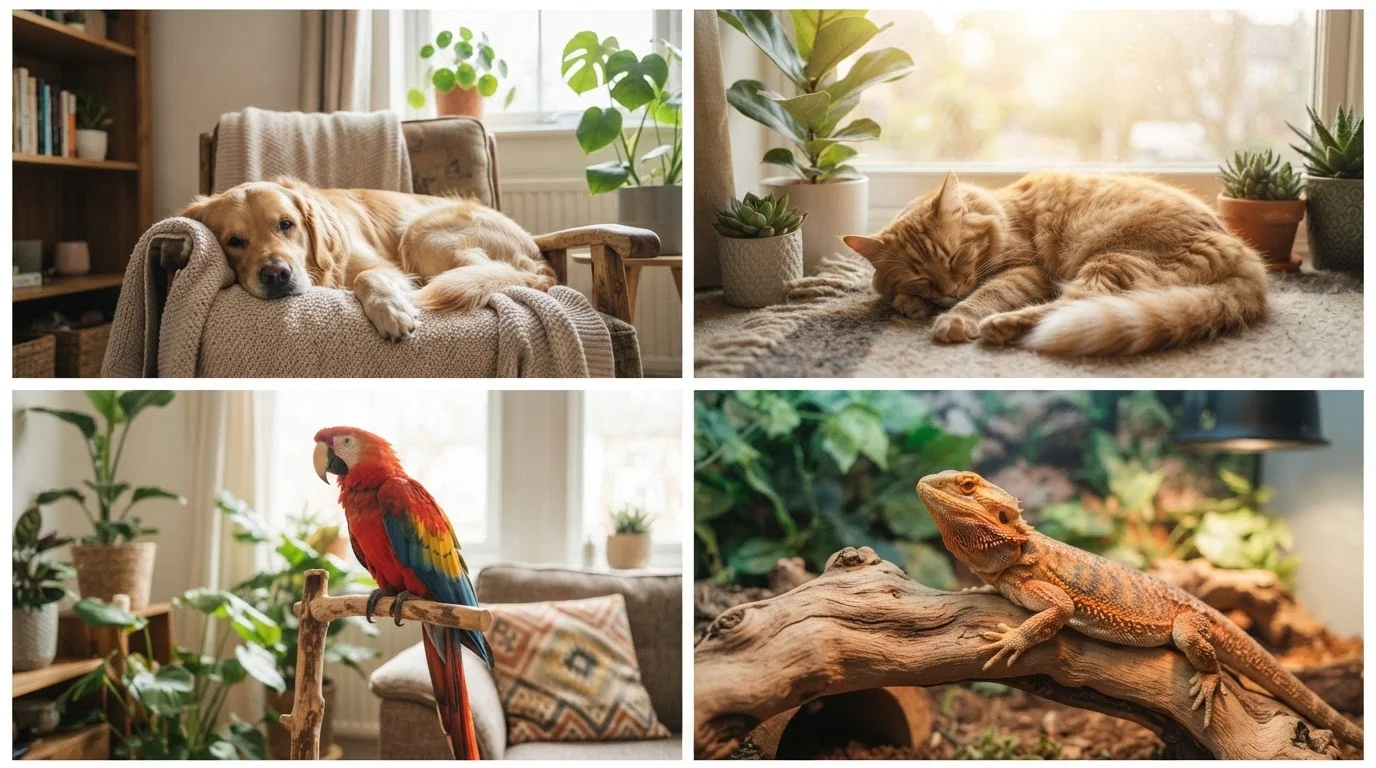
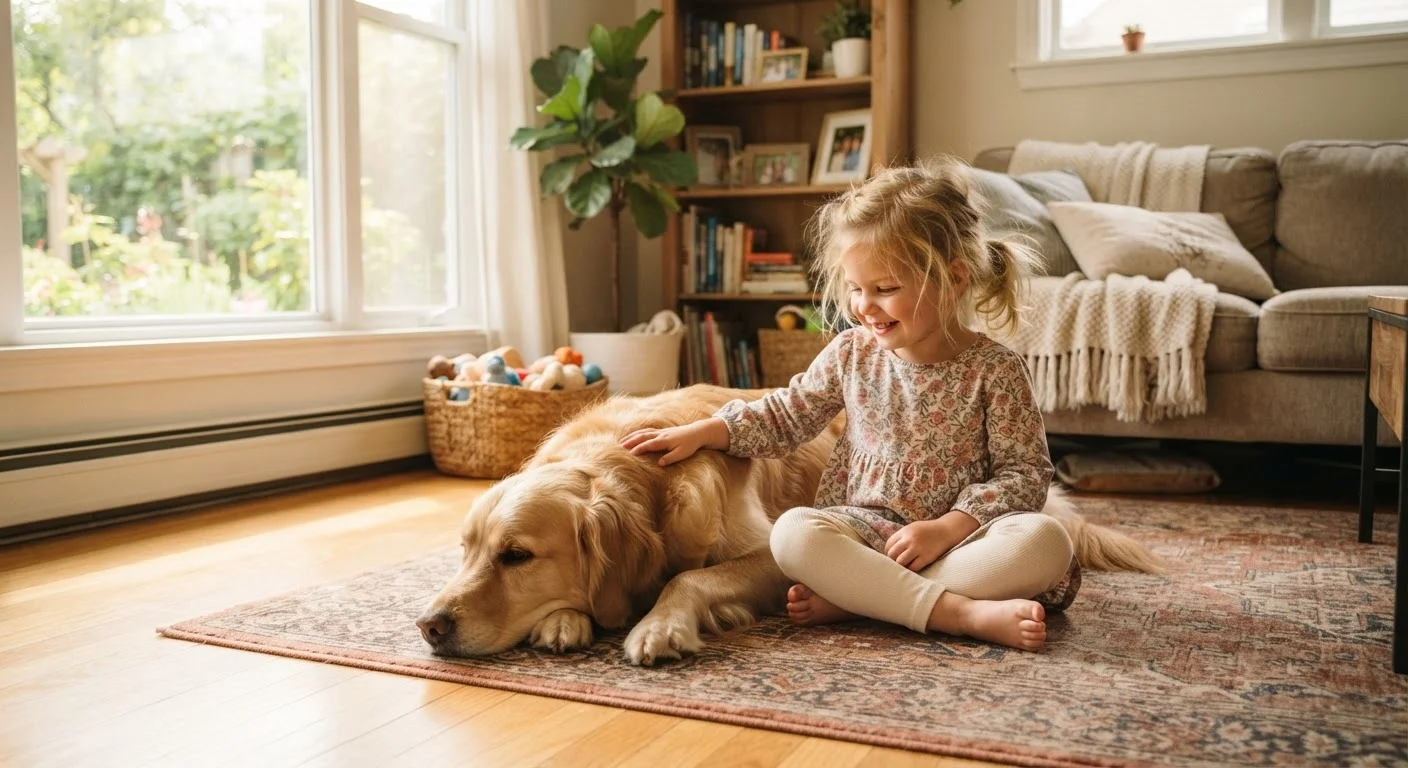
Dogs are the most common family pet choice, and for good reason — many breeds are highly social, resilient to noise, and genuinely enjoy children. But breed generalizations only go so far. Within any breed, individual dogs vary considerably based on genetics, early socialization, and past experience.
That said, some broad traits are worth prioritizing: dogs with lower prey drive, medium-to-low energy levels, and documented patience around unpredictable movement tend to integrate most smoothly into homes with toddlers. High-energy working breeds — regardless of their friendly reputation — may inadvertently knock over or overwhelm small children through sheer enthusiasm. See our guide on matching a dog's energy level to your actual routine for a closer look at this factor.
One often-overlooked consideration: your living space. A large, active dog in a small apartment will need substantial daily exercise that falls on adults — not children — to provide. Our article on what your home environment tells you about which pet will thrive there can help you think this through.
Cats, Small Mammals, and Other Options for Family Life
Cats are frequently underestimated as family pets. A well-socialized adult cat with an even temperament can be an excellent companion for school-age children — curious, lower-maintenance than dogs, and capable of setting their own boundaries. The key word is socialized: cats that were handled gently and regularly during kittenhood are far more tolerant of children than those that were not.
Small mammals — guinea pigs, rabbits, and to a lesser extent hamsters — are often marketed as "starter pets" for children. Guinea pigs in particular tend to be sociable and physically sturdy enough to tolerate gentle handling, making them a reasonable option for families with children aged six and up. Hamsters, however, are nocturnal and easily stressed by daytime handling, which makes them a poor fit for young children who want an interactive companion. Our overview of small mammals and their distinct care needs covers each species in detail.
Reptiles and birds both deserve a candid mention: they can be fascinating, but neither is well-suited to households with very young children. Reptiles require precise environmental conditions and handling confidence that most young children lack. Birds — especially parrots — are highly intelligent and emotionally sensitive, and loud or chaotic environments can cause them lasting stress. If either interests you, explore the honest assessment of reptile ownership and what prospective bird owners need to know before deciding.
Teaching Children to Interact Safely With Pets
Even the most patient animal has limits. Teaching children how to read and respect those limits is not just about protecting the pet — it directly reduces the likelihood of bites, scratches, or fear-based reactions that can sour a child's relationship with animals entirely.
Core principles to establish early:
- No approaching a pet that is eating, sleeping, or clearly retreating. These are universal stress signals that children can understand with simple language.
- Gentle contact only — no grabbing, pulling ears or tails, or pinning. Frame this as being kind, not just following rules.
- Always ask an adult first before touching any animal, including your own family pet.
Adult supervision during all child-pet interactions should be the default until you have observed, repeatedly, that both the child and the animal are comfortable and predictable together. This is not a one-time milestone — it requires ongoing attention as children grow and pets age.
Practice "pet greeting" before you adopt
Before bringing any animal home, take your child to meet animals in a calm, structured setting — such as a shelter meet-and-greet or a friend's well-socialized pet. Use these visits to practice the approach rules you've taught, so the behavior is already familiar when your own pet arrives. It also gives you useful information about how your child naturally responds to animals.
Adoption Versus Purchasing From a Breeder
Families often ask whether to adopt from a shelter or work with a breeder. Both are legitimate paths, and neither automatically produces a better family pet. The more useful question is: what does each route offer your specific situation?
Shelter adoption — particularly of adult animals — has a meaningful advantage for families: you can directly observe temperament before committing. A dog or cat that has lived through intake and shelter life while remaining calm and social is giving you reliable behavioral data. Many shelters also conduct temperament assessments specifically relevant to households with children.
A responsible breeder, on the other hand, can give you detailed information about a puppy's or kitten's health history, the temperament of parent animals, and the socialization practices used during the critical early weeks. This can reduce uncertainty, though it cannot eliminate it — no one can guarantee an individual animal's adult personality.
What to avoid: impulse decisions, sellers who cannot answer questions about their animals' history, and the false reassurance that any breed is automatically safe around children. Taking time to prepare properly pays off. Our readiness checklist for first-time pet owners is a practical starting point before you commit to any animal.
Bringing a pet into a home with young children is genuinely rewarding — when the fit is right. That fit depends less on finding a "perfect" species and more on honest self-assessment, good preparation, and a real commitment to the animal's long-term welfare alongside your child's safety.