Why Birds Are Different From Other Pets
Most people picture a bird as a low-maintenance pet — something that lives in a cage, requires a little seed, and stays out of the way. That picture is almost entirely wrong. Birds, particularly parrots and their relatives, are highly intelligent animals with complex social, emotional, and cognitive needs that rival those of dogs in many respects.
Unlike dogs or cats that were domesticated over thousands of years, most pet birds are only one or two generations removed from wild populations. They retain strong instincts toward flock behavior, foraging, and vocal communication. When those instincts aren't met in a home environment, birds can develop serious behavioral issues including feather-destructive behavior, excessive screaming, and aggression.
For prospective owners, this means the first question isn't "Which bird do I want?" — it's "Am I prepared to meet a bird's real needs?" See our readiness checklist for first-time pet owners for an honest self-assessment before moving forward.
Common Pet Bird Species: A Realistic Overview
Pet birds span an enormous range of sizes, temperaments, and care demands. Understanding species differences is essential before choosing.
- Budgerigars (budgies): Small, social, and generally well-suited for beginners. Budgies can learn to mimic words and bond closely with owners. Their smaller size means lower cost, but they still need daily attention and enrichment.
- Cockatiels: Affectionate and relatively quiet compared to larger parrots. Cockatiels are good for families and first-time bird owners willing to provide consistent socialization.
- Conures: Playful and curious, but notably loud. Green-cheeked conures are among the quieter varieties; sun conures are among the loudest. Noise tolerance is a real factor for apartment dwellers.
- African Grey Parrots: Widely regarded as among the most cognitively sophisticated pet birds. They require extensive mental stimulation and form deep emotional bonds — which also makes them sensitive to disruption or neglect.
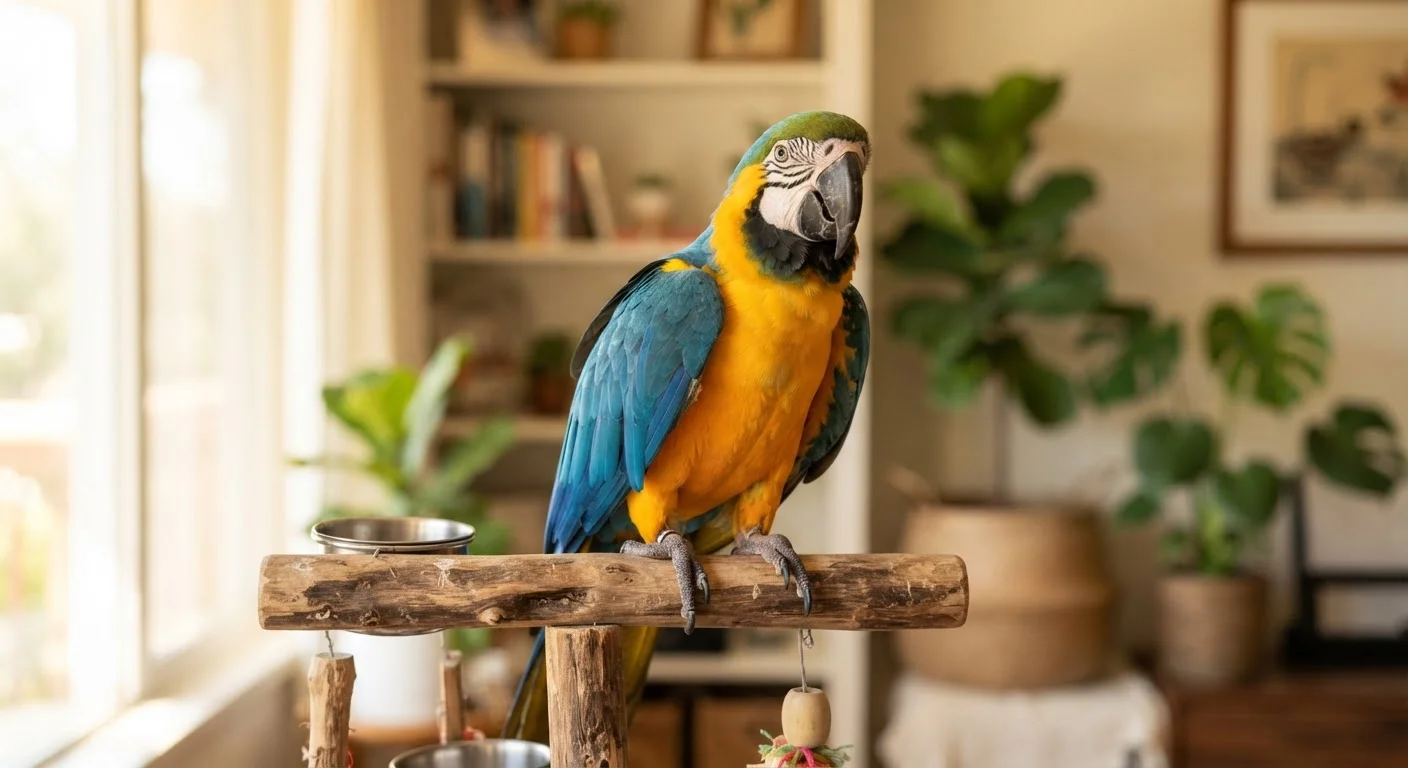
- Macaws and Cockatoos: Large, powerful, extraordinarily social birds. Their needs for space, interaction, and enrichment are substantial. Cockatoos in particular are known for separation anxiety when their social needs aren't met.
- Canaries and Finches: Best suited for owners who prefer observing birds rather than hands-on interaction. These species generally do not seek human handling and thrive in pairs or small groups.
If you're also weighing other non-traditional pets, our article on reptiles as pets offers a useful comparison of care demands.
Before committing to a species, spend time with that type of bird at a rescue or avian sanctuary. Observing real behavior — noise level, energy, and interaction style — for even an hour will tell you more than weeks of research.
Temperament and noise vary enormously between individual birds and species; firsthand exposure prevents major mismatches between owner expectations and reality.
Rotate enrichment toys and foraging activities weekly rather than leaving the same items in the cage indefinitely. Birds habituate quickly, and novelty is one of the simplest ways to support cognitive health.
Behavioral enrichment research consistently links environmental novelty with reduced stereotypic behaviors and improved psychological well-being in captive birds.
Lifespan, Time, and Daily Commitment
Lifespan is one of the most underestimated factors in bird ownership. Small birds like budgies typically live 7–15 years. Mid-sized species like cockatiels average 15–25 years. Large parrots — African Greys, macaws, and large cockatoos — routinely live 40–80 years. Prospective owners must honestly confront the possibility that a parrot may outlive them.
Daily time investment is equally significant. Most parrots need a minimum of 2–4 hours of out-of-cage time and direct social interaction each day. Birds left alone in cages for long stretches often develop stereotypic behaviors as a stress response. For a fuller picture of how bird ownership compares to other pets across a typical day, see our piece on the true time commitment behind common household pets.
Noise is also a daily reality. Many parrot species vocalize loudly — especially at dawn and dusk, mirroring natural flock behavior. This is non-negotiable and not something that can be trained away entirely.
Housing, Diet, and Veterinary Care
Housing: Cage size should always be larger than you think necessary. Birds need room to climb, spread their wings, and engage with enrichment toys. Bar spacing matters too — inappropriate spacing can trap or injure small birds. Most birds also need daily out-of-cage time in a safe, bird-proofed space.
Diet: Seeds alone are not a complete diet for most species. Contemporary avian nutrition guidance emphasizes a varied diet that typically includes quality pellets, fresh vegetables, and limited fruit, with seeds as a supplement rather than the foundation. Certain foods — avocado, onion, chocolate, and caffeine among them — are toxic to birds and must be kept entirely out of reach.
Veterinary care: Birds require an avian veterinarian — not all general-practice vets are trained in bird medicine. Annual wellness exams are standard, and birds are adept at masking illness, which means problems can go undetected until they're serious. Finding an accredited avian vet before bringing a bird home is strongly recommended, not something to figure out after the fact.
For foundational guidance on keeping birds healthy day to day, explore our pet care basics hub.
Adoption vs. Buying From a Breeder
Bird rescue organizations and parrot sanctuaries across the U.S. are consistently full — largely because people underestimated the commitment involved. Adopting an adult bird is a genuinely viable path and offers real advantages: the bird's personality is already established, and many rescues provide behavioral history and post-adoption support.
The trade-off is that some rescue birds carry behavioral or emotional baggage from previous environments. Patience and experience matter more when rehoming a bird with a difficult history.
Purchasing from a reputable breeder can offer the benefit of a hand-raised bird socialized to human contact from an early age, but prospective buyers should visit facilities in person and ask questions about the bird's diet, socialization history, and health screening. Avoid birds sourced from sources that cannot answer basic care questions or that prioritize rapid turnover over bird welfare.
Is a Bird Right for Your Household?
Honestly answering that question requires weighing several household-level factors alongside individual preferences.
Allergies and air quality: Many birds produce fine feather dust — cockatoos and cockatiels are particularly heavy producers. This can trigger respiratory issues in sensitive individuals. Anyone in the household with asthma or bird-related allergies should consult a physician before bringing a bird home.
Children: Some bird species tolerate active, noisy households; others do not. Cockatiels and budgies tend to be more adaptable. Large parrots with strong beaks can unintentionally injure young children. Our guide on raising a pet alongside young children covers species considerations in detail.
Other pets: Cats and birds are a high-risk combination — even a minor scratch from a cat's claw can introduce fatal bacteria to a bird. Dogs vary widely in prey drive. Households with existing carnivorous pets need realistic safety plans, not optimistic assumptions.
If the commitment feels too large but the interest in birds remains strong, birdwatching as a hobby offers a meaningful connection to birds without the care demands of ownership. For many people, that turns out to be exactly the right fit.
Birds are among the most rewarding animals a person can share a home with — but that reward is proportional to the preparation and commitment brought to it. Understand the species, respect the needs, and the relationship can be genuinely extraordinary.