
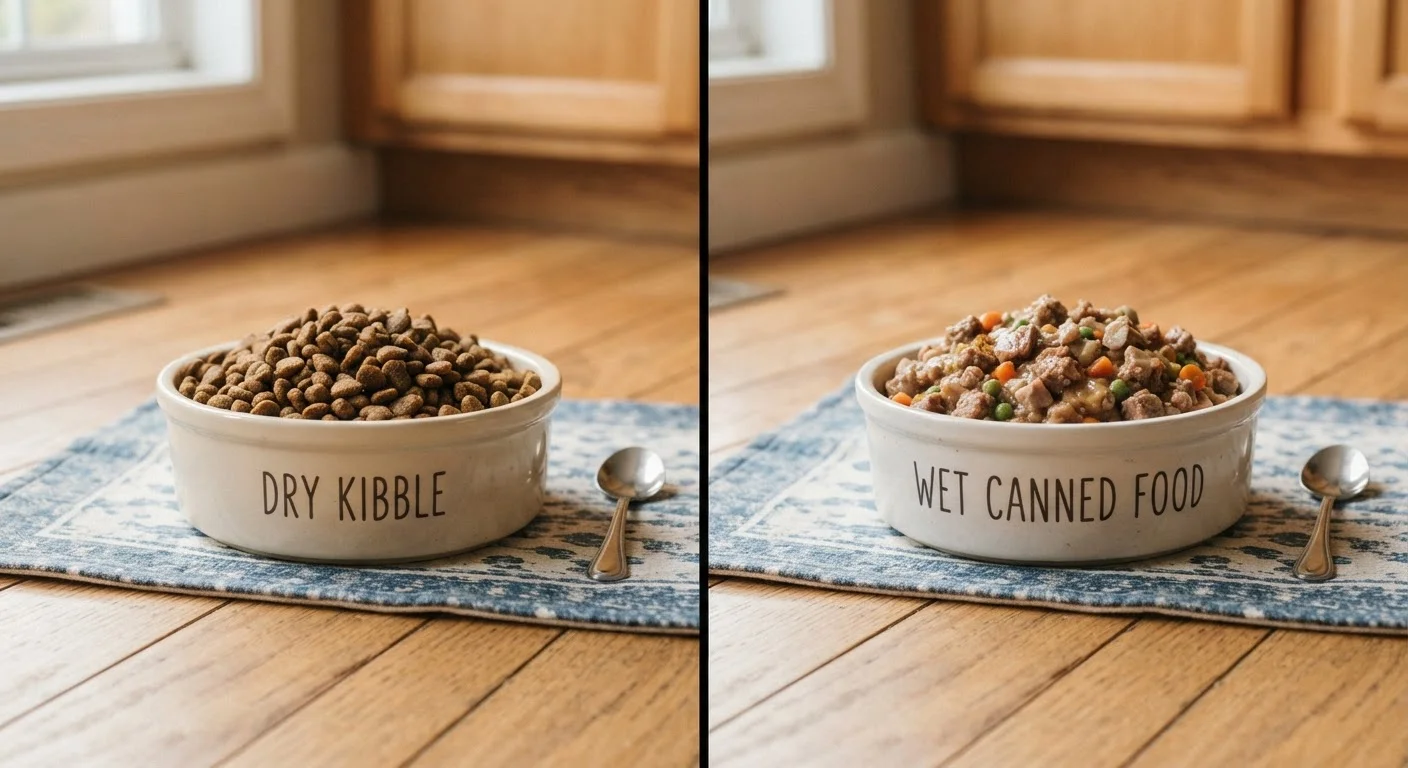
What Sets Kibble and Canned Food Apart
At their core, dry and wet pet foods differ most dramatically in one factor: water content. Dry kibble typically contains around 10% moisture, while canned wet food runs between 70% and 78%. That gap has a real ripple effect on nutrition, digestion, caloric density, and how your pet experiences the meal.
Both formats can deliver complete, balanced nutrition — but how they achieve that looks very different. Kibble is extruded (cooked under high heat and pressure) and then dried, resulting in a shelf-stable product packed with concentrated calories. Wet food is cooked in the can at lower temperatures, preserving more of its natural texture and requiring no preservatives to remain safe before opening.
| Criterion | Dry Food (Kibble) | Wet Food (Canned) |
|---|---|---|
| Moisture content | ~10% | 70–78% |
| Caloric density | High per cup | Lower per gram |
| Hydration support | Minimal | Significant |
| Dental abrasion | Light (not sufficient alone) | None |
| Palatability | Moderate | High — stronger aroma |
| Cost per serving | Generally lower | Generally higher |
| Storage after opening | Room temperature, weeks | Refrigerated, 2–3 days |
| Best for picky eaters | Less effective | More effective |
| Portion control ease | Very easy to measure | Requires calorie awareness |
Understanding these structural differences helps you see why a vet might recommend one over the other for a specific health condition — and why many owners end up using both.
Hydration, Kidneys, and Urinary Health
Cats in particular evolved as desert animals with a low thirst drive. In the wild, they obtained most of their moisture from prey. Domestic cats fed exclusively dry food often drink less water than they need, which can contribute to chronic low-grade dehydration. Over time, this places strain on the kidneys and can increase the risk of urinary tract issues, including feline idiopathic cystitis and struvite or oxalate crystals.
Wet food's high moisture content naturally addresses this gap. Research published in veterinary nutrition literature consistently notes that cats eating wet food have higher total water intake and produce more dilute urine — a meaningful benefit for kidney and urinary health. For dogs, urinary concerns are less common but still relevant, particularly in breeds prone to bladder stones.
If your cat has been diagnosed with a urinary condition, your vet will almost certainly recommend transitioning to or increasing wet food. For healthy cats, even incorporating wet food a few times a week can meaningfully boost hydration. See our guide to keeping pets at a healthy weight for how diet choices intersect with long-term wellness.
Dental Health, Calories, and Everyday Practicality
One of the most persistent claims about dry food is that kibble cleans teeth. The reality is more nuanced. While the mechanical action of crunching hard kibble does provide some light abrasion, most pieces shatter before reaching the gum line where plaque accumulates. Veterinary dental organizations note that kibble alone is not a reliable substitute for active dental care. Our article on dental health in dogs and cats covers what actually works to keep your pet's mouth healthy.
From a calorie and weight standpoint, dry food wins on precision. Caloric density is consistent batch to batch, and measuring cups or a kitchen scale make portioning reliable. Wet food, while lower in calories per gram due to water weight, can be trickier to portion if you're not familiar with your product's calorie count. Overfeeding any food format is easier than owners expect — the overfeeding your pet guide explains exactly where most owners miscalculate.
Practicality matters too. Kibble stores at room temperature for months, works in auto-feeders, and is usually less expensive per feeding. Wet food requires refrigeration after opening, spoils within a few hours in a bowl, and costs more per calorie. For many owners, a mixed feeding approach — kibble as the daily base with wet food as a meal or topper — strikes the best balance of convenience, cost, and health benefit.
How to Choose What's Right for Your Pet
There is no single correct answer that applies to every cat or dog. The right food depends on your individual pet's age, health history, activity level, and personal preferences. Kittens and puppies have different protein and fat requirements than adults; seniors may need softer textures or kidney-supportive formulas. A pet with inflammatory bowel disease or food sensitivities may do better on a limited-ingredient wet diet. A healthy, active adult dog may thrive on high-quality kibble alone.
Whatever format you choose, look for an AAFCO nutritional adequacy statement on the label. This confirms the food meets minimum nutritional standards for your pet's life stage — either through formulation or feeding trials. This single label check is one of the most reliable shortcuts for evaluating a pet food.
Work with your veterinarian before making major dietary changes, particularly if your pet has an existing health condition. Transitions should be gradual — typically over 7 to 10 days — to avoid digestive upset. And remember: food is just one component of a healthy life. Exercise, enrichment, and regular wellness exams all play equally important roles in your pet's long-term wellbeing.