Why Overfeeding Is So Easy to Do
Most pet owners genuinely want to do right by their animals. The problem isn't neglect — it's misinformation and habit. Portion sizes on pet food packaging are calculated for a theoretical average animal at maximum activity, and they're often set conservatively high by manufacturers. That means a mildly sedentary indoor cat or a low-energy senior dog almost certainly needs less than the bag suggests.
Add in the emotional dimension of feeding — we use food to bond with pets, reward good behavior, and express affection — and it's easy to see how daily intake creeps up without anyone noticing. For a deeper look at how common feeding misconceptions can shape long-term habits, see our guide to keeping pets at a healthy weight.
Treating bag feeding guidelines as exact prescriptions for every individual pet.
Why it happens: The serving sizes on packaging look authoritative, so owners assume they represent a precise science. In reality, they're broad estimates based on average body weight and activity — not your specific animal.
Forgetting to count treats, toppers, and table scraps as part of daily caloric intake.
Why it happens: Treats feel incidental — a small reward here, a bit of leftover chicken there. But these additions accumulate quickly and are rarely factored into the mental ledger owners keep.
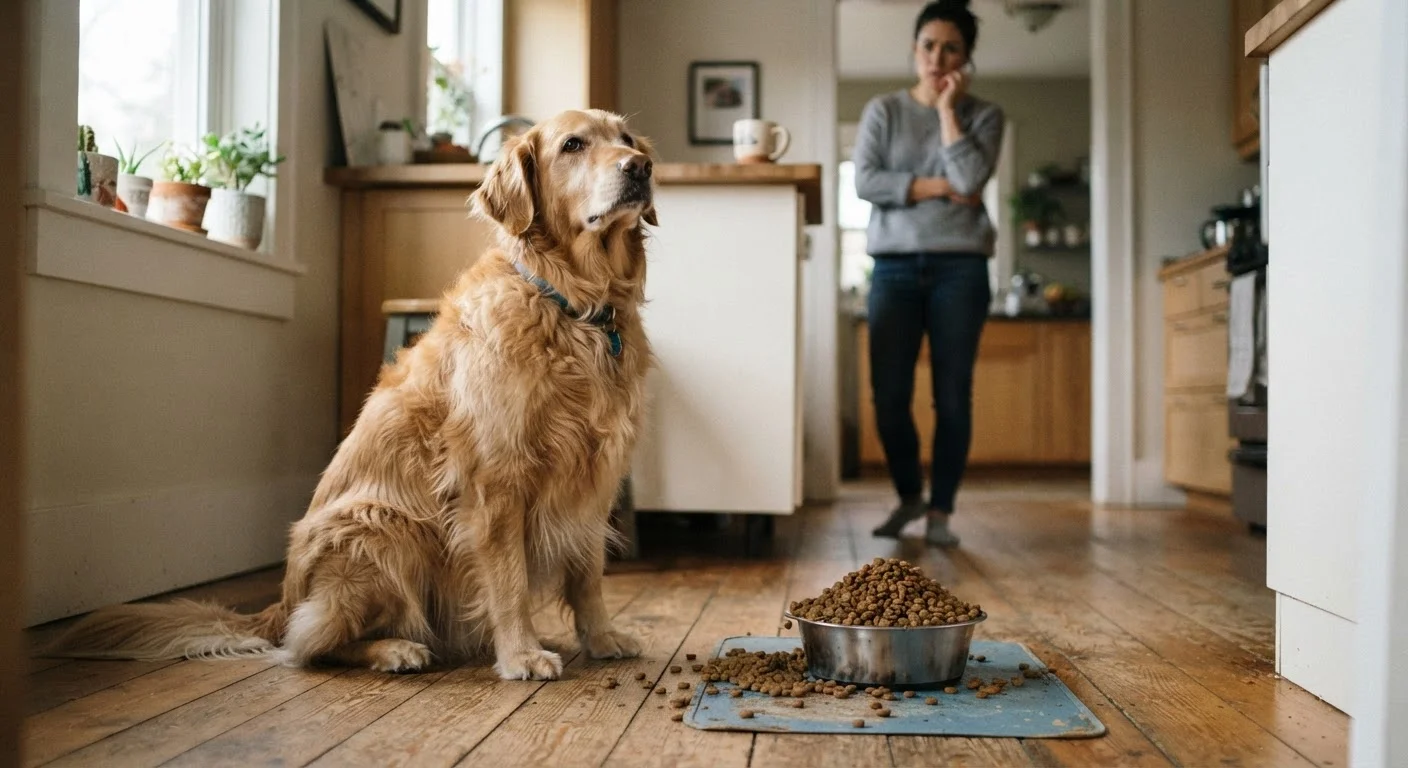
Free-feeding dry kibble without measuring or monitoring consumption.
Why it happens: Free-feeding feels convenient and kind — the pet always has access to food, and there's no risk of hunger. It also removes the guilt of rationing. But most pets, especially cats, will eat past satiety if food is always available.
Using imprecise measuring tools, especially rounded or loosely packed cups.
Why it happens: Owners grab whatever cup is nearby — a coffee mug, a random scoop — and eyeball the amount. Even with a proper measuring cup, not leveling off the top can consistently deliver far more food than intended.
Not adjusting food portions as a pet ages or becomes less active.
Why it happens: Many owners settle into a feeding routine early in a pet's life and never revisit it. A puppy that needed 600 calories a day may be getting the same amount as a sedentary seven-year-old adult with a much lower metabolic rate.
How to Feed Smarter Without Depriving Your Pet
Correcting overfeeding doesn't require a dramatic overhaul. Small, consistent adjustments make the biggest difference. Start by asking your veterinarian to assign your pet a body condition score (BCS) — a standardized 1–9 scale that assesses fat coverage over ribs and spine. A BCS of 4–5 is considered ideal for most dogs and cats. This single assessment gives you an objective baseline that no bag label can provide.
Next, use a digital kitchen scale instead of a measuring cup when possible. Volume measurements are notoriously inconsistent: kibble can be dense or airy, and a loosely filled cup may contain 20–30% more food than a leveled one. Weighing in grams is the most precise method, and most pet food labels now include weight-based guidance alongside volume.
Finally, audit your treat usage honestly. Write down every treat, training reward, table scrap, and food-based enrichment item your pet receives over a single week. Many owners are surprised to find that treats account for 15–25% of their pet's daily caloric intake. Treats should make up no more than 10% of total daily calories — a threshold most pets are well over.
If you've noticed behavioral changes alongside weight gain — lethargy, irritability, or reduced interest in play — it's worth exploring whether food is the only factor. Our article on pet behavior myths can help you distinguish food-related issues from other causes. When in doubt, your veterinarian is always the best starting point for a personalized feeding plan.