
Why Budgeting Myths Are So Persistent
For most Americans, the word "budget" conjures images of deprivation — skipping dinners out, refusing gifts, and tracking every cent with near-obsessive precision. These mental pictures aren't just inaccurate; they're actively keeping people from one of the most powerful financial tools available to them.
Misconceptions about budgeting tend to spread because they feel intuitive. If you've never seen a budget work in real life, it's easy to absorb the cultural shorthand: budgets are for people in trouble, budgets are boring, budgets don't work for people like me. Research into financial behavior consistently shows that the barrier to starting a budget is rarely math — it's belief.
The following myth-and-fact pairs address the most common misconceptions that delay people from taking control of their finances. If you've been putting off budgeting because it feels impossible, irrelevant, or too restrictive, at least one of these beliefs is probably part of the reason.
Myth
Budgeting means you can't spend money on things you enjoy.
Fact
A budget doesn't eliminate discretionary spending — it intentionally allocates money for it.
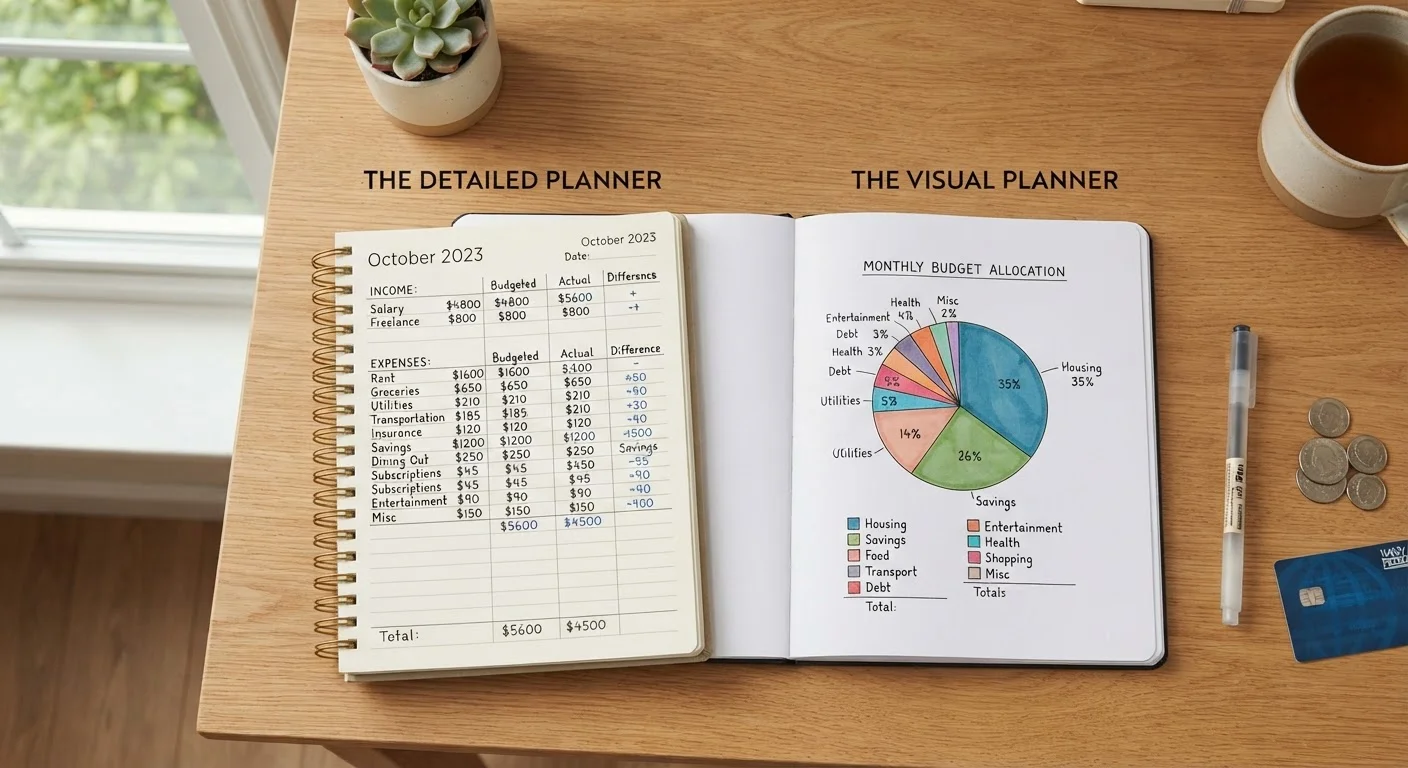
This is probably the most damaging budgeting myth because it frames the tool as an adversary rather than an ally. A budget is simply a plan for how income gets distributed. That plan almost always includes categories for dining out, entertainment, hobbies, and other personal spending — the key difference is that those choices are made deliberately rather than by default.
When spending on enjoyment is baked into your plan, it actually removes guilt from those purchases. You've already decided the money is earmarked for that purpose. This is fundamentally different from either spending without awareness or forbidding yourself from spending at all.
Myth
Budgeting is only necessary if you're in debt or struggling financially.
Fact
Budgeting is a foundational habit for people at every income level and financial situation.
High earners without budgets often find that lifestyle inflation quietly consumes income increases, leaving savings rates surprisingly low despite high salaries. Conversely, people with modest incomes who budget consistently can build meaningful savings and stability over time.
A budget isn't a crisis tool — it's a planning tool. Its value is in giving you clarity and intention, regardless of whether you're paying down credit card debt or saving for a first home. Waiting until finances are strained to start budgeting is like waiting for a health problem to start exercising — the habit is most valuable before the emergency arrives.
Myth
Budgeting is too complicated and time-consuming for everyday people.
Fact
Modern budgeting can be set up in under an hour and maintained in minutes per week.
The perception of budgeting as a laborious spreadsheet exercise is outdated. Simple frameworks like the 50/30/20 rule require only that you know your monthly take-home pay and can categorize expenses broadly into needs, wants, and savings. No accounting background required.
For those who prefer more structure, envelope budgeting adapted for the digital age offers a straightforward category-based approach. Getting familiar with core budgeting vocabulary — like the difference between gross and net income, or fixed versus variable expenses — further reduces the learning curve significantly.
Myth
If your income is irregular, budgeting is impossible.
Fact
Irregular income earners can budget using a conservative income baseline and flexible spending tiers.
Freelancers, gig workers, and people with commission-based pay often assume that income unpredictability makes budgeting futile. In practice, the approach simply needs adjustment. One common method is to base the budget on a conservative estimate of monthly income — often the lowest-earning month from the past year — and treat any income above that floor as available for savings or debt payoff.
Another approach is to budget against a rolling average of the past three to six months of income. Both methods introduce structure without requiring that every month look identical. The goal isn't to predict the future precisely; it's to ensure that essential expenses are covered and that surplus income has a directed purpose rather than quietly disappearing.
Myth
A budget has to be perfect to be worth doing.
Fact
An imperfect, consistent budget outperforms a flawless budget that's abandoned after one difficult month.
Perfectionism is one of the most common reasons people stop budgeting after starting. A single month where spending overshoots a category can feel like failure — which triggers abandonment of the entire effort. But budgeting is a practice, not a performance. Variance is normal and expected, especially in the first few months when spending patterns are still being calibrated.
The more useful measure of success is whether the budget is being revisited and adjusted — not whether every category lands exactly on target. A budget that gets refined over time, as described in building a budget flexible enough for real life, is far more durable than a rigid plan that cracks under the first unexpected expense.
Practical Starting Points Once the Myths Are Out of the Way
Clearing up misconceptions is only the first step. Once you recognize that budgeting is neither punishing nor complicated, the next move is choosing a framework that fits your life rather than forcing your life to fit a framework.
The 50/30/20 rule compared with zero-based budgeting is a useful starting point for understanding your options. The 50/30/20 guideline — allocating roughly 50% of take-home pay to needs, 30% to wants, and 20% to savings and debt repayment — is a widely recognized, low-friction structure that requires no prior financial expertise. Zero-based budgeting, by contrast, assigns every dollar of income a specific job, which suits people who prefer granular control.
If you're brand new to the process, building your first personal budget is less complicated than most people expect — and starting imperfectly is far better than not starting. Equally important is understanding what causes budgets to unravel over time; the patterns behind budget derailment are predictable and largely avoidable once you know them.
Budgeting also doesn't happen in a vacuum. If you share finances with a partner, aligning a household budget with two people involved introduces specific dynamics worth understanding early. And once a budget is in place, pairing it with an emergency savings habit significantly strengthens your overall financial stability.
This article is for general informational and educational purposes only. It is not personalized financial, tax, or legal advice. Readers should consult a qualified financial professional before making decisions specific to their own financial situation.