What Is a Personal Budget?
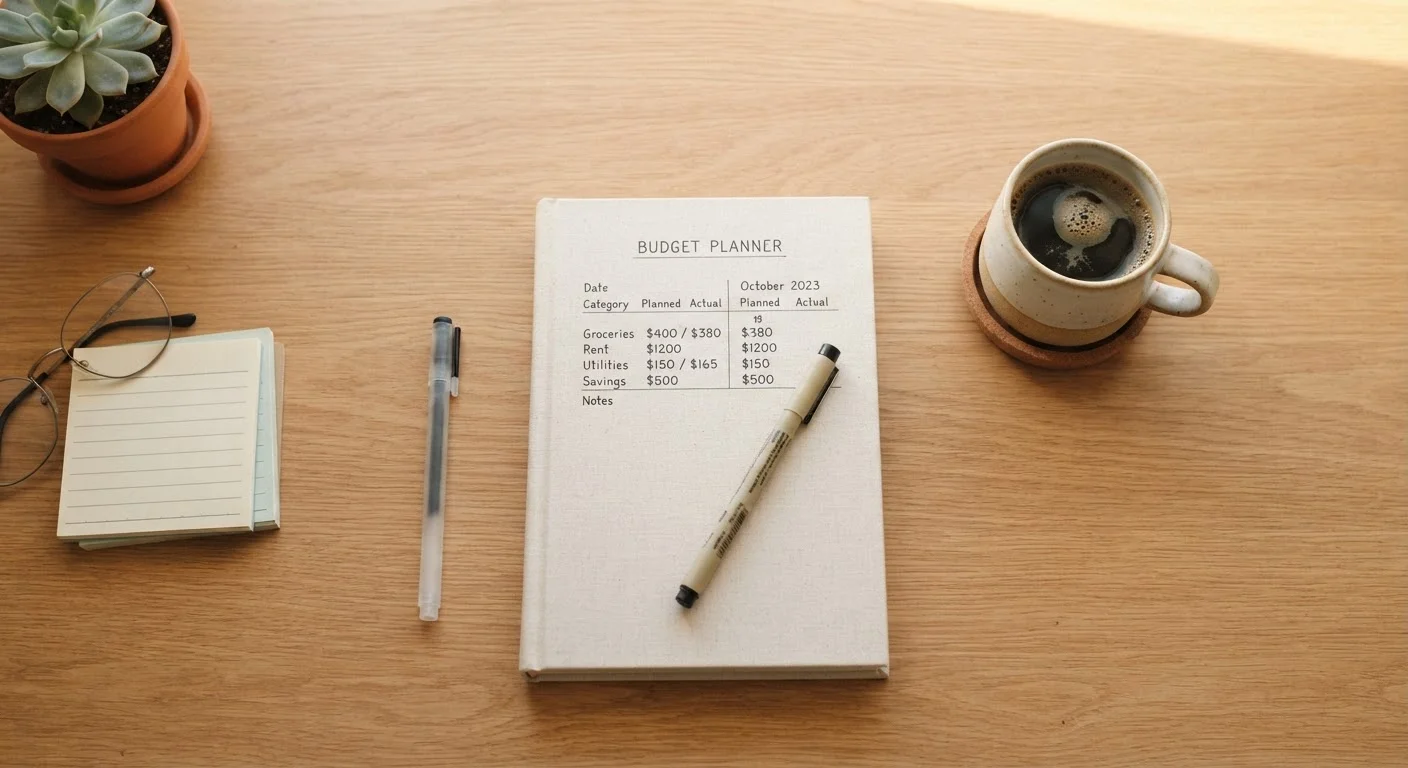
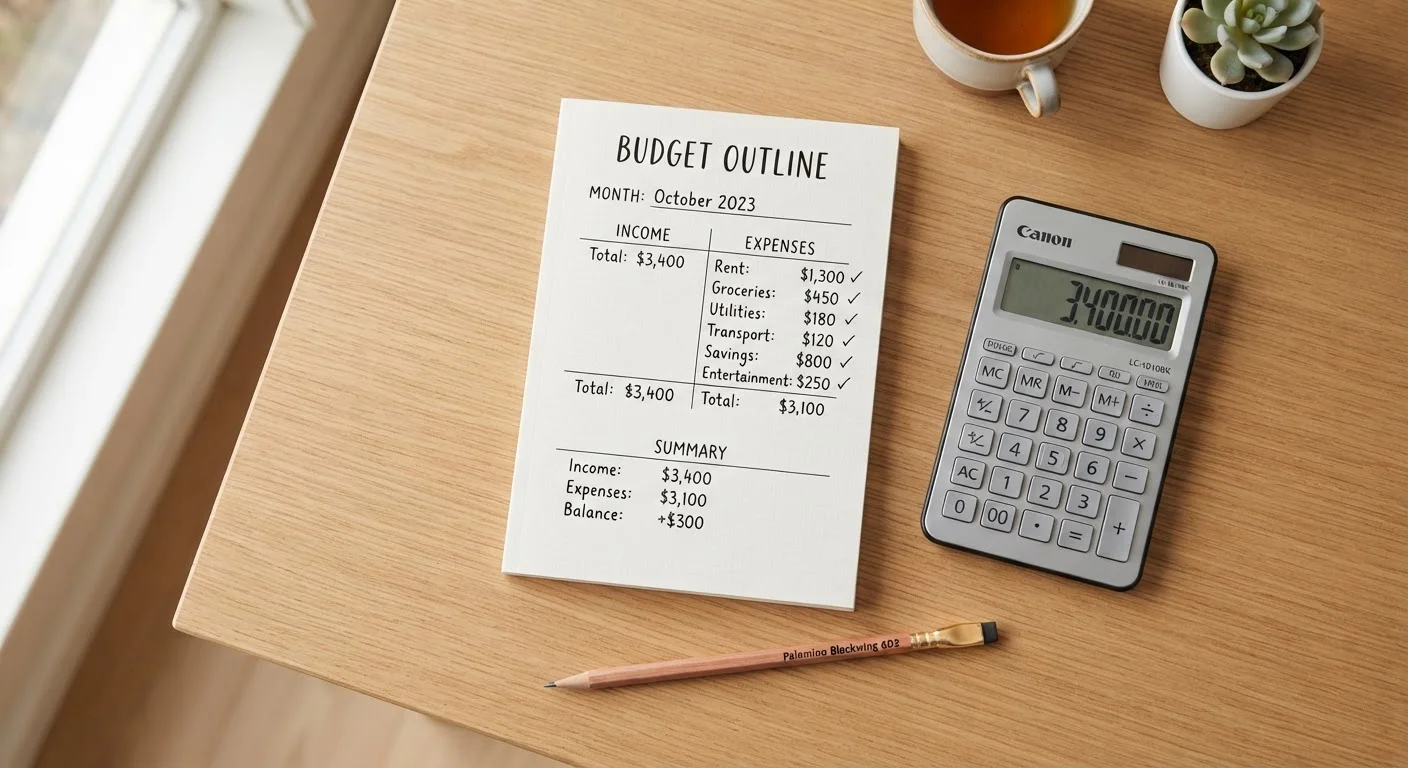
A personal budget is a written plan — digital or on paper — that maps out how much money you expect to receive and how you intend to spend or save it over a defined period, typically one month. Think of it as a financial blueprint: it shows you where your money is coming from and where it is going before it silently disappears.
At its core, a budget has two sides: income (what comes in) and expenses plus savings (what goes out). When these two sides balance, you are spending within your means. When expenses exceed income, a budget reveals that gap — which is exactly the kind of clarity that allows you to fix it.
Many people assume budgeting is only for those struggling financially, but that is one of the most persistent misconceptions in personal finance. See how other common budgeting myths may be holding you back from getting started.
Net income
The amount of money you actually take home after taxes, Social Security, and any other deductions are subtracted from your paycheck. This is the number your budget should be built on.
Fixed expense
A recurring cost that stays the same amount every month, such as rent, a car loan payment, or an insurance premium.
Variable expense
A cost that changes from month to month depending on your behavior or circumstances — examples include groceries, gas, and entertainment spending.
50/30/20 rule
A budgeting guideline that divides after-tax income into three categories: 50% for needs, 30% for wants, and 20% for savings and debt repayment.
Irregular expense
A cost that does not occur monthly but recurs annually or unpredictably — such as car registration fees, holiday gifts, or medical co-pays. These should be averaged and saved for monthly.
Why Budgeting Matters More Than You Think
Without a budget, most people operate on a vague sense of how much they earn and spend. That vagueness tends to cost money — through overdraft fees, missed savings opportunities, and the low-grade financial anxiety that comes from not knowing where you stand.
A budget does several concrete things for you. It makes invisible spending visible. It creates a target for saving. And it gives you a structured way to work toward financial goals — whether that is building an emergency fund, paying down debt, or eventually investing.
Consider this: the Consumer Financial Protection Bureau (CFPB) consistently identifies a lack of organized spending tracking as a key barrier to household financial resilience. A budget directly addresses that gap.
If you are also thinking about how savings and credit fit into the bigger picture, the Credit & Debt hub and Saving & Emergency Funds hub offer solid grounding in those adjacent areas.
The Core Components of a Budget
Every workable budget — regardless of format — contains the same fundamental building blocks:
- Gross vs. net income: Your gross income is what you earn before taxes and deductions. Your budget should be built on net income — what actually lands in your bank account after withholdings.
- Fixed expenses: Costs that do not change month to month. Rent or mortgage, car payments, insurance premiums, and minimum loan payments all fall here.
- Variable expenses: Costs that fluctuate. Groceries, utilities, fuel, dining out, and personal care spending shift each month and require consistent tracking.
- Savings allocation: Treating savings as a non-negotiable line item — not an afterthought — is what separates a budget that builds wealth from one that simply tracks spending. The pay yourself first principle is one proven approach.
- Irregular expenses: Annual costs like car registration, holiday gifts, or medical co-pays that catch people off guard. Divide them by 12 and set aside that amount monthly.
A Simple Framework to Get Started
The 50/30/20 rule is one of the most accessible starting frameworks for first-time budgeters. Popularized by financial educators and widely cited in personal finance literature, it divides your after-tax income into three broad categories:
- 50% for needs: Housing, groceries, utilities, transportation, minimum debt payments.
- 30% for wants: Dining out, subscriptions, hobbies, travel, and entertainment.
- 20% for savings and debt repayment: Emergency fund contributions, retirement savings, and extra payments toward debt.
These percentages are a guide, not a law. If you live in a high cost-of-living city, your housing costs alone may consume more than 50% of take-home pay — and that is a real constraint to work around, not a personal failure.
Once you have a framework, the next step is tracking. Gather one to three months of bank and credit card statements to see where your money has actually been going. Then compare that reality to your framework and identify the gaps.
For a step-by-step approach once you have the basics in place, the complete budgeting framework guide walks through income tracking, expense categories, and goal-setting in detail.
Start With One Month of Real Data
Before writing a single budget number, pull your last month's bank and credit card statements and total up what you actually spent by category. Real spending data — even if it is uncomfortable to look at — will produce a far more accurate starting budget than estimates made from memory. Honesty at this stage sets up everything that follows.
Common First-Budget Mistakes to Avoid
Most first budgets have flaws — and that is expected. What matters is recognizing common traps so you can course-correct quickly.
- Underestimating variable expenses: People routinely guess too low on groceries, dining, and personal spending. Use real data from your statements, not optimistic estimates.
- Forgetting irregular expenses: Car maintenance, medical bills, and seasonal costs will derail a budget that does not account for them.
- Setting an unrealistic plan: A budget that requires extreme sacrifice from day one rarely lasts. Build in some room for the things you genuinely enjoy.
- Not revisiting it: A budget is a living document. Life changes — income fluctuates, expenses shift — and your plan needs to reflect that.
When you are ready to take a more systematic look at whether your existing plan is actually working, the Personal Budget Overhaul Checklist is a structured next step. And if you want a budget built to handle real-life surprises, Building a Budget That Survives Real Life covers exactly that.
This article provides general financial education and is not personalized financial advice. For guidance specific to your situation, consider consulting a qualified financial professional.