Why a Day Hike Checklist Actually Matters
Day hikes feel low-stakes — no tent, no multi-night commitment — but they carry real risks when approached without preparation. Most search-and-rescue calls in the backcountry involve day hikers who underestimated the trail, packed too light, or simply lost the path. The good news? A solid pre-hike routine takes under an hour and dramatically stacks the odds in your favor.
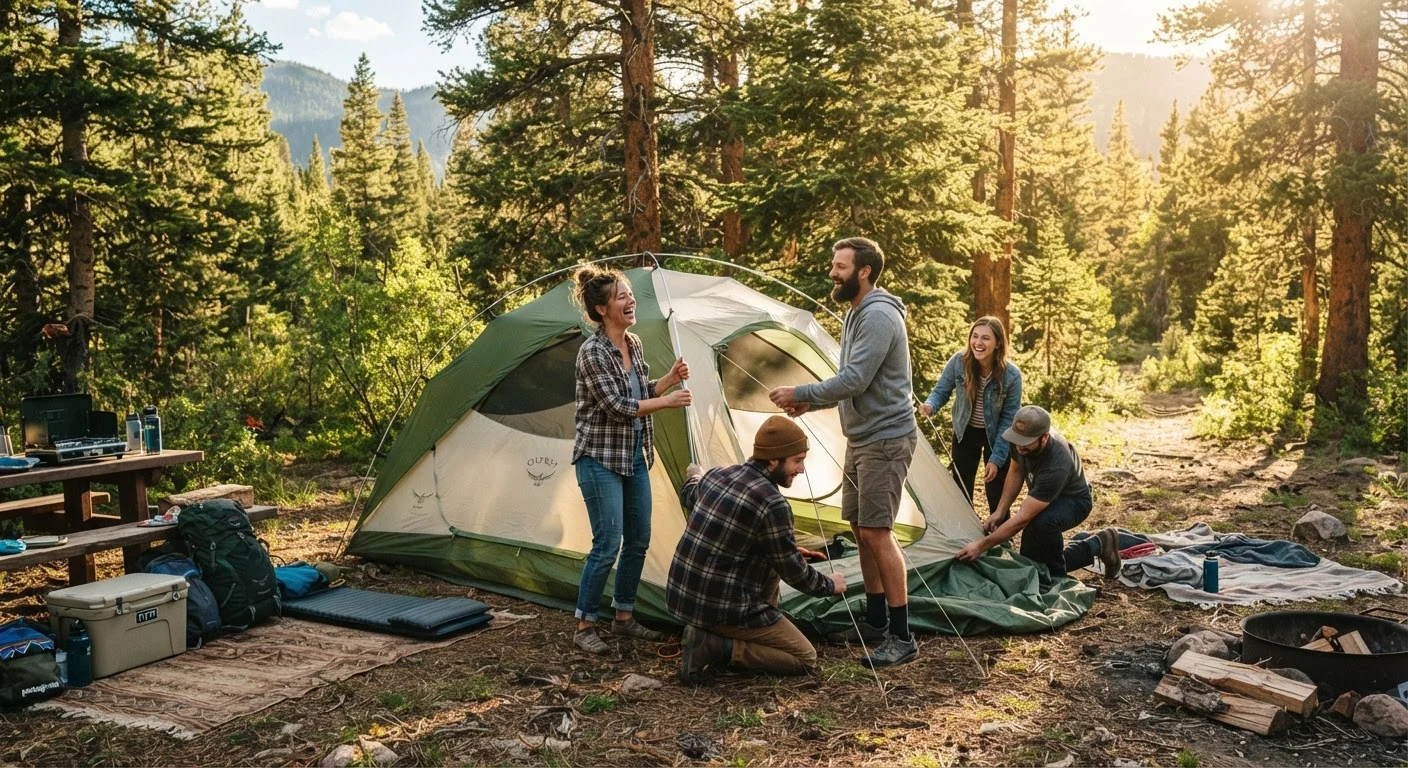
Whether you're heading out for the first time or returning after a long break, this checklist covers every stage: research, gear, safety, nutrition, and etiquette. If you're eventually eyeing overnight trips, our beginner's camping guide is a natural next step. For now, let's get you trail-ready.
Research & Planning
Weather & Timing
Navigation
Hydration & Nutrition
Safety Gear & First Aid
Tools and Resources You'll Want on Hand
You don't need expensive gear to hike safely, but a few reliable tools make an enormous difference. Gather these before you run through the checklist so you can verify rather than guess.
Topographic Map (printed or offline app)
Provides reliable trail navigation that doesn't depend on cell service.
Baseplate Compass
Serves as a backup navigation tool when visibility drops or GPS signals are unreliable.
Water Filter or Purification Tablets
Allows safe water refills from streams or lakes on longer trails.
Compact First-Aid Kit
Handles minor injuries — blisters, cuts, sprains — before they become serious problems.
Headlamp with Extra Batteries
Keeps you safely mobile if your hike extends into low-light conditions.
Emergency Mylar Space Blanket
Retains body heat in an unexpected overnight or cold-weather situation.
Portable Battery Pack
Keeps your phone charged for navigation, emergencies, or photos on long trails.
Once you've assembled your kit and confirmed your gear is in working order, you're ready to move through the checklist systematically — it only takes a few minutes per category.
Trail Etiquette and Leave No Trace
Prepping your pack is only half the job. How you behave on the trail affects other hikers, wildlife, and the long-term health of the natural spaces we all love. A few habits go a long way: yield to uphill hikers, keep noise levels considerate of both people and wildlife, and pack out every bit of trash — including food scraps.
The Leave No Trace framework gives these habits a clear structure. Our companion piece Leave No Trace: The Seven Principles Every Outdoor Visitor Should Know breaks down each of the seven principles in practical terms, from campfire rules to staying on marked trails.
Cutting Corners on Trail Etiquette Has Real Consequences
Feeding wildlife — even seemingly harmless animals — can alter their natural behavior and make them dependent on humans, which often ends badly for the animal. Straying off marked trails damages fragile vegetation and can widen erosion paths that take years to recover. Stay on designated routes, store food securely, and observe wildlife from a respectful distance.
Approach every hike as a guest in a shared natural space, and the experience becomes richer — for you and for everyone who follows.