Why Dental Health Matters for Pets
Periodontal disease — inflammation and infection of the structures supporting the teeth — is one of the most diagnosed conditions in veterinary medicine. According to the American Veterinary Medical Association, most dogs and cats show some degree of dental disease by age three. Yet it's also one of the most preventable.
The problem isn't limited to the mouth. Bacteria from infected gums can enter the bloodstream and contribute to damage in the heart, kidneys, and liver over time. This means keeping your pet's teeth clean isn't just about fresh breath — it's about protecting their long-term organ health.
See our guide to annual vet visits to understand how dental checks fit into your pet's broader wellness routine.
80%
Dogs with dental disease by age 3
The American Veterinary Medical Association estimates approximately 80% of dogs show signs of periodontal disease by age three.
70%
Cats affected by age 3
Cats develop periodontal disease at a similarly high rate, with many cases going undetected due to pain-masking behavior.
20–60%
Adult cats with tooth resorption
Studies in veterinary dentistry suggest tooth resorption affects between 20% and 60% of adult cats, making dental X-rays essential.
Signs of Dental Disease to Watch For
Pets can't tell you their mouth hurts, and they're instinctively good at masking pain. That makes owner awareness critical. Watch for these warning signs:
- Bad breath — a consistently foul odor is not normal; it signals bacterial buildup or infection
- Yellow or brown tartar on teeth, especially near the gumline
- Red, swollen, or bleeding gums
- Difficulty eating, dropping food, or chewing on one side
- Pawing at the mouth or reluctance to be touched around the face
- Loose or missing teeth
- Excessive drooling, particularly in cats
If you notice any of these signs, schedule a veterinary appointment rather than waiting for a routine visit. Early intervention can prevent tooth loss and significant pain. Understanding your pet's overall body language — including subtle facial cues — can also help. Our article on reading your pet's body language explains what to look for.
Brushing Your Pet's Teeth: How to Actually Do It
Daily brushing is the single most effective home care strategy, but it requires patience and a gradual introduction — especially for cats.
What you'll need
- A soft-bristled toothbrush designed for pets, or a finger brush
- Pet-safe enzymatic toothpaste (never use human toothpaste — the fluoride and xylitol in human products are toxic to pets)
A step-by-step introduction
- Week 1: Let your pet sniff and lick the toothpaste from your finger to build a positive association.
- Week 2: Gently rub your finger along the gumline for a few seconds, then reward.
- Week 3: Introduce the brush with toothpaste, starting with just the front teeth.
- Week 4 and beyond: Work toward all surfaces, aiming for 30–60 seconds total per session.
Keep sessions short, use high-value praise or treats afterward, and never force the process. A stressed pet will associate brushing with a negative experience, making consistency much harder.
Start toothbrushing as soon as you bring a puppy or kitten home — even before their adult teeth come in. Early positive exposure makes compliance far more likely throughout their life.
Habituation during the socialization window (roughly 3–14 weeks in puppies, 2–7 weeks in kittens) dramatically reduces resistance to handling, including oral examination and brushing.
If your cat absolutely will not tolerate a brush, try applying enzymatic toothpaste to a cotton swab or gauze strip and gently wiping the outer surfaces of the upper back teeth — that's where tartar accumulates fastest.
The upper carnassial teeth (fourth premolars) are the most frequently affected by periodontal disease in cats due to their size and position; even partial cleaning there has measurable benefit.
Dental Chews, Diets, and Water Additives
Brushing isn't always realistic every day, and supplemental tools can help reduce plaque between sessions. Look for products carrying the Veterinary Oral Health Council (VOHC) seal — this indicates controlled studies have shown the product reduces plaque or tartar.
Dental chews
Chews work through mechanical abrasion as the pet gnaws. They don't replace brushing but can meaningfully slow tartar buildup. Size them appropriately — a chew too small becomes a swallowing risk, while one too hard can fracture teeth.
Dental diets
Certain prescription dental diets are formulated with a fiber structure that encourages chewing and scrubs tooth surfaces. These are particularly useful for dogs and cats that resist all other forms of home care. Discuss with your veterinarian whether a dental diet is appropriate given your pet's overall nutritional needs. For context on how food type affects dental health, see our dry food vs. wet food comparison.
Water additives
Oral rinse additives dissolved in drinking water can reduce bacterial load. They're easy to use but have modest evidence compared to brushing or chews. They work best as part of a layered approach.
Professional Cleanings: What to Expect
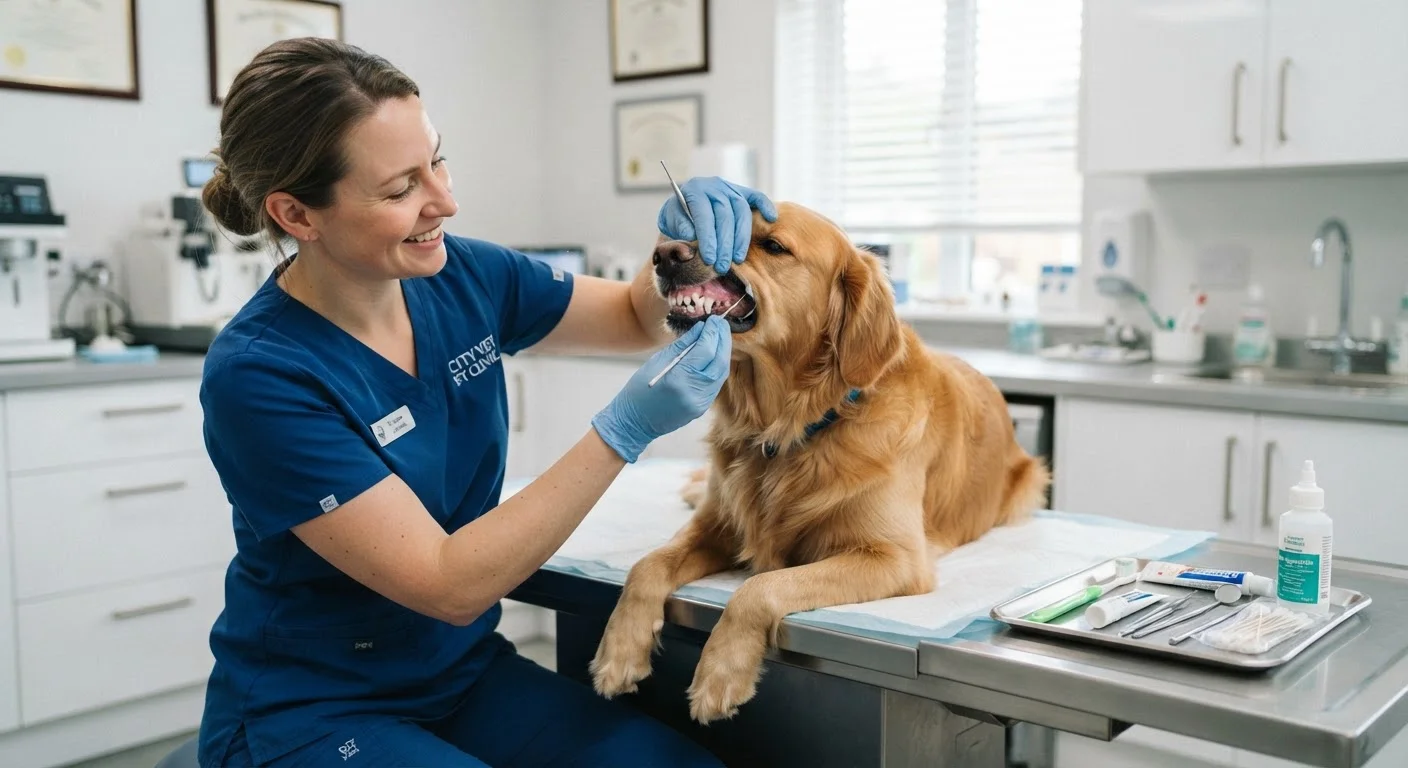
Home care slows dental disease but cannot remove hardened tartar (calculus) once it has formed below the gumline. That requires a professional cleaning performed by a veterinarian under general anesthesia.
Anesthesia Is Necessary for Safe Dental Cleanings
General anesthesia is required for a thorough, safe professional dental cleaning in pets. It allows the veterinarian to probe, X-ray, and scale below the gumline without causing pain or risk of aspiration. Anesthesia-free cleanings offered at some grooming or retail settings only address visible surfaces and cannot treat or accurately diagnose periodontal disease. Discuss anesthesia protocols and pre-anesthetic bloodwork with your veterinarian to address any concerns about your individual pet.
A thorough professional cleaning includes scaling above and below the gumline, polishing tooth surfaces, dental X-rays to assess root and bone health, and probing for pockets or lesions. Many problems — such as root abscesses and tooth resorption in cats — are invisible without X-rays.
The frequency of professional cleanings depends on the individual pet. Small breeds and brachycephalic (flat-faced) breeds such as Pugs and Persian cats typically need more frequent cleanings due to crowded teeth. Your vet will recommend a schedule based on your pet's oral assessment.
Anesthesia concerns are common among owners, but the American Animal Hospital Association maintains that anesthesia-free dental cleanings are not an adequate substitute — they don't allow safe subgingival (below gumline) cleaning or diagnostic imaging and can create a false sense of security.
Dogs vs. Cats: Key Differences in Dental Care
While the fundamentals of dental care apply to both species, there are meaningful differences owners should know.
Dogs
- More likely to fracture teeth by chewing hard objects (bones, antlers, hard nylon toys). A general rule: if you wouldn't want to be hit over the knee with it, it's too hard for your dog's teeth.
- Typically more tolerant of toothbrushing than cats when introduced early in life.
- Toy and small breeds (Chihuahuas, Yorkshire Terriers) are genetically predisposed to accelerated tartar buildup and early tooth loss.
Cats
- Prone to tooth resorption — a painful condition where the tooth structure breaks down from the inside. It affects an estimated 20–60% of adult cats and can only be diagnosed by dental X-ray. Affected teeth must be extracted.
- Often more resistant to brushing; finger brushes or gauze-wrapped fingers may be better tolerated than full brush handles.
- Stomatitis (severe oral inflammation) is more common in cats and may require specialist care.
Regardless of species, starting dental care early — ideally when your pet is a kitten or puppy — builds tolerance and sets a long-term foundation. Grooming routines and dental habits go hand in hand; our grooming frequency guide can help you build a complete care schedule.