
Why Parasite Prevention Isn't One-Size-Fits-All
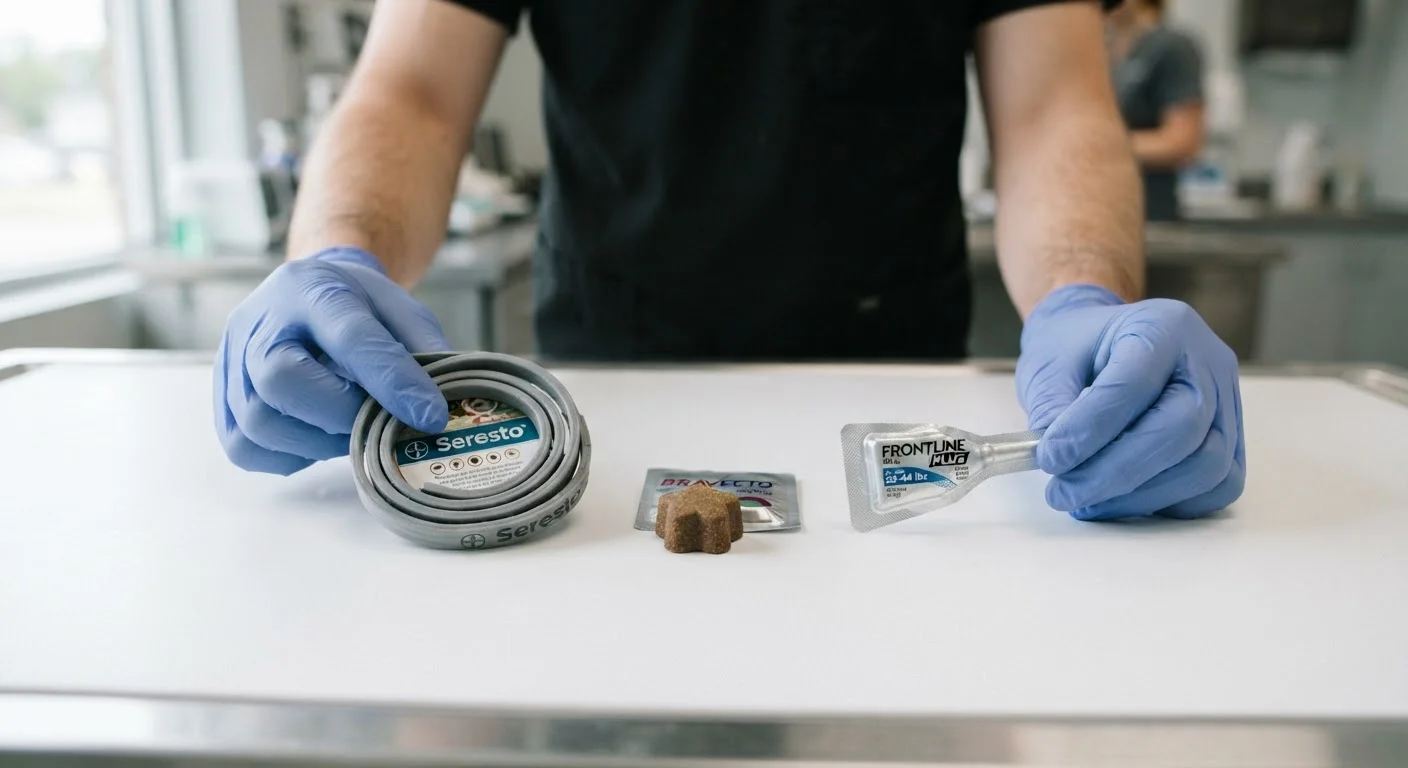
Fleas, ticks, heartworms, and intestinal parasites aren't just nuisances — they pose real health risks to pets and, in some cases, to people in the household. Yet the range of prevention products available can feel overwhelming. Topical drops, chewable tablets, long-lasting collars: each works through a distinct biological mechanism, covers a different set of parasites, and suits a different kind of pet and lifestyle.
Understanding how each option actually functions — rather than just what the packaging claims — helps you have a more productive conversation with your veterinarian and make a choice that fits your pet's real life. This article breaks down the three main delivery formats and the key factors that should shape your decision. For context on overall pet wellness, our guide to vaccination facts and myths covers how preventive medicine works more broadly.
Topical Treatments: How Spot-Ons Work
Topical or "spot-on" treatments are liquid formulations applied directly to a small area of skin — typically between the shoulder blades or along the back. Once applied, the active ingredient spreads through the skin's surface oils (a process called translocation) or is absorbed into the bloodstream, depending on the specific product.
Products that work via skin translocation kill parasites on contact with the pet's coat or skin. Those absorbed systemically kill parasites when they bite and ingest treated blood. Some spot-ons are broad-spectrum, targeting fleas, ticks, and mites simultaneously; others focus on a narrower range.
Key considerations:
- Most require 24–48 hours to fully distribute before bathing or swimming.
- Children and other pets should avoid contact with the application site until dry.
- Some formulations approved for dogs are toxic to cats — always verify species labeling with your vet.
- Monthly reapplication is standard, though some products offer longer windows.
Oral Medications: Chewables and Pills
Oral parasite preventives are absorbed through the digestive system and circulate in the bloodstream. When a flea or tick bites and feeds, it ingests the active compound, which disrupts its nervous system and kills it. Because the mechanism requires a bite to trigger, oral products generally do not repel parasites before contact — but they kill quickly and effectively once exposure occurs.
Some oral products are given monthly; others are dosed every three months. Heartworm prevention is predominantly delivered this way, often combined with coverage for certain intestinal parasites in a single monthly chewable.
Key considerations:
- Waterproof by design — swimming and bathing don't reduce efficacy.
- Easier to dose accurately by weight compared to topicals.
- Not appropriate for pets with certain liver conditions or sensitivities — your vet should review the health history.
- Some dogs experience mild gastrointestinal side effects; report any unusual behavior to your veterinarian.
Keep a Year-Round Mindset
Many owners scale back prevention in cooler months, but fleas can survive indoors year-round and ticks remain active in temperatures above freezing in many U.S. regions. Year-round, consistent prevention is generally recommended by veterinarians rather than seasonal use. Talk to your vet about the specific parasite pressures in your area.
Collars: Long-Duration Coverage Explained
Modern parasite prevention collars work by releasing active ingredients continuously from the collar material. Depending on the formulation, this can kill parasites on contact, repel them before a bite, or both. Some collars distribute active compounds across the pet's coat through natural movement; others work via vapor or direct skin contact.
Duration is a significant advantage — certain collars are designed to remain effective for several months, making them appealing for owners who find monthly applications difficult to maintain consistently. However, fit matters greatly: a collar that's too loose may not deliver adequate coverage, while one that's too tight poses a physical risk.
Key considerations:
- Effectiveness diminishes if the collar gets wet frequently or is removed regularly (e.g., during baths or boarding).
- Not recommended for pets that chew or mouth their own collar or those of housemates.
- Residue on the collar surface can transfer to human skin — wash hands after handling.
- Check whether coverage includes ticks in your geographic region, as species vary by area.
| Topical Treatments | Oral Medications | Collars | |
|---|---|---|---|
| How it works | Skin translocation or bloodstream absorption | Bloodstream absorption via bite | Continuous slow-release on coat/skin |
| Repels before bite | Some formulations yes | Generally no | Some formulations yes |
| Typical duration | Monthly (most products) | Monthly or quarterly | Several months |
| Water resistance | Reduced after bathing/swimming | Fully waterproof | Reduced with frequent wetting |
| Parasite coverage | Fleas, ticks, mites (varies) | Fleas, ticks, heartworm, intestinal (varies) | Fleas, ticks (varies by product) |
| Household contact risk | Moderate until dry | Minimal | Low-moderate; wash hands after handling |
| Key suitability concern | Species-specific labeling critical | Requires bite to kill; GI sensitivity possible | Fit and removal frequency matter |
Choosing the Right Approach for Your Pet
Several practical factors should guide this decision — ideally in partnership with your veterinarian:
- Age and weight
- Many products have minimum age and weight requirements. Puppies and kittens under eight weeks are particularly vulnerable to certain active ingredients.
- Health status
- Pets with kidney disease, epilepsy, or known chemical sensitivities may be contraindicated for specific compounds. Always share a full health history.
- Lifestyle and environment
- An indoor-only cat faces different risks than a dog who hikes regularly. Tick species, flea pressure, and heartworm risk all vary by geography and season.
- Household composition
- Homes with young children, other pets, or immunocompromised individuals may benefit from formulations that minimize surface residue or contact risk.
Parasite prevention is part of a broader routine care picture. Our overview of dental health in dogs and cats is another example of how consistent preventive habits protect your pet's long-term wellbeing.