
Why Budgeting Vocabulary Matters
Picking up a personal finance article or sitting down with a budgeting app can feel disorienting when the terminology is unfamiliar. Words like discretionary spending, net income, and zero-based budget get used casually — as if everyone already knows what they mean. Most people don't, and that knowledge gap is one of the quiet reasons so many Americans never start a budget in the first place.
This reference covers the core terms you'll encounter when reading about or building a personal budget. Learning them doesn't require a finance background — it just requires a plain-English starting point. Once you have the vocabulary, frameworks like the steps of building your first personal budget become far less intimidating.
Gross Income
Your total earnings before taxes, benefits deductions, or any other withholdings are removed. This is the number shown on a job offer letter, not what you take home.
Net Income
The amount you actually receive after all deductions — taxes, Social Security, Medicare, and any employer-withheld benefits — are subtracted from gross income. Budgets should always be built from net income.
Discretionary Spending
Money spent on non-essential goods and services such as dining out, streaming services, and hobbies. This is typically the most flexible budget category and the first place adjustments are made.
Fixed Expense
A recurring cost that stays the same amount each billing period, such as rent, a car loan payment, or a monthly insurance premium. Fixed expenses are predictable and harder to reduce in the short term.
Variable Expense
A cost that changes from month to month based on usage or purchasing decisions, such as groceries, gas, or utility bills. Variable expenses offer more flexibility for budget adjustments.
Zero-Based Budget
A budgeting method where every dollar of income is assigned a specific purpose — spending, saving, or debt repayment — so that total income minus total allocations equals zero. Nothing is left unplanned.
50/30/20 Rule
A popular budgeting guideline suggesting you direct 50% of net income to needs, 30% to wants, and 20% to savings and debt repayment. It is a framework for thinking about proportions, not a strict formula.
Budget Surplus
The amount remaining when income exceeds total expenses in a given period. A surplus can be redirected toward savings goals, debt payoff, or an emergency fund.
Budget Deficit
The shortfall that occurs when expenses exceed income in a given period. Persistent deficits indicate a need to either increase income or reduce spending to avoid accumulating debt.
Emergency Fund
A separate cash reserve intended to cover unexpected essential expenses — such as job loss, car repairs, or medical bills — without disrupting the rest of the budget or requiring new debt.
Pay-Yourself-First
A savings strategy where a set amount is transferred to savings or investments automatically at the beginning of each pay period, before any discretionary spending occurs.
Cash Flow
The net movement of money into and out of your accounts over a given period. Positive cash flow means more money came in than went out; negative cash flow means the reverse.
Income and Spending Fundamentals
Every budget starts with income and expenses. Understanding the distinctions between income types and spending categories is the foundation of any working financial plan.
| Recommended Emergency Fund Size | 3–6 months of essential expenses (Consumer Financial Protection Bureau general guidance) |
| 50/30/20 Rule — Needs Allocation | 50% of net income (Framework popularized in All Your Worth, Warren & Tyagi) |
| 50/30/20 Rule — Savings & Debt Allocation | 20% of net income (Framework popularized in All Your Worth, Warren & Tyagi) |
| Zero-Based Budget Starting Point | Income minus all allocations = $0 (Standard definition across personal finance frameworks) |
| Most Flexible Budget Category | Discretionary (wants) spending |
| Budget Foundation: Income Type to Use | Net income (take-home pay) (Standard personal finance guidance) |
Gross income is your total earnings before any deductions — taxes, Social Security contributions, and health insurance premiums. Net income (often called take-home pay) is what lands in your bank account after those deductions. Budgeting from gross income rather than net is one of the most common beginner mistakes; it inflates what you actually have to spend.
On the expense side, the distinction between fixed and variable expenses shapes how flexible your budget can be. Fixed expenses — rent, loan payments, insurance premiums — stay the same each month. Variable expenses — groceries, gas, dining out — fluctuate. Understanding which is which helps you identify where you have room to adjust. See a deeper look at fixed vs. variable expenses and what the difference means for your budget for a detailed breakdown.
Discretionary spending refers to non-essential purchases — entertainment, subscriptions, travel. It's the category most budgets target first when cuts are needed. Non-discretionary spending covers necessities: housing, utilities, food, healthcare, and minimum debt payments.
Budgeting Frameworks and Planning Terms
Several structured approaches help people organize income and expenses into a workable plan. Knowing the vocabulary behind each framework lets you choose what fits your situation rather than guessing.
The 50/30/20 rule is a widely cited guideline suggesting you allocate roughly 50% of net income to needs, 30% to wants, and 20% to savings and debt repayment. It's a starting point, not a rigid law — your actual percentages may vary based on income level, cost of living, and financial goals.
A zero-based budget assigns every dollar of income a specific job — spending, saving, or debt payoff — so that income minus expenses equals zero. Nothing is left unaccounted for. This approach requires more tracking effort but can reveal spending patterns that looser methods miss.
Pay-yourself-first budgeting flips the usual order: savings and investments are moved automatically at the start of each pay cycle, and you live on what remains. It removes the temptation to spend first and save whatever is left over.
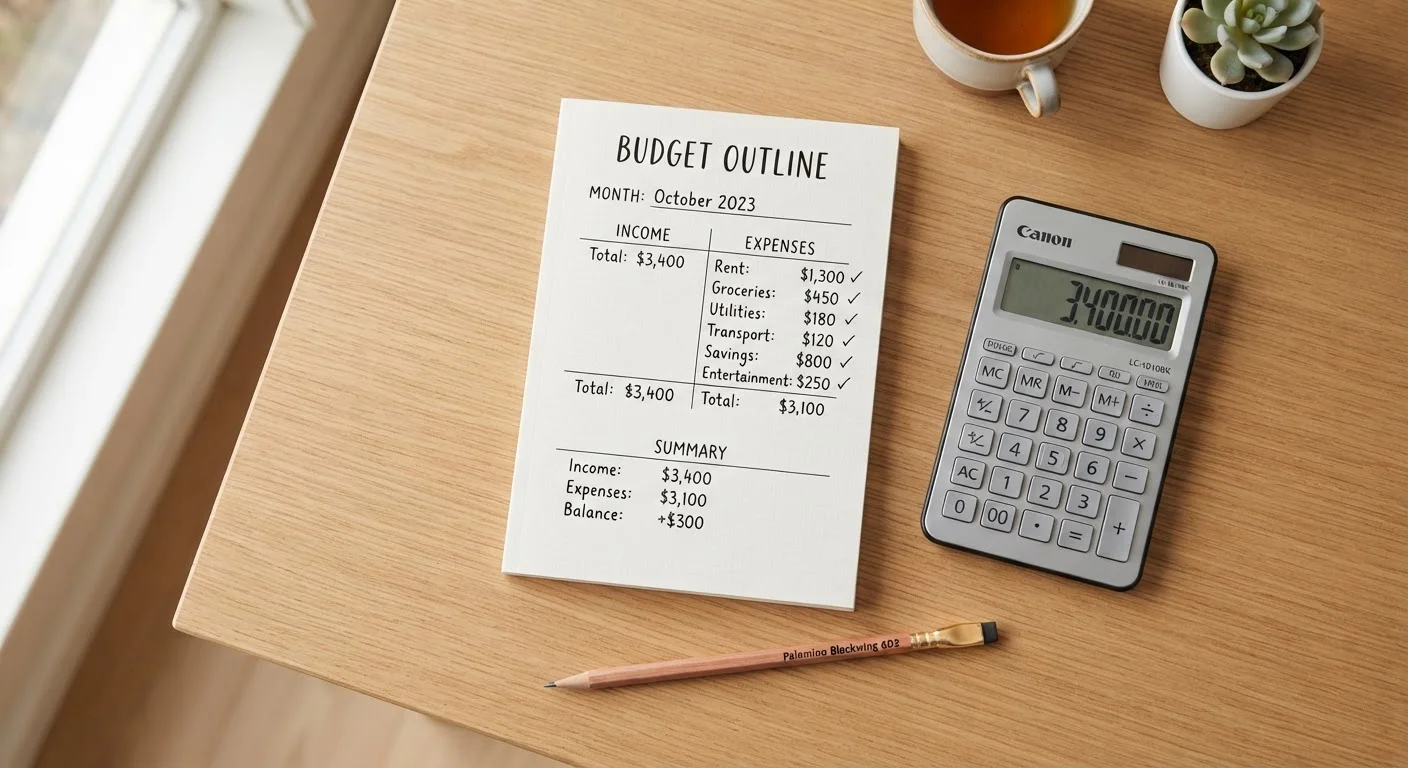
A budget surplus occurs when income exceeds expenses in a given period; a budget deficit is the reverse. Persistent deficits signal that either income needs to rise, spending needs to fall, or both. For a comprehensive look at how these concepts fit together, the complete personal budgeting framework from income to goals is a useful next read.
Finally, an emergency fund is a dedicated cash reserve — typically three to six months of essential living expenses — set aside for unexpected events like job loss or medical bills. It sits outside your regular budget categories and is explored in depth through the Saving & Emergency Funds hub.
This article is for general informational and educational purposes only and does not constitute personalized financial, tax, or legal advice. Consult a qualified financial professional for guidance specific to your circumstances.