
Why Most Budgets Break Down
Most budgets fail not because people lack willpower, but because the budget itself was too brittle. A plan built around a single, idealized month — no car repair, no medical copay, no birthday dinner — will shatter the moment real life arrives. And real life always arrives.
The fix isn't more discipline. It's a better design. A resilient budget treats unpredictability as a given and builds in structural room for the unexpected. See our complete personal budgeting framework if you want a full end-to-end foundation before diving into these practices.
Giving Every Dollar a Job — Including Slack
Zero-based budgeting — where every dollar of income is assigned a purpose — is one of the most effective frameworks available. The key insight most people miss: one of those purposes should be a buffer category. Label it "miscellaneous," "flex fund," or whatever feels natural, and fund it every month even when nothing unplanned has happened yet.
A starting target of 3–5% of your take-home pay in this buffer can absorb the friction of daily life without forcing you to raid savings or carry a credit card balance. If the buffer goes untouched in a given month, roll it forward or redirect it to your emergency fund.
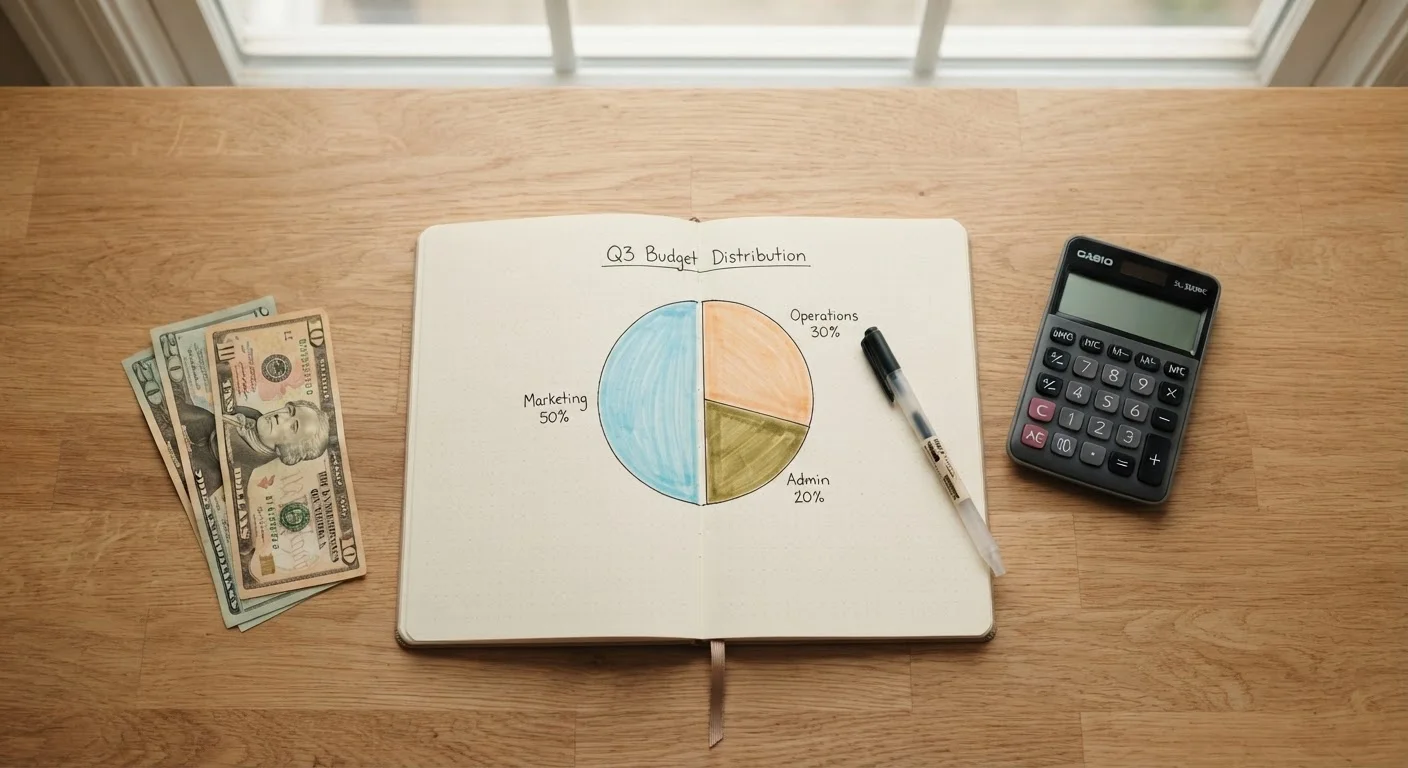
Frameworks like the 50/30/20 rule — which divides income into needs (50%), wants (30%), and savings or debt repayment (20%) — provide a simple starting structure. That said, the right split depends on your income, cost of living, and goals. Our 50/30/20 explainer walks through how to assess whether those ratios fit your situation.
Separating Fixed and Variable Expenses
Not all expenses behave the same way, and treating them identically is a common budgeting mistake. Fixed expenses — rent, loan payments, insurance premiums — stay constant each month and form the non-negotiable floor of your budget. Variable expenses — groceries, dining, gas, entertainment — fluctuate and give you actual room to maneuver when money is tight.
Map these two categories clearly so you know, at a glance, how much of your income is truly committed versus how much is adjustable. When an unexpected expense hits, you immediately know which line items have flexibility and which don't. This is the lever that prevents a budget from collapsing entirely under pressure.
For households where two incomes are involved, clearly labeling shared fixed commitments versus individual discretionary spending adds another layer of clarity. The household budgeting guide covers how couples can align on these distinctions.
Planning for the Expenses You Know Are Coming
One of the most powerful — and underused — budgeting tools is the sinking fund: a dedicated savings bucket for a specific, predictable future expense. Car registration, holiday gifts, annual subscriptions, and home maintenance don't appear out of nowhere. They're entirely foreseeable. Yet most budgets treat them as emergencies when they arrive.
Divide the total anticipated cost by the number of months until you need it, and set that amount aside automatically each month. When the expense arrives, the money is already there — no stress, no scrambling, no debt. Our sinking funds explainer covers exactly how to set these up alongside an emergency fund.
This approach also works for variable annual expenses. If you typically spend around $600 on holiday gifts, that's $50 a month starting in January — a number that barely registers in a monthly budget but eliminates a December crunch entirely.
This article is for general informational and educational purposes only. It is not personalized financial, tax, or legal advice. For guidance specific to your financial situation, consult a qualified financial adviser or other licensed professional.