
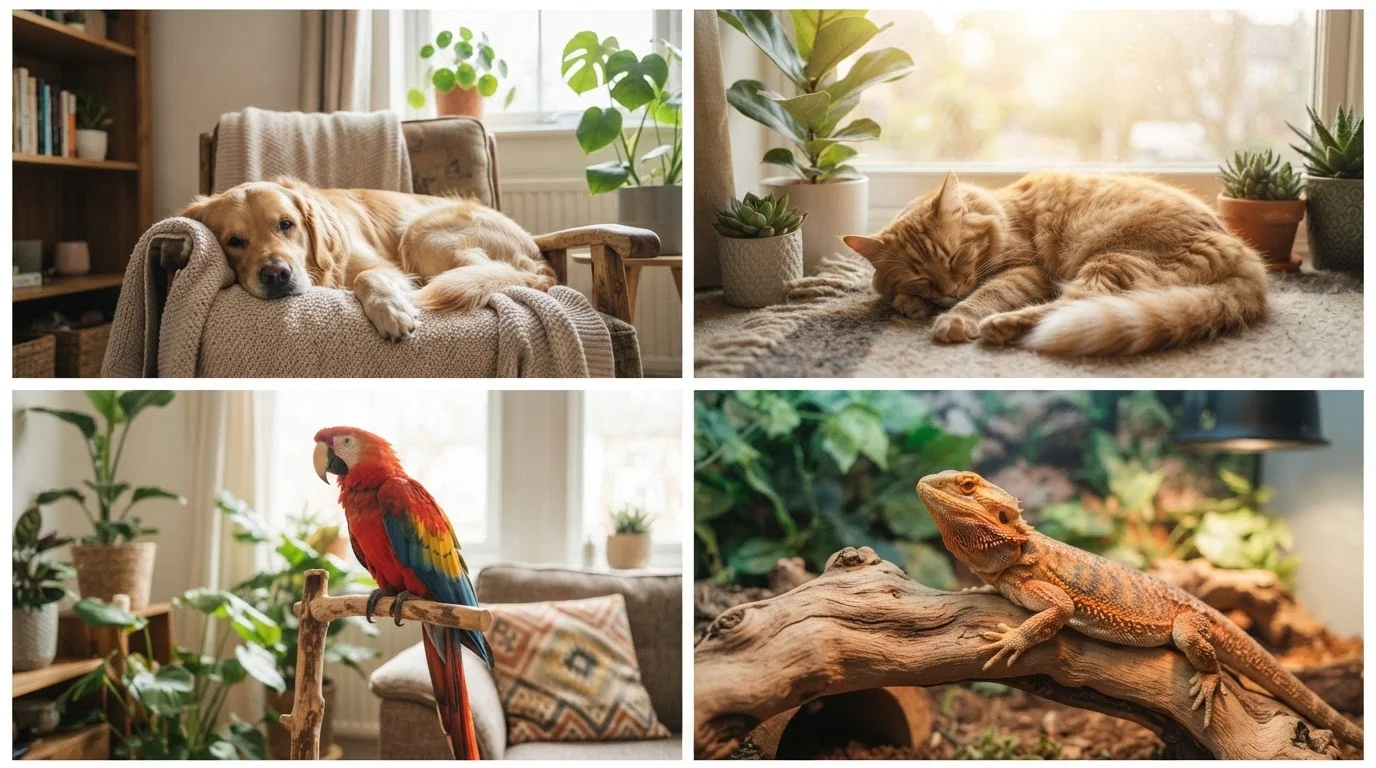
Why Time Is the Most Honest Metric
Most prospective owners think carefully about space and cost when choosing a pet — but daily time investment is arguably the most consequential factor. A pet that fits your budget but not your schedule leads to stress for both you and the animal. Before committing to any species, it helps to look at the realistic daily, weekly, and lifelong demands involved.
See our companion matching guide for a deeper look at how lifestyle shapes the right choice. This reference breaks down time commitments by species so you can compare honestly.
Dogs: The High-Investment Companion
Dogs are highly social animals that require structured daily attention. On average, expect to dedicate 1–3 hours per day to walks, play, training, feeding, and general interaction — and that's a minimum for a healthy, well-adjusted dog. High-energy breeds such as Border Collies, Huskies, and Belgian Malinois can demand significantly more. Even lower-energy breeds need consistent exercise and mental stimulation to prevent destructive behavior.
Beyond daily routines, dogs require regular veterinary check-ups, grooming (frequency varies by coat type), and cannot be left alone for extended stretches — typically no more than 4–6 hours, depending on age and temperament. If your schedule includes long work days or frequent travel, consider how you'll handle midday care. Matching a breed's energy level to your routine is one of the most important pre-adoption steps you can take.
Cats: Independent, But Not Hands-Off
Cats are frequently described as low-maintenance, but that framing undersells their real needs. A typical cat requires roughly 30–60 minutes of active daily engagement — play sessions, grooming checks, litter box cleaning, and feeding. Interactive play is especially important for indoor cats, which lack the environmental enrichment of outdoor roaming.
Long-haired breeds such as Persians and Maine Coons need daily brushing to prevent matting, adding significant time. Cats also benefit from environmental enrichment — climbing structures, window perches, puzzle feeders — that requires periodic setup and rotation. For more on the daily tradeoffs of indoor versus outdoor lifestyles, see our indoor vs. outdoor cat breakdown.
Birds: Social Demands That Surprise Most Owners
Birds, particularly parrots and cockatiels, are among the most time-intensive pets pound for pound. Social species like African Grey parrots or cockatoos can require 2–4 hours of direct interaction daily to remain psychologically healthy. Neglect leads to feather-destructive behaviors, screaming, and long-term behavioral problems that are difficult to reverse.
Even smaller birds like budgerigars need daily out-of-cage time, socialization, and mental stimulation. Cage cleaning, fresh food preparation, and health monitoring add additional time each day. Before adopting a bird, read a full introduction to bird ownership — the lifespan alone (some parrots live 50+ years) reframes the commitment entirely.
Reptiles and Small Mammals: Lower Interaction, Higher Setup
Reptiles such as bearded dragons, leopard geckos, and ball pythons are often chosen for their lower direct-interaction needs — typically 20–45 minutes per day for feeding, spot-cleaning, and handling. However, habitat maintenance is where the time investment accumulates: monitoring temperature gradients, humidity levels, UVB lighting cycles, and performing deep enclosure cleanings weekly or biweekly adds up quickly.
Small mammals like guinea pigs and rabbits sit in the middle ground. Guinea pigs are social and do best with at least an hour of supervised floor time daily, plus daily feeding and cage spot-cleaning. Rabbits, often underestimated, need several hours of exercise space and consistent social interaction. Our guide to small pets with big personalities covers the distinctions in detail.
Whichever species you're considering, building a consistent routine benefits the animal's wellbeing and your own peace of mind. Learn how to establish a healthy daily rhythm that works for both of you.