
Why This Decision Is More Consequential Than It Seems
Choosing whether to keep your cat indoors, outdoors, or somewhere in between is one of the most consequential routine decisions a cat owner makes — yet it rarely gets the careful attention it deserves. The choice directly affects your cat's life expectancy, disease exposure, stress levels, and behavioral health. It also affects local wildlife: domestic cats are recognized as a significant predator of small birds and mammals in the United States.
Understanding the real trade-offs between these lifestyles can help you make a decision grounded in evidence and your cat's individual needs, not just habit or convenience.
The Case for Keeping Cats Indoors
The most compelling argument for indoor living is longevity. According to veterinary research, indoor cats live an average of 12–18 years, while cats with outdoor access typically average 2–5 years — a dramatic gap driven largely by preventable causes.
Significantly longer average lifespan
Indoor cats average 12–18 years compared to 2–5 years for outdoor cats, largely because they avoid traffic, fights, and predators.
Reduced disease and parasite exposure
FeLV, FIV, rabies, and common parasites like fleas and ticks are much less prevalent in cats that never roam freely outdoors.
Lower risk of traumatic injury
Vehicle collisions and animal attacks are among the leading causes of death and injury in outdoor cats — risks that are essentially eliminated indoors.
Safer for local wildlife populations
Keeping cats indoors prevents predation on birds, small mammals, and reptiles, which is a notable conservation benefit in many regions.
Indoor cats are shielded from vehicle traffic, dog attacks, territorial fights with other cats, and exposure to diseases like feline leukemia virus (FeLV) and feline immunodeficiency virus (FIV), which spread through bites and close contact. Parasites such as fleas, ticks, and intestinal worms are also far less common in exclusively indoor cats.
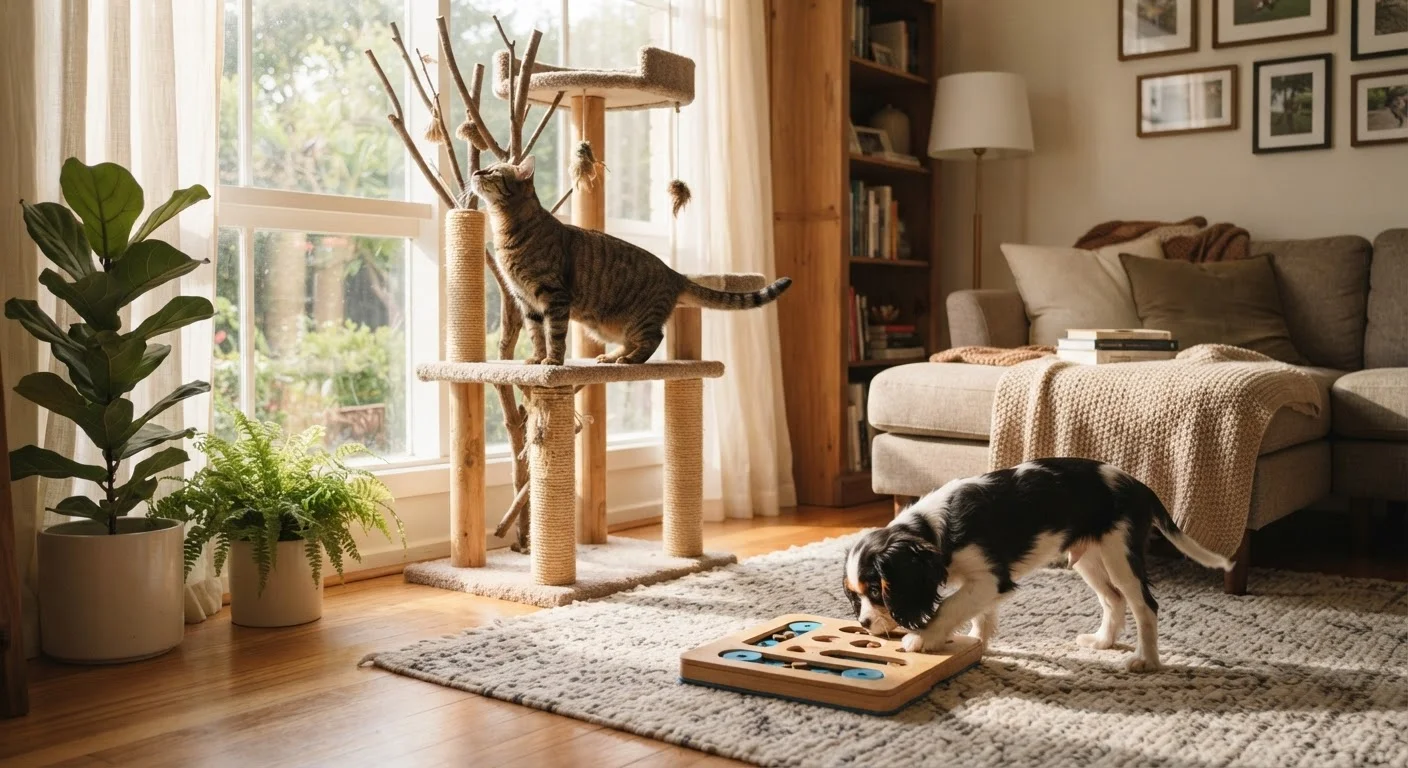
That said, the indoor environment must be actively managed. A cat confined to a small apartment with no stimulation can develop anxiety, destructive behaviors, or obesity. See our guide to environmental enrichment for practical strategies to keep indoor cats mentally engaged and physically active.
The Case for Outdoor Access
Cats are obligate carnivores with strong predatory instincts, and the outdoors provides a richness of sensory input that indoor environments struggle to replicate. Hunting behaviors, climbing, scent-marking, and territory exploration are all natural expressions of feline behavior.
Requires deliberate enrichment to prevent boredom
Without structured play, climbing opportunities, and mental stimulation, indoor cats are prone to anxiety, destructive behavior, and weight gain.
Higher risk of outdoor hazards and disease
Outdoor cats face traffic, predators, territorial injuries, and exposure to contagious diseases through contact with other animals.
Can be stressful for cats with no outdoor experience
Cats accustomed to outdoor access may exhibit chronic stress responses — vocalization, pacing, or aggression — if abruptly confined indoors.
Greater owner responsibility for parasite and disease prevention
Outdoor cats need more frequent veterinary monitoring, flea and tick prevention, and updated vaccinations to manage the broader range of exposures they encounter.
For cats raised outdoors from kittenhood, full confinement can sometimes cause chronic stress, especially in adults with established roaming habits. Outdoor cats also tend to maintain a healthier weight through natural activity — though this benefit can be replicated indoors with interactive play and puzzle feeders.
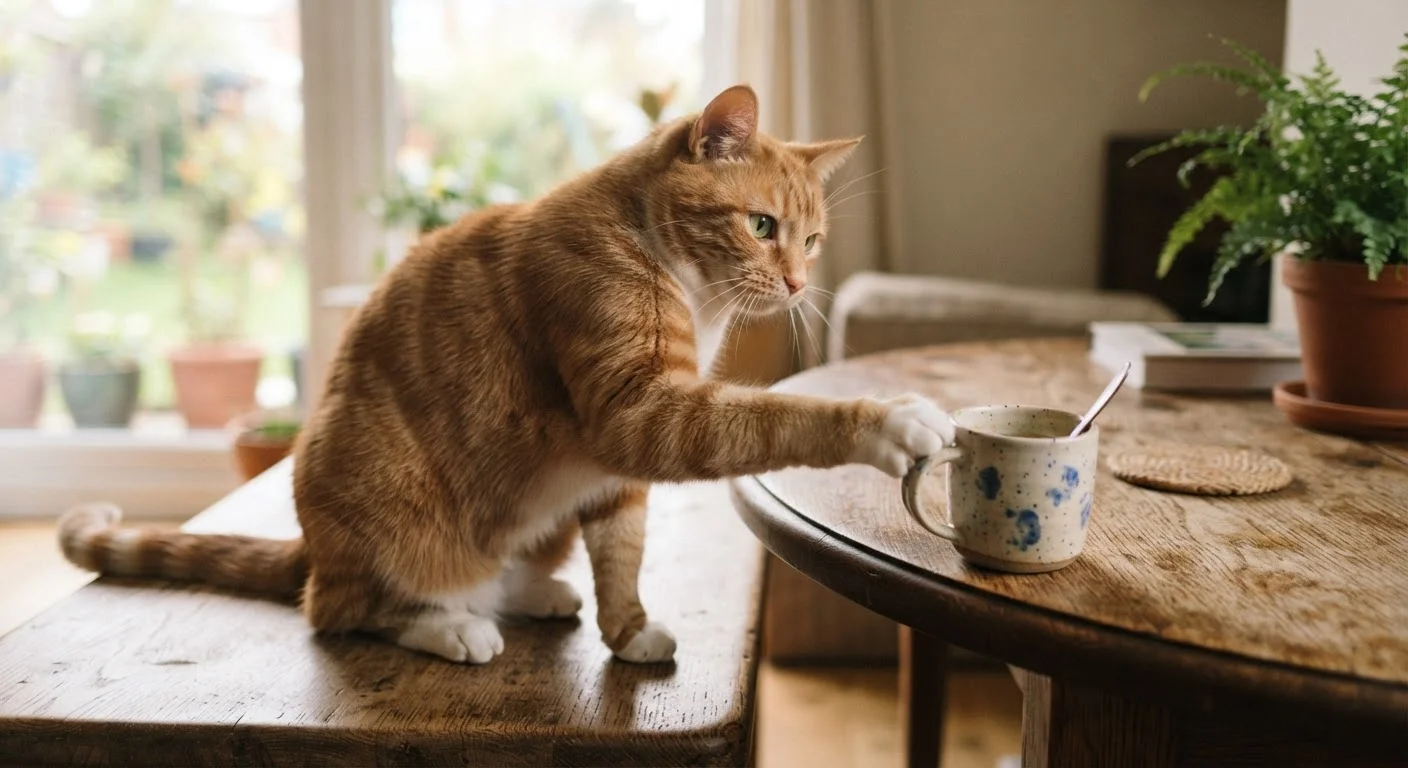
Understanding instinct-driven cat behaviors can help owners appreciate why some cats show strong environmental curiosity — and why enrichment matters regardless of lifestyle.
The Middle Ground: Supervised and Managed Outdoor Access
For many cats and owners, a hybrid approach offers meaningful benefits while reducing the most serious risks. Options include:
- Catios (cat patios): Enclosed outdoor structures that allow fresh air, sunlight, and natural stimulation without free-roaming hazards.
- Leash and harness walking: Best introduced gradually, ideally when a cat is young. Not every cat tolerates a harness, so temperament matters.
- Supervised yard time: Allowing outdoor access only when you can directly monitor your cat limits exposure to traffic, predators, and disease.
Transitioning an Outdoor Cat Indoors
Cats with established outdoor habits can be transitioned to indoor or managed-access living, but the process requires patience. Gradual restriction, increased enrichment, and consistent routine help reduce stress. Some cats adapt quickly; others may take weeks or months. Consulting your veterinarian or a certified animal behaviorist can be helpful if a cat shows persistent signs of distress during the transition.
The diet you choose also intersects with lifestyle: outdoor cats typically burn more calories and may need higher caloric intake, while indoor cats are more prone to weight gain and may benefit from portion-controlled or weight-management formulas.
Factors That Should Guide Your Decision
No single lifestyle suits every cat. Consider these factors when evaluating what works for your situation:
12–18 yrs
Average lifespan of indoor cats
Veterinary sources consistently cite indoor cats outliving outdoor cats by a wide margin due to reduced exposure to hazards.
2–5 yrs
Average lifespan of outdoor cats
The shortened lifespan of free-roaming cats is primarily attributed to traffic, disease, predators, and territorial injury.
1.3–4B
Birds killed by cats annually in the US
A study published in Nature Communications estimated that free-ranging domestic cats kill billions of birds and small mammals each year in the United States.
- Your environment: Urban and suburban cats face far higher traffic and toxin exposure than rural cats. Local predator presence — coyotes, birds of prey — also matters.
- Your cat's history: A cat that has lived outdoors for years may struggle with sudden full confinement. A cat raised indoors from kittenhood usually adapts well without it.
- Health status: Cats with FIV, FeLV, chronic illness, or disabilities are better served by a controlled indoor environment.
- Temperament: Bold, exploratory cats may show signs of frustration indoors without enrichment; timid cats often feel safer inside. See time commitment considerations when evaluating your readiness to meet either lifestyle's demands.
Whatever you decide, regular veterinary check-ups, up-to-date vaccinations, and parasite prevention remain essential for all cats — indoor or out.