It's Not Spite — It's Instinct
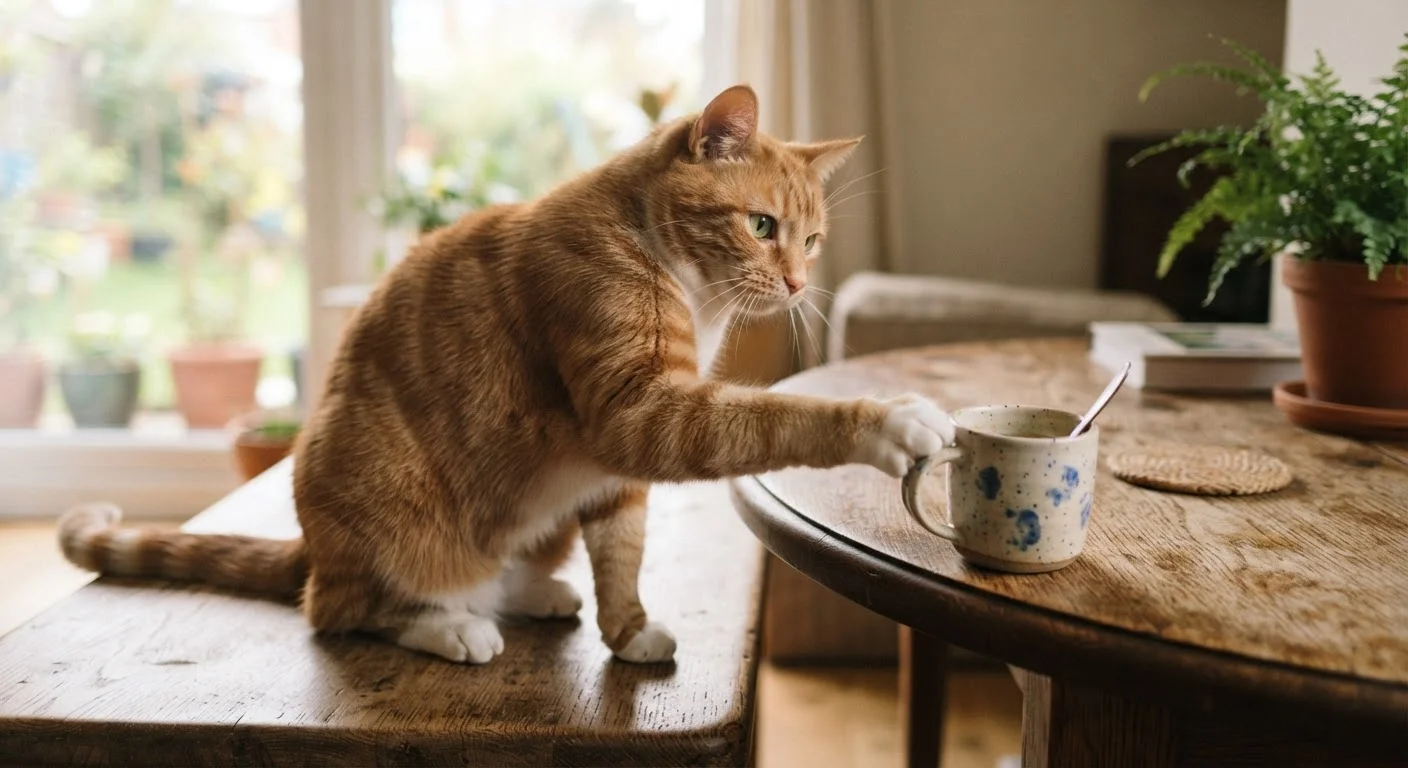
Few feline habits frustrate owners as reliably as watching a cat lock eyes with them and deliberately nudge a glass off the counter. It feels personal. Behaviorists, however, are clear: cats don't do things out of spite. That deliberate-looking shove is the product of millions of years of predatory evolution, not a grudge.
Domestic cats retain the full predatory motor sequence of their wild ancestors — orient, stalk, chase, pounce, grab, bite. When a cat bats at a stationary object, it is essentially running the early stages of that sequence. A pen sitting on a desk or a phone on a nightstand registers in a cat's brain much like a small prey animal might: something to investigate, destabilize, and potentially pursue. The fact that it falls and skitters across the floor is almost a bonus — movement triggers even more instinctive engagement.
Understanding this reframes the behavior entirely. Your cat isn't rebelling. It's being a cat. That distinction matters, because many widely held beliefs about pet behavior don't survive contact with the actual science.
The Role of Paw Sensitivity and Sensory Exploration
A cat's paws are remarkably sophisticated sensory organs. The pads and toe tips are densely packed with mechanoreceptors — nerve endings that detect texture, temperature, and subtle movement. Before a cat commits to biting something unfamiliar (which carries some risk), it will often pat and prod with a paw first. This is exploratory behavior, not destructive intent.
When a cat taps your water glass, it is gathering information: How heavy is it? Does it move? Does it make a sound? Is it alive? This sensory-first approach is the same reason cats knead soft surfaces and bat at dangling toys. The paw is essentially a highly sensitive testing instrument.
Redirect, Don't Punish
Scolding a cat for knocking things over is rarely effective and can erode trust. Instead, redirect the behavior by offering an appropriate outlet — a wand toy, a crinkle ball, or a puzzle feeder — right when you notice the cat getting into an investigative mood. Meeting the instinct rather than fighting it is almost always the more effective strategy.
This sensory curiosity is one of the reasons enrichment matters so much for indoor cats. See how enrichment needs factor into the indoor vs. outdoor cat debate for a broader picture of what cats need to thrive.
Attention-Seeking: When Knocking Becomes a Learned Habit
Predatory instinct explains why cats start knocking things over. Attention from owners often explains why they keep doing it. If a cat swipes something off a table and its owner immediately reacts — even with a frustrated "No!" — the cat has successfully captured attention. From the cat's perspective, that's a win.
Cats are quick learners when it comes to cause and effect. A cat that discovers knocking produces a reliable human response will file that away as a useful strategy, particularly if it happens when the cat is hungry, bored, or wants play. This is not manipulation in any morally loaded sense — it's simple associative learning, the same process that makes cats come running when they hear a can opener.
Paying attention to when your cat knocks things over can reveal what's driving it. If it happens mostly before mealtimes or when you're absorbed in a screen, attention or hunger is likely the motive. If it happens when your cat seems energized and playful, predatory arousal is the better explanation. Reading your cat's body language in those moments adds useful context.
What Owners Can Do About It
Because knocking behavior has multiple drivers, managing it means addressing the most likely root cause for your specific cat.
- Increase interactive play. Two dedicated play sessions per day — using wand toys or puzzle feeders — can substantially reduce the predatory energy that gets redirected toward table clutter.
- Don't reward the behavior with attention. If your cat knocks things over to get a reaction, a calm, non-reactive response (or simply leaving the room) removes the reinforcement.
- Secure valuables. For truly breakable or important items, moving them off accessible surfaces is the simplest solution. Cats will always find something to knock over; reducing the stakes is practical, not defeat.
- Enrich the environment. Cat trees, window perches, and puzzle feeders give cats legitimate outlets for their curiosity. A mentally engaged cat is generally a less disruptive one. The same instincts behind knocking also explain why cats get active at odd hours.
Knocking behavior rarely signals a problem that needs veterinary attention. But if it seems compulsive, is paired with anxiety signals, or represents a sudden change in behavior, a conversation with your vet is a reasonable next step.