
Why These Myths Persist — and What They Cost You
Homebuying myths survive because they spread through trusted channels: family advice, popular media, and well-meaning friends who bought years ago under different market conditions. Acting on outdated or incorrect information can delay a purchase unnecessarily, or worse, send buyers into the process underprepared for real costs and complications.
The myths below are among the most common. Each one has a factual correction grounded in how mortgages, offers, and closings actually work in today's market. If you're weighing the broader rent-versus-buy question first, renting vs. buying — a decision that's never one-size-fits-all offers a fuller framework before you commit to either path.
Myth
You must put 20% down to buy a home.
Fact
Many loan programs allow down payments as low as 3% to 3.5%, and some qualifying buyers pay nothing down.
The 20% figure comes from a legitimate goal — avoiding private mortgage insurance (PMI), a monthly premium added to loans where the buyer's equity is below 20%. But PMI is not a dealbreaker for most borrowers; it's a cost that can be weighed against the benefit of buying sooner. FHA loans allow down payments as low as 3.5% for borrowers with qualifying credit scores. Conventional loans backed by Fannie Mae and Freddie Mac offer 3% down options for eligible buyers. VA loans and USDA loans have zero down payment requirements for qualified veterans and rural borrowers, respectively. See what every first-time buyer should know about down payments for a detailed look at the trade-offs between down payment sizes.
Myth
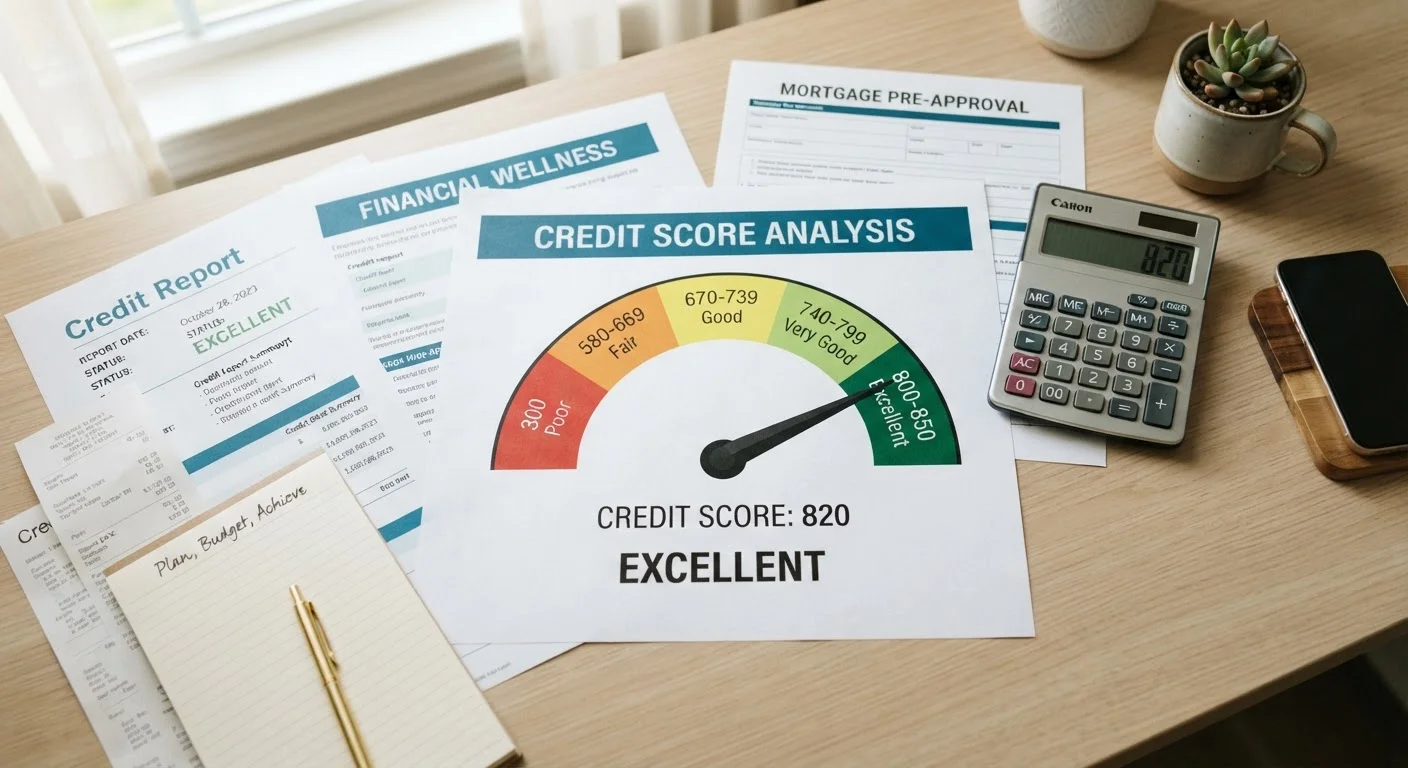
You need an excellent credit score to get a mortgage.
Fact
Conventional loans are accessible to borrowers with scores in the mid-600s, and FHA loans go lower still.
Lenders do use credit scores to assess risk and set interest rates, but the threshold for qualifying is lower than many people assume. FHA loans are available to borrowers with scores as low as 580 with a 3.5% down payment, and in some cases down to 500 with a larger down payment. Conventional loan minimums are generally around 620. A higher score will typically earn a better interest rate, so improving your credit before applying can reduce your long-term costs — but waiting for a perfect score is rarely necessary. For a broader look at how credit works, the common credit score myths article covers frequent misunderstandings worth clearing up.
Myth
Pre-qualification means you're approved for a loan.
Fact
Pre-qualification is an informal estimate; pre-approval involves verified documentation and carries far more weight.
These two terms are often used interchangeably, but they represent very different levels of commitment. A pre-qualification is typically based on self-reported income, assets, and debt — no documents are reviewed, no credit hard-pull is performed. It gives a rough borrowing range but carries little weight with sellers. Pre-approval, by contrast, requires submitting pay stubs, tax returns, bank statements, and authorizing a credit check. A lender reviews the file and issues a conditional commitment to lend up to a stated amount. In competitive markets, sellers may not seriously consider offers from buyers who cannot show a pre-approval letter. Going further, some buyers pursue full underwriting before finding a home — a process sometimes called a credit-approved or verified approval — which reduces the risk of financing issues after an offer is accepted.
Myth
Closing costs are covered in the down payment.
Fact
Closing costs are separate from the down payment and typically add 2%–5% of the loan amount to your upfront expenses.
This misconception catches buyers off guard at the worst possible moment — right before closing. Closing costs include lender origination fees, title insurance, appraisal fees, attorney fees (where applicable), prepaid homeowner's insurance, and escrow deposits for property taxes, among others. On a $350,000 home, that could mean an additional $7,000 to $17,500 due at closing, entirely separate from your down payment. Some of these fees are negotiable, and sellers can sometimes be asked to contribute toward closing costs as part of the purchase agreement. Closing costs explained line by line breaks down each fee so you know what to expect.
Myth
The asking price is what you have to pay.
Fact
List price is an opening position; buyers routinely negotiate price, repairs, closing cost contributions, and contingencies.
Sellers set asking prices with negotiation in mind. In a buyer's market, offers below list price are common and accepted regularly. Even in competitive markets, buyers often negotiate seller concessions — contributions toward closing costs, repairs identified during inspection, or appliances and fixtures included in the sale. Understanding how to make a strong, well-structured offer matters more than paying the sticker price. How the offer process works and buyer negotiating approaches explain how to engage this process with confidence.
Myth
Once your offer is accepted, the home is yours.
Fact
Accepted offers begin a contingency period during which inspections, appraisals, and financing can still derail the deal.
Offer acceptance starts a transaction, not a transfer of ownership. Most purchase contracts include contingencies — conditions that must be met for the sale to proceed. A home inspection may surface significant defects that require negotiation or cause the buyer to walk away. An appraisal below the purchase price can trigger a price renegotiation or leave the buyer responsible for covering the gap. And financing approved in principle can still be denied if the buyer's financial situation changes — taking on new debt, changing jobs, or large bank withdrawals can all raise lender concerns. Understanding what can go wrong helps buyers protect themselves. What can derail a home purchase after offer acceptance covers these risks in detail.
Putting It All Together Before You Start
Correcting these misconceptions doesn't just reduce anxiety — it opens up possibilities. Buyers who assumed they needed 20% down have waited years unnecessarily. Buyers who dismissed their credit profile as disqualifying never pursued pre-approval. And buyers who didn't plan for closing costs scrambled for funds at the last minute.
3%
Minimum down payment on some conventional loans
Fannie Mae and Freddie Mac back conventional loan programs that allow qualified first-time buyers to put as little as 3% down.
2%–5%
Typical closing cost range as share of loan amount
The Consumer Financial Protection Bureau (CFPB) notes closing costs commonly fall between 2% and 5% of the loan amount, separate from the down payment.
620
Common minimum credit score for conventional loans
Most conventional mortgage lenders require a minimum credit score of around 620, though FHA loans can accept scores as low as 580 with a 3.5% down payment.
The homebuying process rewards preparation over assumption. Get pre-approved before you shop, budget for closing costs alongside your down payment, and understand that every stage from offer to closing involves steps where informed decisions matter. For a complete walkthrough of what to expect, the American homebuying process, start to finish is a practical reference from pre-approval through closing day.
This article provides general educational information about the homebuying process and is not a substitute for personalized advice from a licensed real estate professional, mortgage lender, or financial adviser. Loan programs, eligibility requirements, and market conditions vary and may change. Consult qualified professionals before making decisions about your specific situation.