Why This Decision Is More Personal Than Financial
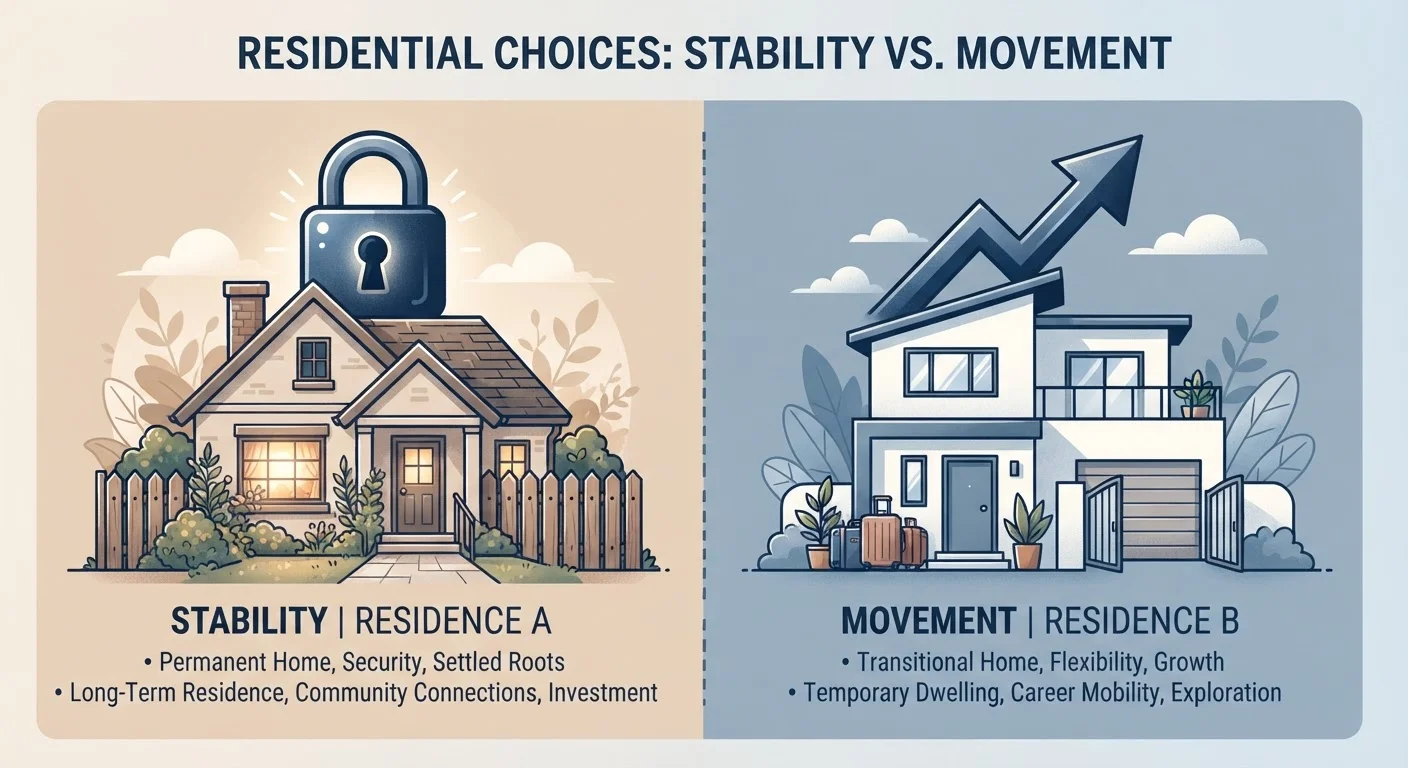
The renting-vs.-buying debate rarely has a clean answer, because the variables that drive the outcome — your income, savings, credit, local market, and life plans — are deeply personal. Yet most of the public conversation flattens it into a simple moral judgment: buying is responsible, renting is wasteful. Neither framing is accurate.
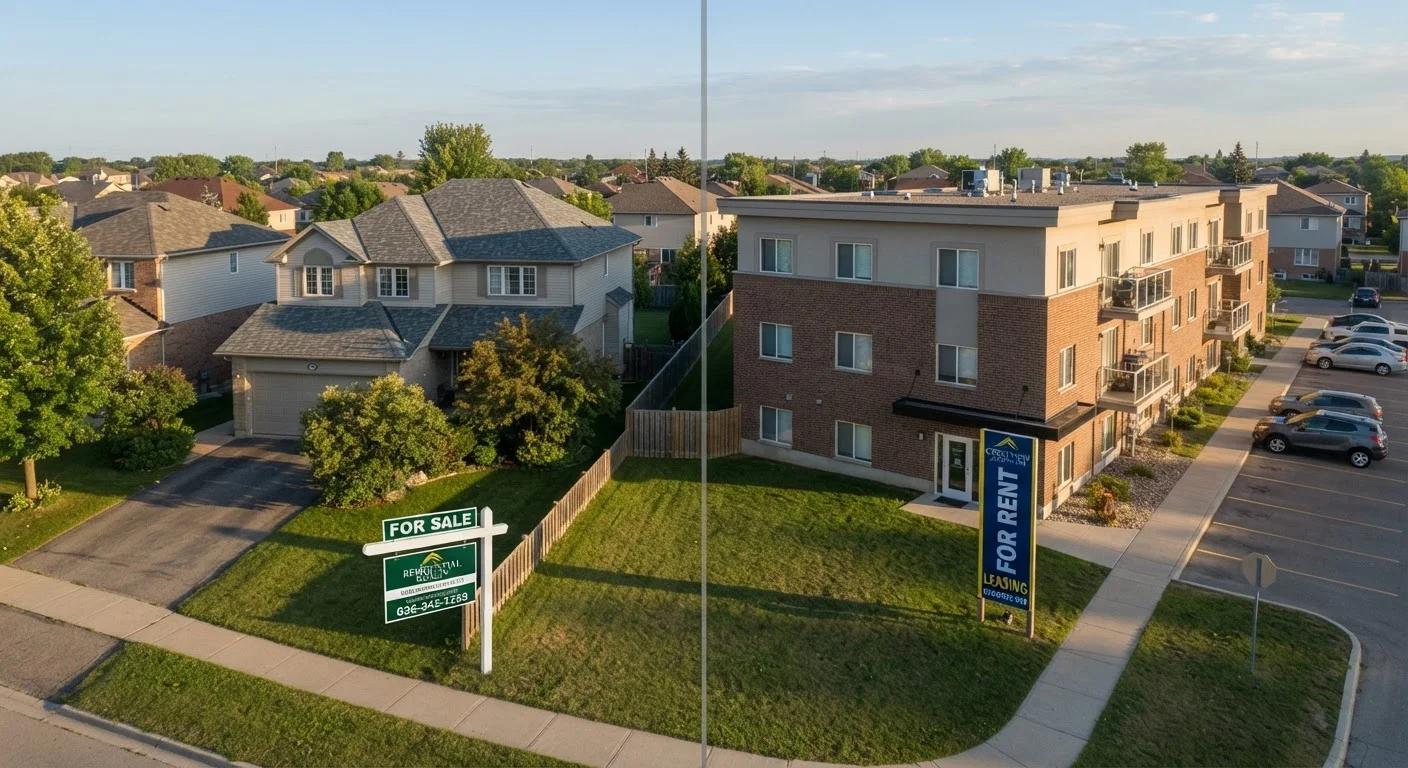
Renting purchases something real: shelter, flexibility, and freedom from the costs of ownership. Buying builds equity and provides stability — but only when the conditions are right. Understanding which conditions apply to your situation is the actual work of this decision.
For a deeper look at how common assumptions distort this choice, see our piece on homebuying myths that catch people off guard. And if renting is the path you're on, our renting and leasing hub covers tenant rights, lease terms, and smart renting decisions across the U.S.
The True Cost of Buying: What Goes Beyond the Mortgage
Buyers consistently underestimate how much homeownership costs beyond the monthly mortgage payment. A realistic accounting includes:
- Down payment: Conventional loans typically require 3–20% down. Down payment requirements and trade-offs vary significantly depending on loan type and lender.
- Closing costs: Typically 2–5% of the purchase price, paid at settlement.
- Property taxes: Vary dramatically by state and county — from under 0.5% to over 2% of assessed value annually.
- Homeowner's insurance: Required by virtually all mortgage lenders.
- Maintenance and repairs: A widely cited rule of thumb is budgeting 1% of the home's value per year, though actual costs depend heavily on the home's age and condition.
- HOA fees: Common in condos and planned communities; can run hundreds of dollars monthly.
The mortgage rate structure you choose also meaningfully affects long-term cost. Fixed-rate vs. adjustable-rate mortgages carry different risk profiles that are worth understanding before you commit.
| Renting | Buying | |
|---|---|---|
| Upfront cost | Security deposit (1–2 months rent) | Down payment + closing costs (5–25% of price) |
| Monthly cost predictability | Fixed for lease term; may rise at renewal | Fixed (if fixed-rate); taxes/insurance can rise |
| Equity building | None | Yes, through mortgage paydown and appreciation |
| Maintenance responsibility | Landlord typically responsible | Owner fully responsible |
| Flexibility to relocate | High — lease end or break clause | Low — selling takes time and incurs costs |
| Exposure to market risk | None | Value can decline as well as rise |
| Tax considerations | No direct deductions | Potential mortgage interest / property tax deductions |
| Customization | Limited by lease terms | Full control as owner |
What the Price-to-Rent Ratio Actually Tells You
One of the most useful — and underused — tools in this decision is the price-to-rent ratio: the median home price in a given area divided by the annual cost of renting a comparable property. A ratio below 15 generally favors buying; above 20 generally favors renting; between 15 and 20 calls for a closer look at your personal finances and timeline.
In many high-cost coastal metros, ratios have historically run well above 25, meaning the math of buying is difficult to justify unless you plan to stay for a decade or more. In more affordable Midwestern and Southern markets, ratios closer to 12 or 14 make buying far easier to defend financially.
This ratio does not replace a full financial analysis, but it tells you immediately whether your local market even makes ownership competitive with renting on pure economics. Use it as a first filter, not a final answer.
The Timeline Question: When Does Buying Actually Pay Off?
Upfront buying costs — down payment, closing costs, and moving expenses — create a financial hole that appreciation and equity accumulation must overcome before buying beats renting. Most analyses suggest that requires a minimum of five to seven years in the home, though the exact break-even point depends on local appreciation rates, your loan terms, and what you would have done with the down payment money otherwise.
If there's a realistic chance you'll relocate within three to four years — for work, family, or personal reasons — the transaction costs of buying and selling are likely to erase any equity gains. In that scenario, renting and maintaining financial flexibility is often the more prudent path. Month-to-month vs. fixed-term leases can offer additional flexibility if your timeline is genuinely uncertain.
Conversely, if you have strong reasons to expect stability — a rooted career, family ties, community belonging — a longer time horizon shifts the financial calculus considerably in favor of buying.
Renting Has Real Financial Advantages Worth Naming
Renting is frequently presented as a temporary or inferior arrangement. In many circumstances it is neither. Renters carry no exposure to property value declines, bear no repair or maintenance costs, and retain the liquidity of a down payment — capital that could be invested or kept accessible for other needs. Renters also aren't responsible for a roof that needs replacement or an HVAC system that fails in August. (For homeowners, those are consequential expenses — see our overview of roof age, condition, and replacement for a sense of the scale.)
The flexibility argument is equally concrete. Renters can relocate for career opportunities with relatively low friction. In a labor market where geographic flexibility often correlates with higher lifetime earnings, this mobility has measurable value that rarely appears in rent-vs.-buy calculators.
If you're exploring renting for the first time, our ground-up guide to finding and signing a lease walks through the full process clearly.
This article provides general financial and real estate education. It is not personalized financial, investment, or legal advice. Consult a qualified financial adviser, mortgage professional, or real estate attorney before making decisions about your own circumstances.