
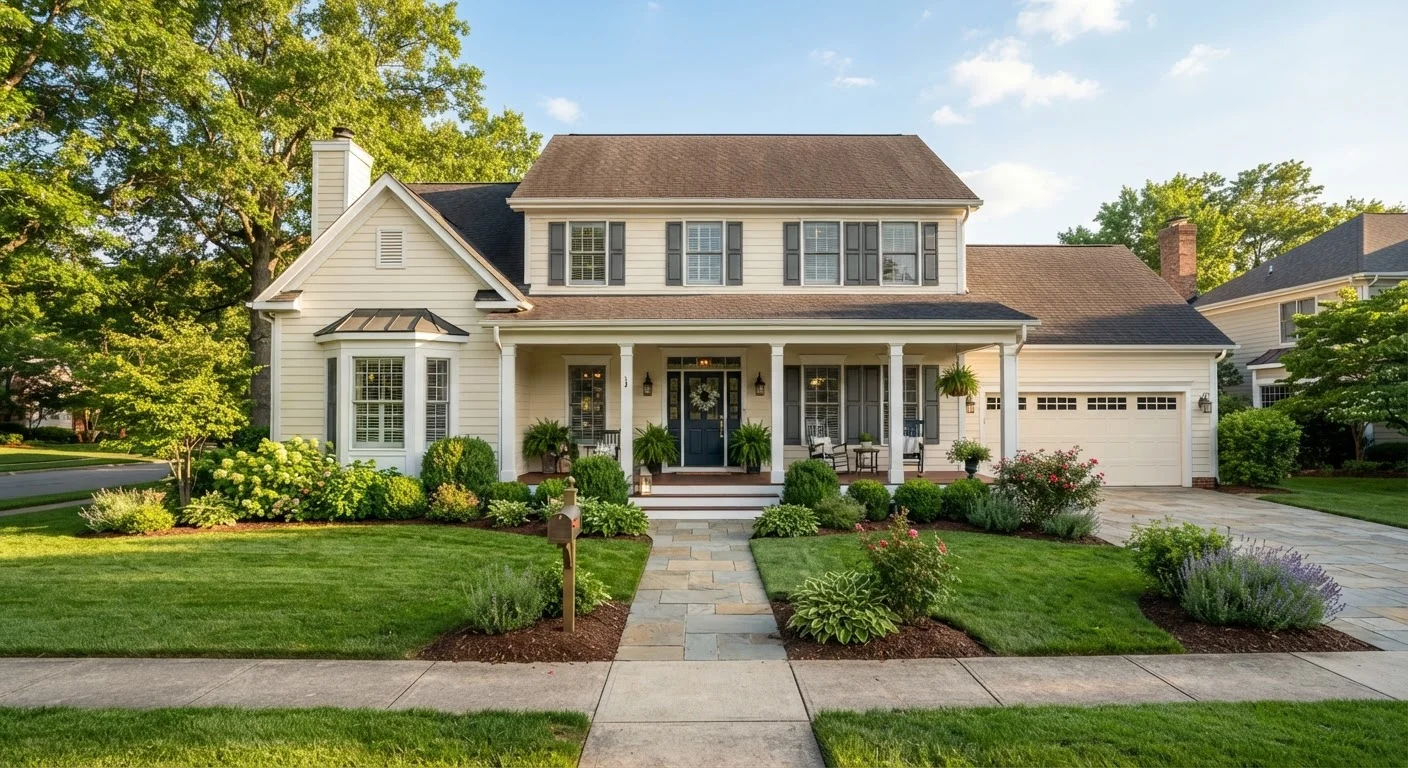
What Buyers and Appraisers Actually See
When industry professionals talk about curb appeal, they are describing something broader than a tidy garden. The exterior of a home functions as a proxy for the entire property's maintenance history. A buyer approaching the front door is subconsciously — and sometimes consciously — cataloging the roof condition, the state of the gutters, whether the siding is intact, how the driveway holds up, and whether the foundation grade looks correct. An appraiser conducts that same exterior review with formal criteria attached.
This is why the smartest curb appeal investments fix things before decorating them. Replacing a cracked section of walkway or resealing deteriorating gutters does more for perceived and appraised value than any amount of seasonal planting.
Myth
Curb appeal is mostly about flowers, fresh mulch, and decorative touches that make a home look pretty.
Fact
Curb appeal encompasses the full exterior condition of a home, including structural elements like the roof, siding, gutters, and foundation — not just decorative plantings.
The term 'curb appeal' gets conflated with purely aesthetic choices, but professional appraisers and seasoned buyers scan a home's exterior with a structural lens first. A well-mulched garden bed won't offset the signal sent by a visibly sagging roofline or water-stained siding. The exterior is the first indicator of how well a home has been maintained overall — and that maintenance record carries real weight in an appraisal and in buyer negotiations.
Myth
Spending heavily on landscaping will reliably boost your home's sale price.
Fact
Landscaping improvements generally deliver modest and variable returns; consistent lawn care and basic tidiness outperform expensive installations in cost-recouped ratios.
Industry cost-vs.-value analyses have repeatedly found that upscale landscape projects — pergolas, elaborate planting schemes, custom outdoor kitchens — recoup a fraction of their cost at sale. What does move the needle is basic presentation: a mowed, edged lawn; trimmed hedges; clean walkways; and removal of dead vegetation. These low-cost steps signal attentiveness without creating a high-maintenance impression for the buyer.
[warning_callout]Myth
Curb appeal only matters when buyers pull up to the property in person.
Fact
Online listing photographs now form the dominant first impression, meaning curb appeal must photograph well — not just look appealing in person.
A substantial majority of home searches begin online before any in-person visit occurs. This means the exterior photo — typically shot wide to show the full facade — has to work hard. Harsh shadows, overgrown shrubs crowding the front, or a driveway dominated by cracks and oil stains can filter a home out of consideration before a buyer ever schedules a tour. Smart sellers think about how the exterior reads in a photograph, including the time of day the listing photo is taken.
For buyers, this also matters: if you're preparing to shop for homes, understanding what exterior photos can and can't reveal helps you make sharper decisions about which listings warrant a visit.
Myth
A freshly painted front door and new house numbers are enough to meaningfully raise appraised value.
Fact
Minor cosmetic touch-ups improve presentation and buyer psychology but do not independently raise an appraiser's opinion of value in any measurable way.
Appraisers rely on a structured methodology — primarily comparable sales, gross living area, condition ratings, and neighborhood factors — rather than subjective aesthetic reactions. A fresh coat of paint on the door is unlikely to shift a formal appraisal. Where these small upgrades matter is in buyer psychology: a well-presented entry can help buyers walk through the front door feeling positively disposed, which may support a stronger offer. That's a real but indirect effect, not a direct appraisal driver.
This distinction is worth keeping in mind if you've read about common homebuying myths — market perceptions and appraisal methodology don't always move in lockstep.
Myth
Curb appeal improvements can mask serious exterior problems and help a home sell at full price regardless.
Fact
Inspectors and observant buyers will typically identify underlying exterior defects even when cosmetic improvements are present — and discovery during due diligence can derail a sale.
A coat of exterior paint can make a home photograph beautifully while concealing wood rot underneath. But a home inspection — standard practice in most transactions — includes a visual assessment of siding, trim, the roof surface, drainage, and structural elements. Defects uncovered at that stage can trigger renegotiation, credits, or outright deal termination. For a closer look at what can go wrong after an offer is accepted, see our coverage of issues that derail home purchases. Sellers are better served by addressing real problems than by layering cosmetic improvements over them.
The Limitations of Pure Aesthetics
Real estate marketing has long amplified the idea that visual charm sells homes at premium prices — and there is some truth to it. Presentation matters. But the causal chain is less direct than the myth suggests. Cosmetic improvements support buyer enthusiasm; they do not independently drive appraisal outcomes. And enthusiasm that turns to skepticism during an inspection can collapse an offer just as quickly as it formed.
Homeowners planning to sell should allocate their exterior improvement budget in order of condition first, presentation second. Address deferred maintenance — roof, siding, drainage, paint integrity — before spending on decorative landscaping or entry-door hardware. That sequencing consistently produces better outcomes than the reverse.
Maintenance Beats Cosmetics Every Time
Appraisers and experienced buyers look past fresh mulch and potted plants to assess the underlying condition of a home's exterior. Peeling paint, cracked driveways, and worn roofing are red flags that signal deferred maintenance — and they can influence both appraised value and buyer offers. Prioritize repairs before investing in purely decorative upgrades.
This article provides general real estate information for educational purposes and is not a substitute for advice from a licensed real estate professional, appraiser, or contractor familiar with your specific property and local market conditions.