Why Hotel Packing Is Its Own Skill
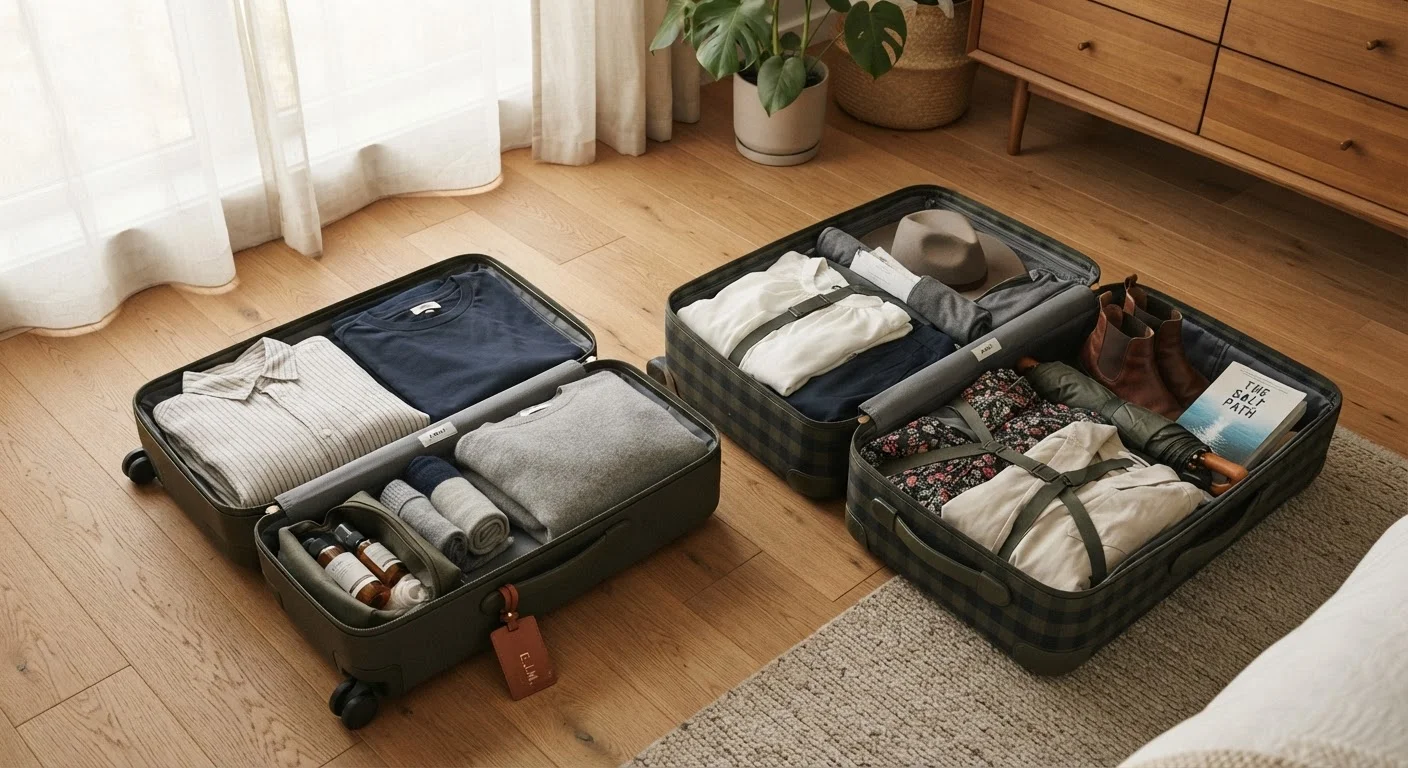
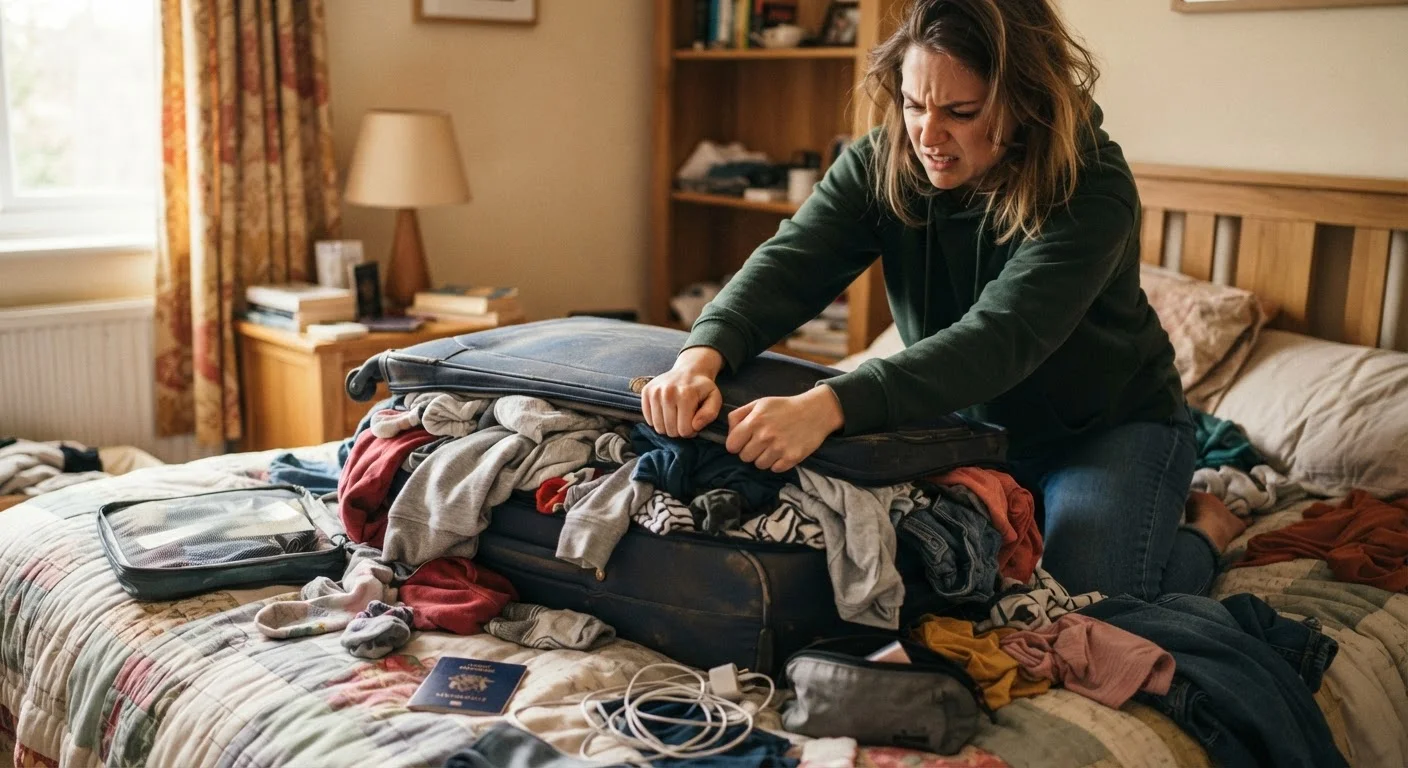
Packing for a hotel stay is a fundamentally different exercise than packing for camping or an Airbnb. Hotels — from budget motels to full-service properties — cover a predictable baseline: bed linens, towels, soap, shampoo, and often a hair dryer. The mistake most travelers make is either duplicating what the hotel already provides, or assuming the hotel covers everything they actually need.
The result is bags stuffed with full-size shampoo bottles and forgotten essentials like a universal outlet adapter. Getting this balance right means you travel lighter, clear security faster, and arrive with exactly what you need. For a broader look at how bag choice shapes your whole trip, see our guide on carry-on vs. checked bag packing strategies.
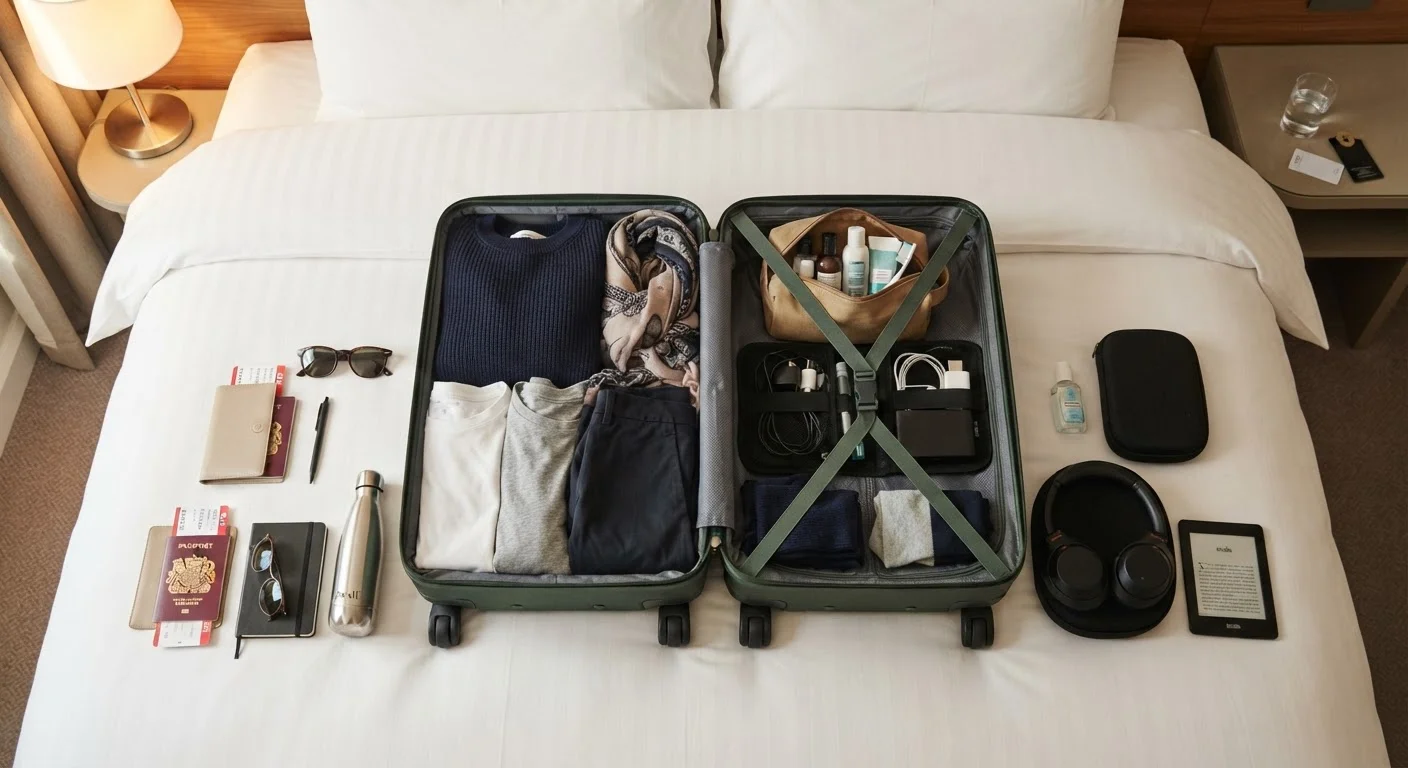
Below are the items seasoned hotel travelers consistently bring — and the ones they confidently leave at home.
A compact power strip or multi-outlet adapter
Hotel rooms are notoriously short on outlets, and the ones available are often awkwardly placed — behind the nightstand, near the floor, or in the bathroom. A compact power strip with surge protection lets you charge your phone, laptop, and earbuds simultaneously from a single wall socket without competing for space.
Look for a flat-plug design that fits neatly into a bag pocket. Note that some hotels prohibit power strips with surge protectors due to fire codes — a quick check of the property's policies or a call ahead resolves this. A multi-USB wall charger is a low-profile alternative if a strip feels like overkill.
Hotel outlets are scarce and badly placed — a compact power strip solves both problems at once.
Earplugs and a sleep mask
Corridor noise, HVAC hum, neighboring room sounds, and early-morning light gaps around blackout curtains are among the most common sleep disruptors in hotel stays. Foam earplugs weigh almost nothing and cost very little. A contoured sleep mask blocks uneven curtain coverage without pressing on your eyes.
These two items combined do more for sleep quality in unfamiliar rooms than almost anything else you can pack. They're especially valuable for travelers sharing rooms, staying in urban properties, or crossing time zones.
Earplugs and a sleep mask are the lowest-weight, highest-impact items for better hotel sleep.
A reusable tote or day bag
Once you've checked in and dropped your luggage, you'll need something to carry a water bottle, sunscreen, your wallet, and a light layer as you head out. A foldable tote or packable daypack takes up almost no space in your main bag and eliminates the need to carry — or pay for — a plastic shopping bag when you pick up groceries or souvenirs.
For travelers with creative pursuits on the road, a tote doubles as a carry-all for sketchbooks or supplies — something explored in depth in our piece on creative hobbies that travel well.
A foldable tote weighs almost nothing and earns its space on every single trip.
Your own toiletry kit — scaled to the stay
Hotels provide soap, shampoo, and conditioner, but quality varies significantly. If you have a skin condition, color-treated hair, or strong product preferences, bringing your own in TSA-compliant travel bottles makes sense. For a two-night stay at a mid-range property, hotel-supplied toiletries are usually perfectly adequate.
What hotels rarely provide well: a nail file, razor, dental floss, and any prescription skincare. Pack those regardless of property tier. Skip the full-size everything — a 3-oz bottle of face wash handles a week-long trip without issue.
Scale your toiletry kit to the stay length and trust the hotel basics for short trips.
A door stopper or personal security device
This is a practical safety measure many experienced travelers keep in rotation, particularly for solo travelers or stays at properties where room security feels less certain. A rubber door wedge placed from the inside adds an additional physical barrier that doesn't depend on the hotel's lock quality.
This isn't about fear — it's about sleeping more soundly knowing you've added a layer of control. It's compact, inexpensive, and doubles as peace of mind in unfamiliar environments. Always verify that any security measures comply with local laws and hotel policies.
A rubber door wedge costs almost nothing and adds a meaningful layer of personal security.
What to confidently leave at home
Understanding what not to pack is just as important as the bring list. Hotels reliably provide:
- Bath towels and washcloths — even budget properties include these
- A hair dryer — call ahead if you have doubts; most U.S. hotels include one
- An iron and ironing board — standard at virtually all full-service hotels
- Basic coffee setup — in-room coffee makers are nearly universal in the U.S.
Leave behind full-size shampoo, conditioner, and body wash unless you have specific needs. Skip the travel umbrella if the hotel has loaners (many do). And resist the urge to bring a full entertainment setup — most hotels offer smart TVs or HDMI inputs. For a full framework on avoiding overloaded bags, see our budget traveler's pre-trip checklist.
Hotels handle towels, hair dryers, and irons reliably — stop packing what's already waiting for you.
Pack Smarter on Every Future Stay
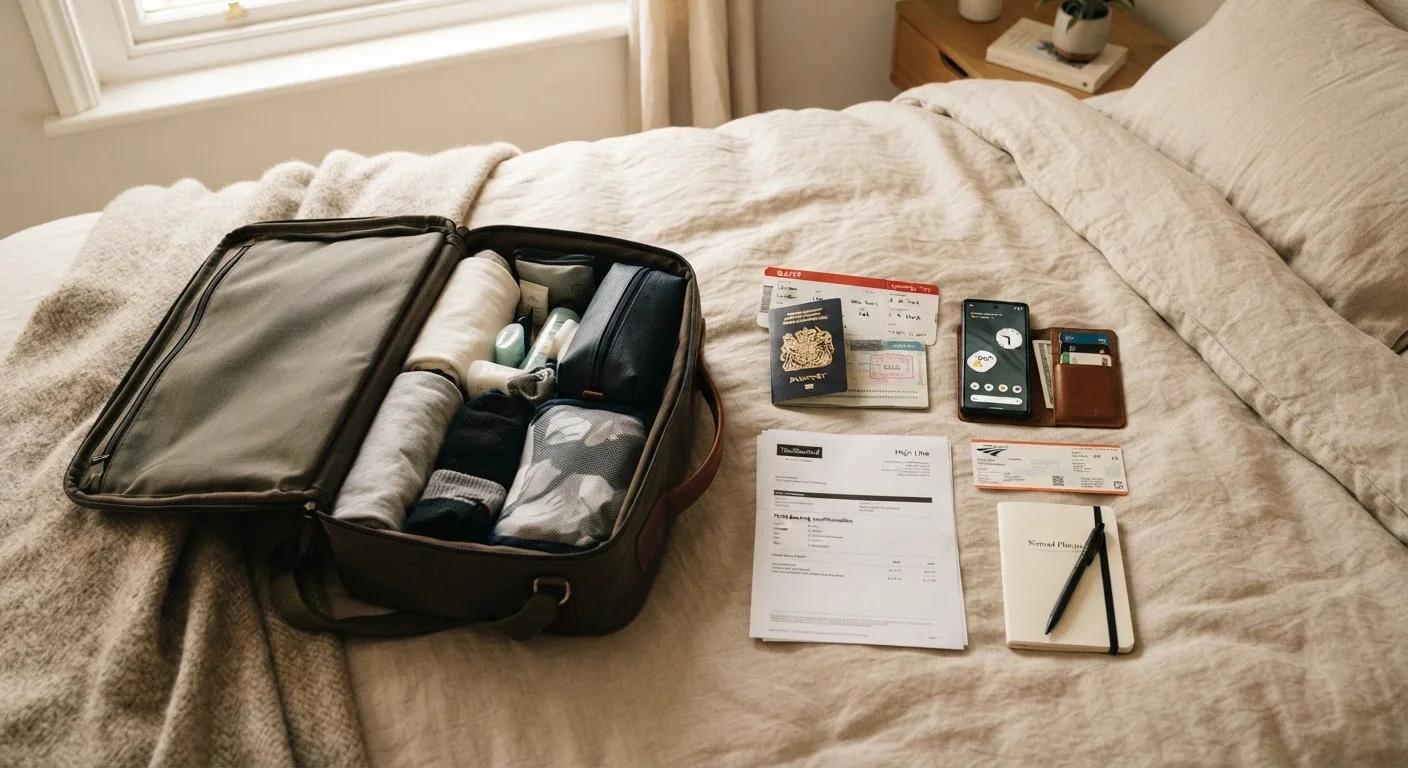
The goal isn't a minimalist challenge — it's intentional packing. A short pre-trip habit of checking the property's amenity list (usually on its website or booking page) takes two minutes and can save you hauling items you'll never touch. Higher-tier hotels tend to stock more; budget properties often skip the extras.
Check the amenity list before you pack
Most hotel booking pages and property websites list room amenities in detail. Spending two minutes reviewing that list before you pack can save you from hauling duplicate items — or arriving without something critical. If the listing is vague, a quick call to the front desk gives you a definitive answer.
For a complete pre-departure routine that covers documents, reservations, and health prep alongside packing, walk through our pre-trip checklist before every trip. And if overpacking is a recurring pattern, understand the real costs of excess luggage — they go well beyond baggage fees.