Why Tracking Beats Estimating
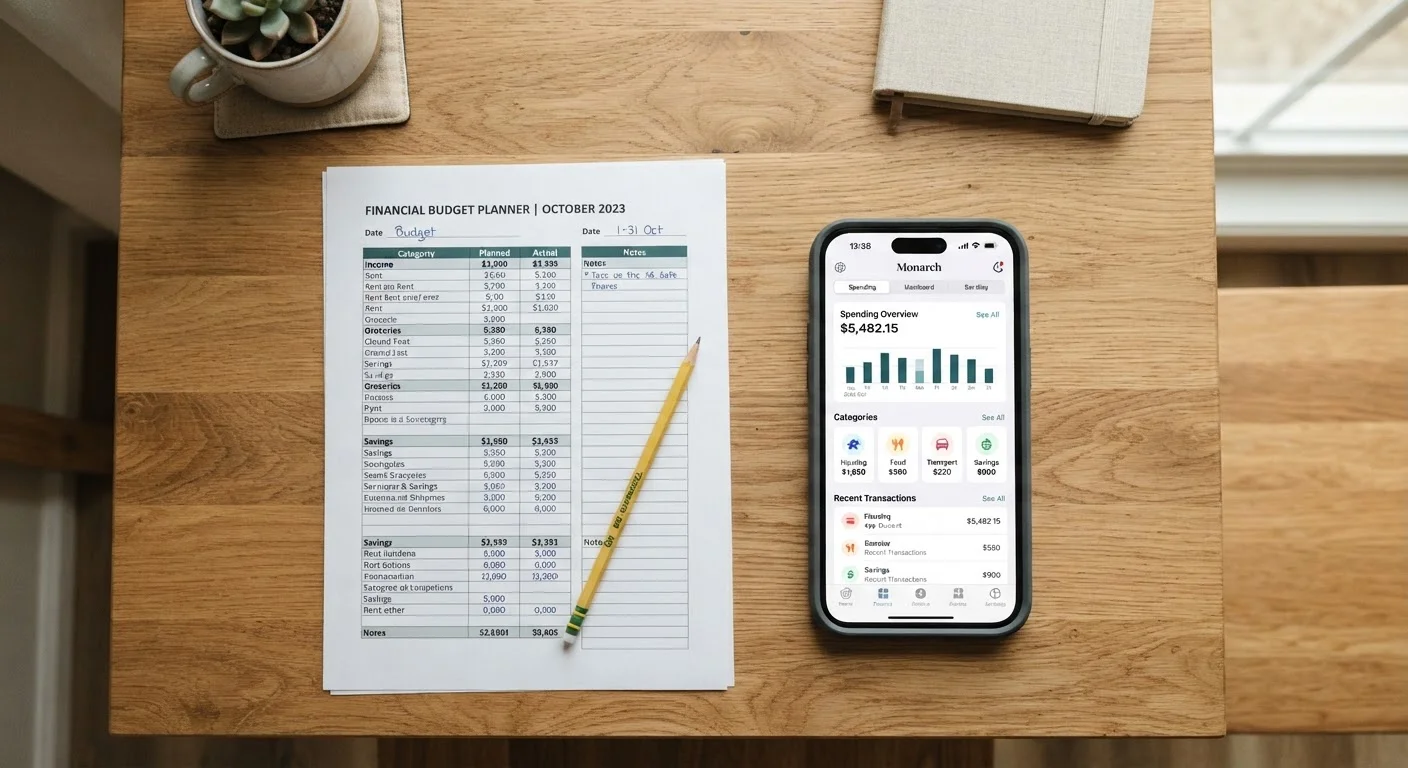
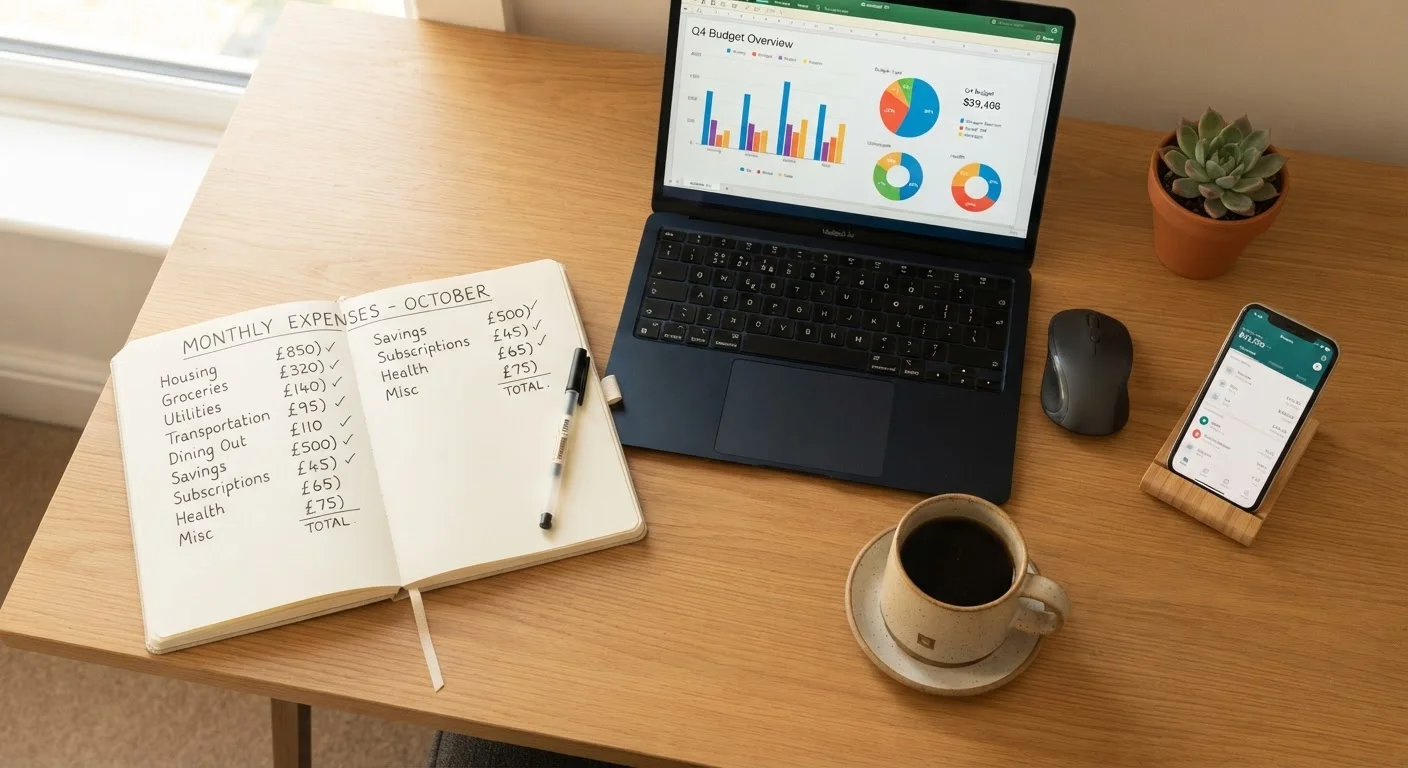
Most Americans significantly underestimate how much they spend each month. A casual mental tally of groceries and rent rarely captures the subscriptions, impulse buys, and small daily purchases that quietly drain a checking account. Tracking — actually recording what you spend — replaces guesswork with data you can act on.
This isn't about judgment or restriction. It's about awareness. Once you know where your money goes, you're in a position to decide whether that reflects your actual priorities. That awareness is the first step toward building stronger savings habits, as explored in the Saving & Emergency Funds hub.
The method you choose should fit your lifestyle, not the other way around. Below, we compare four approaches that real people use successfully.
Four Tracking Methods Compared
Each method below suits a different kind of spender. Consider your daily habits, comfort with technology, and how much time you're willing to invest weekly before choosing.
| Spreadsheet | Budgeting App | Envelope Method | Zero-Based Budget | |
|---|---|---|---|---|
| Setup effort | Medium — build your own template | Low — account linking required | Low — label envelopes and fill | Medium — allocate all income upfront |
| Ongoing time commitment | Weekly manual entry needed | Minimal if reviewed regularly | Refill envelopes each month | Monthly plan, weekly check-ins |
| Works best for | Data-oriented, detail-focused users | Busy people wanting automation | Cash spenders, visual learners | Goal-driven, disciplined planners |
| Customization | Fully customizable | Limited to app categories | Category names only | Fully customizable allocations |
| Privacy consideration | Data stays local | Third-party account access | No digital data shared | No digital data required |
| Biggest risk | Abandoning manual entry | Passive, not reviewing alerts | Running out of cash early | Rigid plan may frustrate beginners |
For a deeper look at the tradeoffs between hands-on and automated approaches, see our guide to manual vs. automated budget tracking.
Spreadsheets: Flexible but Hands-On
A well-built spreadsheet gives you complete control over categories, formulas, and layout. You decide what to track, how to group it, and what calculations matter most — such as your savings rate versus a fixed savings amount.
The downside is manual data entry. You need to log transactions yourself — daily, or at least weekly — or the spreadsheet becomes outdated and useless. This method rewards disciplined, detail-oriented people and those who enjoy seeing a system they built themselves.
Best practice: Set a recurring 10-minute weekly appointment to reconcile your entries. Consistency, not precision, is what makes spreadsheets work long-term.
Budgeting Apps: Automation With Trade-Offs
Apps that connect to your bank accounts and credit cards can categorize transactions automatically, giving you a near-real-time picture of spending with minimal effort. This low friction is their biggest strength — and their biggest risk.
When data flows in automatically, it's easy to stop engaging with it. Reviewing your app once a month instead of weekly means you'll spot a problem only after it's repeated several times. Automation works best when paired with a weekly check-in habit.
Privacy is also worth considering. Linking financial accounts to a third-party app means sharing sensitive credentials or read-only access tokens. Evaluate any app's data practices and security disclosures before connecting accounts.
Envelope and Zero-Based Methods: Structure First
The envelope method allocates physical cash into labeled envelopes for each spending category — groceries, dining out, entertainment. When the envelope is empty, spending in that category stops for the month. It's tactile, immediate, and remarkably effective for people who struggle with card-based overspending.
A digital version of this concept exists in several apps, but the psychological impact of handing over physical cash differs meaningfully from tapping a card.
Zero-based budgeting takes a different approach: you assign every dollar of income a specific job — expenses, savings, debt repayment — until your budget reaches zero. No unallocated money means no mystery spending. It requires upfront effort at the start of each month but produces a highly intentional financial plan.
Both methods pair naturally with the frameworks in our guide to building a budget that survives real life, particularly for households managing irregular expenses.
This article provides general financial education and is not personalized financial advice. For guidance tailored to your specific situation, consult a qualified financial professional.