What Each Approach Actually Involves
Budget tracking boils down to one core task: knowing where your money goes. The method you use to accomplish that shapes everything — how much effort it takes, how accurate it is, and whether you'll actually stick with it.
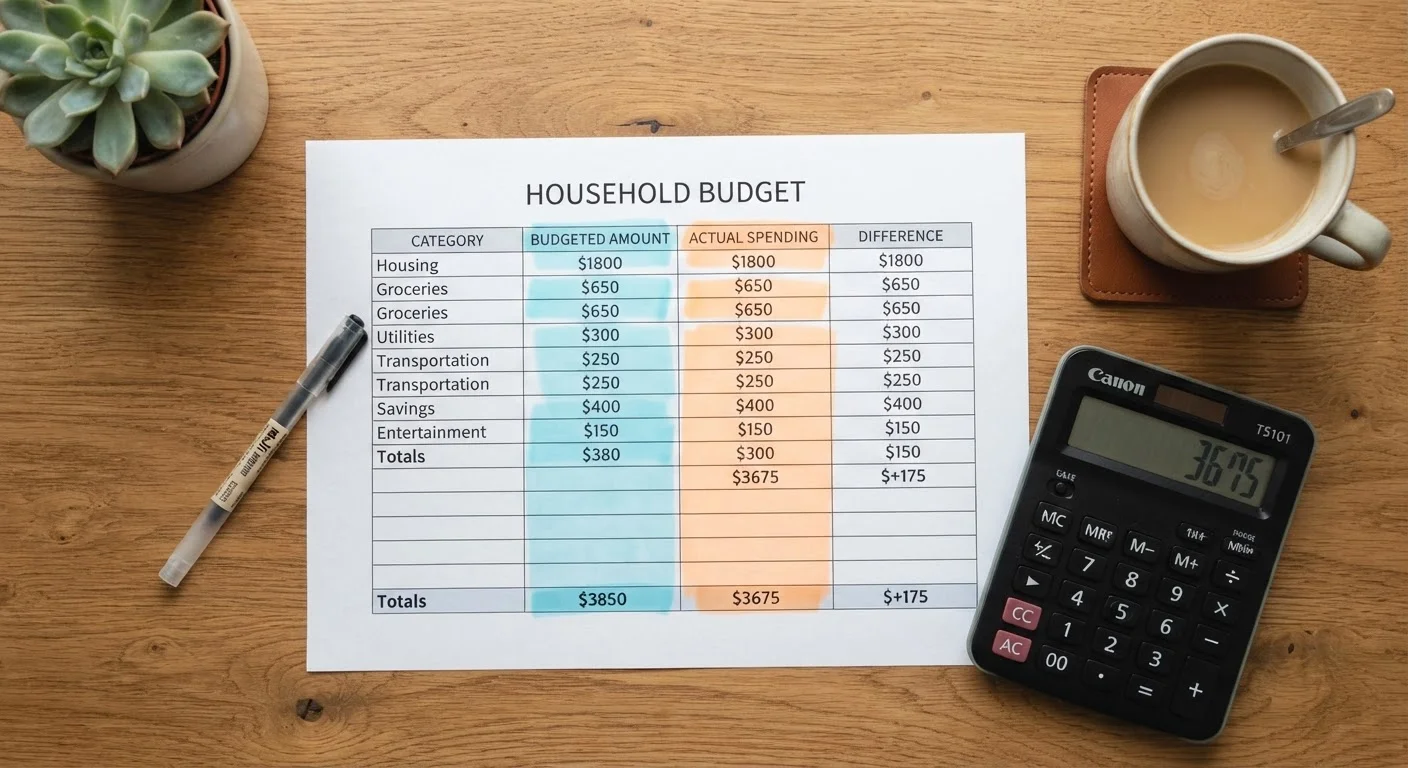
Manual tracking means recording income and expenses yourself, typically in a spreadsheet, notebook, or printed template. You log each transaction by hand, categorize it, and review your totals regularly. It's deliberate by design.
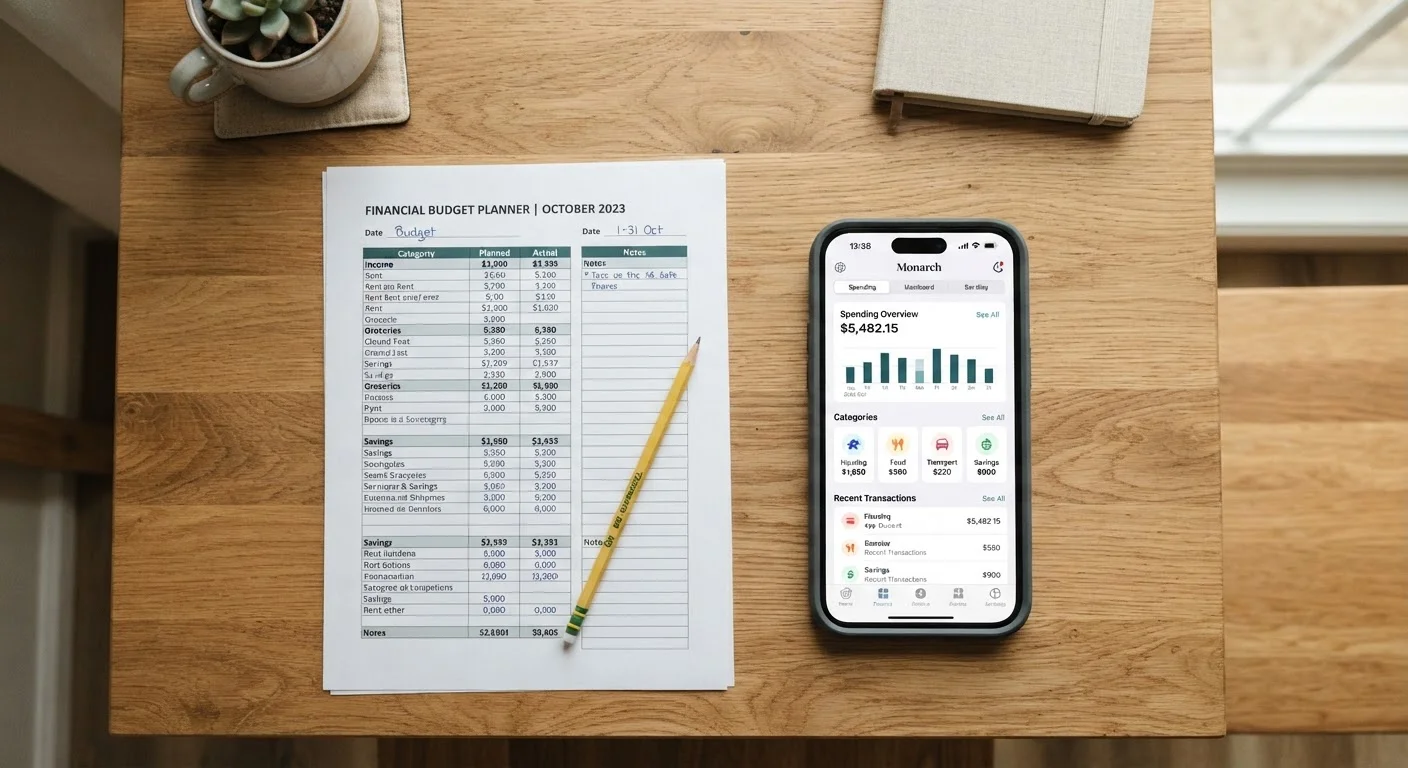
Automated tracking means connecting your bank accounts, credit cards, and other financial accounts to a digital tool that imports and categorizes transactions for you. The software does the data entry; you review and adjust.
Understanding how your spending breaks down is foundational to either method. If you haven't yet mapped out your fixed vs. variable expenses, that distinction shapes which approach will serve you better.
The Case for Manual Tracking
Manual tracking has stayed relevant precisely because the act of writing down every expense changes your relationship with spending. Research in behavioral economics consistently shows that friction — even minor friction like logging a purchase — causes people to pause and evaluate their choices more critically.
Deepens spending awareness through deliberate data entry
Writing down each expense prompts a moment of reflection that passive automation skips entirely, often leading to more mindful spending decisions over time.
Fully customizable categories and logic
You define how transactions are labeled and grouped, making manual systems adaptable to non-standard income sources, side businesses, or unique household needs.
No third-party data access required
Manual tracking keeps your financial details entirely private — no app credentials, no bank integrations, no data stored on external servers.
Works without internet or software subscriptions
A spreadsheet or notebook costs nothing and functions regardless of app outages, subscription fee changes, or service discontinuations.
Manual tracking also gives you complete control over your categories and logic. You decide how to define "dining out" versus "groceries," whether a clothing purchase counts as a want or a need, and how you want to roll up totals. That flexibility matters especially for people with irregular income, where standard category templates rarely fit cleanly.
The tradeoff is time. Consistent manual tracking typically takes 30–60 minutes per week for an average household. It's also only as accurate as your discipline — missed receipts or delayed entries erode the picture quickly.
Time-intensive and dependent on personal discipline
Regular manual entry demands 30–60 minutes weekly for most households, and even brief lapses in consistency can leave significant gaps in your financial picture.
Prone to missed or delayed transaction entries
Forgotten receipts, cash purchases, and delayed logging are common failure points that reduce the accuracy of a manual system over time.
Limited real-time visibility and alerting
Manual systems can't notify you of overspending the moment it happens — you only see the damage when you next sit down to review your records.
Scales poorly with multiple accounts or complex finances
Households managing several credit cards, investment accounts, and recurring subscriptions face significant complexity when tracking everything manually without automation.
The Case for Automated Tracking
Automated tools solve the consistency problem that derails most manual budgeters. Once connected, they capture every transaction without relying on your memory or motivation. For households juggling multiple accounts, credit cards, and recurring subscriptions, that completeness is a significant advantage.
~33%
Americans with a detailed household budget
A Gallup survey found that roughly one in three Americans maintains a detailed written or tracked budget, suggesting most people lack a consistent system of any kind.
4 in 10
Adults who overspend monthly without realizing it
Research by the National Endowment for Financial Education has highlighted that many adults regularly spend more than intended, often due to lack of real-time tracking.
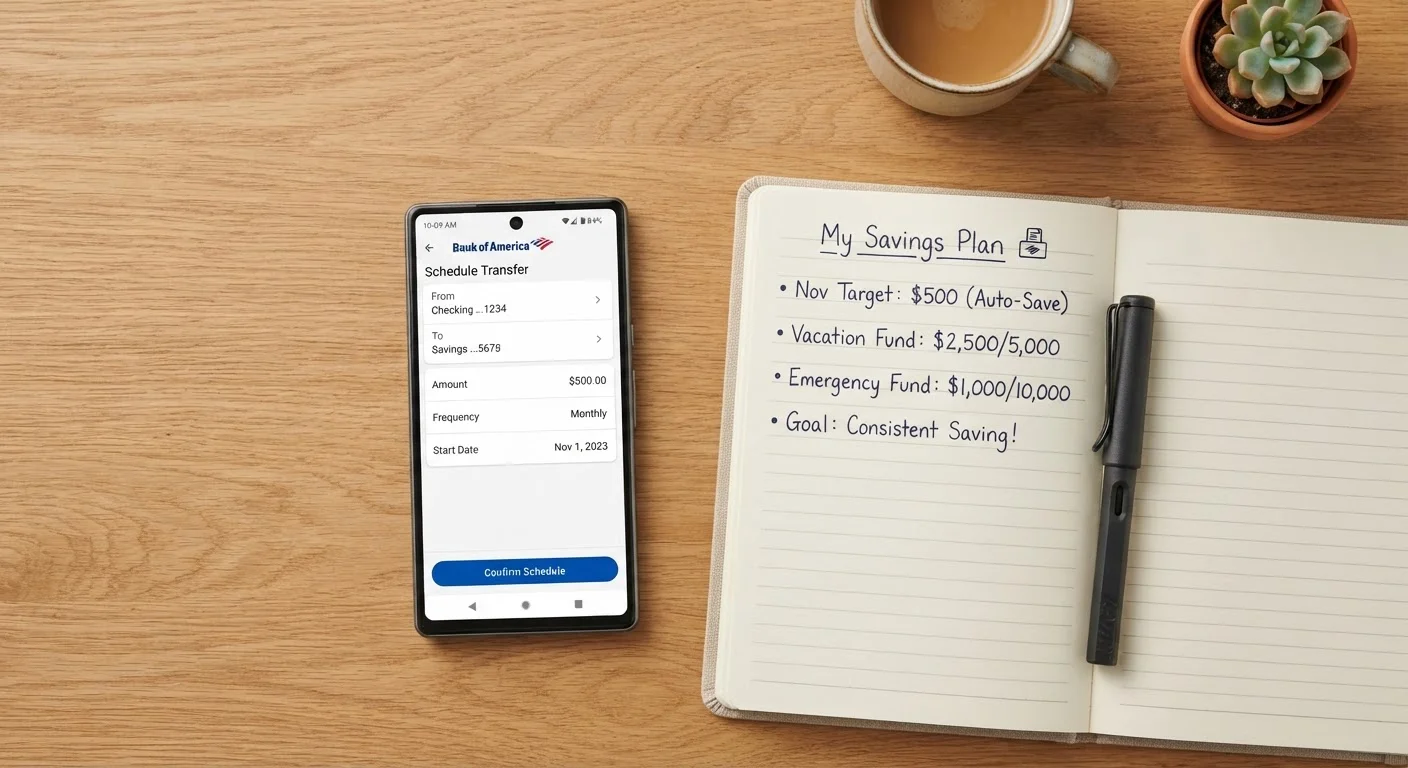
Automation also enables real-time visibility. Overspending alerts, category summaries, and month-over-month comparisons are generated without any manual effort. This pairs naturally with automated savings strategies, creating a cohesive system where money flows and is tracked with minimal friction.
However, automation introduces its own risks. Miscategorized transactions — a restaurant charge filed under "healthcare," for instance — can silently distort your data if you never review it. And connecting financial accounts to third-party apps requires granting data access, which raises legitimate privacy questions that each person must weigh for themselves.
For a broader look at why even well-designed systems can fail, see where budgets break down and why.
Choosing the Right Fit — or Combining Both
The most effective budget system is the one you'll actually maintain. Honest self-assessment matters more than picking the "correct" method in theory.
Hybrid Tracking: A Practical Middle Ground
Many financial professionals suggest using automated tools to capture all transactions reliably, then scheduling a dedicated monthly review session to manually categorize, question, and learn from your spending. This approach preserves the accuracy of automation while keeping you engaged with your data. The key is treating your review session as a non-negotiable appointment — not an optional task.
A hybrid model works well for many people: automated tools handle data collection, while a scheduled weekly or monthly review session applies the intentional scrutiny of manual budgeting. This captures the accuracy of automation without surrendering the awareness that hands-on review provides.
If you're building or rebuilding your approach from the ground up, the complete personal budgeting framework walks through income tracking, expense categories, and how to set goals that hold. You might also find it useful to compare specific methodologies — zero-based budgeting versus the 50/30/20 rule — before committing to a tracking format.
This article is for general informational purposes only and does not constitute personalized financial advice. Consult a qualified financial professional for guidance tailored to your individual circumstances.