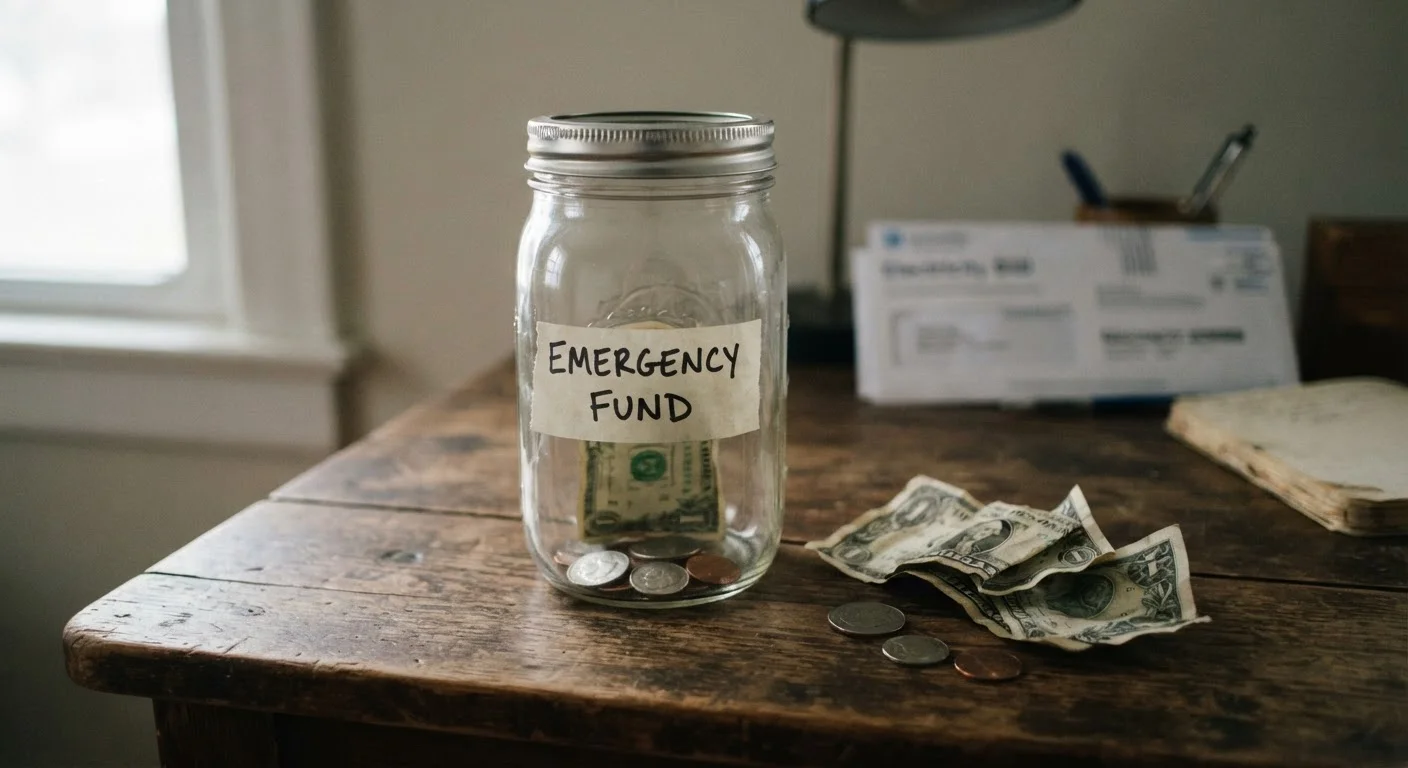

Why the Textbook Definition Isn't Enough
Ask most people what an emergency fund is and they'll say something like "money saved for a rainy day." That's not wrong — but it's dangerously vague. Vague definitions lead to vague behavior: funds that get raided for concert tickets, spontaneous travel, or a sale on electronics. None of those are emergencies.
A more useful definition has three hard edges. First, the expense must be unexpected — something that couldn't reasonably be anticipated and scheduled for in advance. Second, it must be necessary — not a want or an upgrade, but a genuine need with real consequences if unmet. Third, it must be urgent — the kind of cost that can't be deferred for weeks or months while you save up.
When all three conditions are met, that's what your emergency fund is for. When even one is missing, another financial tool — a sinking fund, a budget reallocation, or simply patience — is usually the right answer. For a deeper look at how sinking funds complement this approach, see our article on sinking funds and how they prevent financial surprises.
Emergency Fund vs. General Savings: Know the Difference
Many people combine their emergency fund with their general savings in a single account, which blurs the psychological and practical boundary between the two. Keeping them in separate, labeled accounts — even at the same bank — reinforces the fund's dedicated purpose and makes it easier to track whether your safety net is actually intact. If you want to assess your current readiness, our emergency fund readiness checklist is a practical starting point.
What an Emergency Fund Actually Covers
The clearest way to understand an emergency fund's purpose is to look at what genuinely belongs in it — and what doesn't.
Legitimate uses include:
- Income loss from involuntary job loss or medical leave
- Urgent medical or dental expenses not covered by insurance
- Essential vehicle repairs needed to commute to work
- Critical home system failures — a burst pipe, a failed HVAC unit in extreme weather
- Emergency travel for a family crisis
Common misuses that drain the fund:
- Irregular but predictable expenses (annual insurance premiums, car registration)
- Non-urgent home improvements or upgrades
- Impulse purchases framed after the fact as "necessary"
- Replacing items that still function adequately
The irregular-but-predictable category trips up a lot of people. A car inspection every year isn't an emergency — it's a known cost that belongs in a sinking fund. If those expenses keep landing in your emergency fund, your budgeting structure likely needs adjustment before your fund size does. Our guide on why emergency funds get raided and how to stop the cycle explores those patterns in detail.
Sizing Your Fund for Your Actual Life
The three-to-six months of expenses guideline is a reasonable starting point, but it's built around an average household that may not look like yours. The right target shifts based on several factors.
Income stability: A salaried employee in a stable field has more predictable income than a freelancer or a worker in a cyclical industry. Variable income earners generally need a larger cushion — closer to nine or twelve months — because both the likelihood and the duration of income disruption are higher.
Dependents: Every additional person relying on your income raises the stakes of a financial shock. A single adult with no dependents can recover from a disruption more flexibly than a household supporting children or aging parents.
Fixed obligations: High fixed monthly costs — a mortgage, car payment, or ongoing medical expenses — reduce your ability to cut spending quickly in a crisis. That rigidity means you need more runway, not less.
For a structured comparison of the three-month and six-month benchmarks and how to choose between them, see our detailed breakdown of the three-month vs. six-month debate.
37%
Americans who can't cover a $400 emergency with cash
According to the Federal Reserve's Report on the Economic Well-Being of U.S. Households, a significant share of adults would need to borrow or sell something to cover a small unexpected expense.
~56%
U.S. adults living paycheck to paycheck
Multiple consumer finance surveys consistently find that over half of American adults have little or no financial buffer between their income and their monthly obligations.
3–6 months
Standard emergency fund target in essential expenses
This benchmark is widely cited by financial planning organizations as a starting point, though individual circumstances often warrant adjusting the target higher.
Where to Keep It — and What Makes a Good Home
An emergency fund has one non-negotiable job: be available when you need it. That means liquidity is the primary criterion, not return. The fund should be held in an account that is FDIC-insured, free to withdraw from at any time without penalty, and ideally separate from your everyday checking account to reduce the temptation to spend it.
Beyond those minimums, earning some interest on idle cash is a reasonable goal. High-yield savings accounts and money market accounts both offer meaningfully higher rates than a standard savings account at most traditional banks. Each comes with trade-offs in access, minimums, and rate structures. Our article on high-yield savings vs. money market accounts for emergency funds walks through the differences in detail.
Investments — including stocks, bonds, or mutual funds — are not appropriate homes for an emergency fund. Market volatility means the value can drop precisely when you need the money most, and liquidating investments may trigger tax consequences or require days to settle.
This article provides general financial education and is not personalized financial advice. For guidance specific to your situation, consult a qualified financial professional.