The Social Science Behind the Shadow
Dogs are descendants of wolves — animals that survived through tight-knit social cooperation. Over thousands of years of domestication, dogs shifted their primary social attachment from a wolf pack to the human household. You, essentially, are your dog's pack.
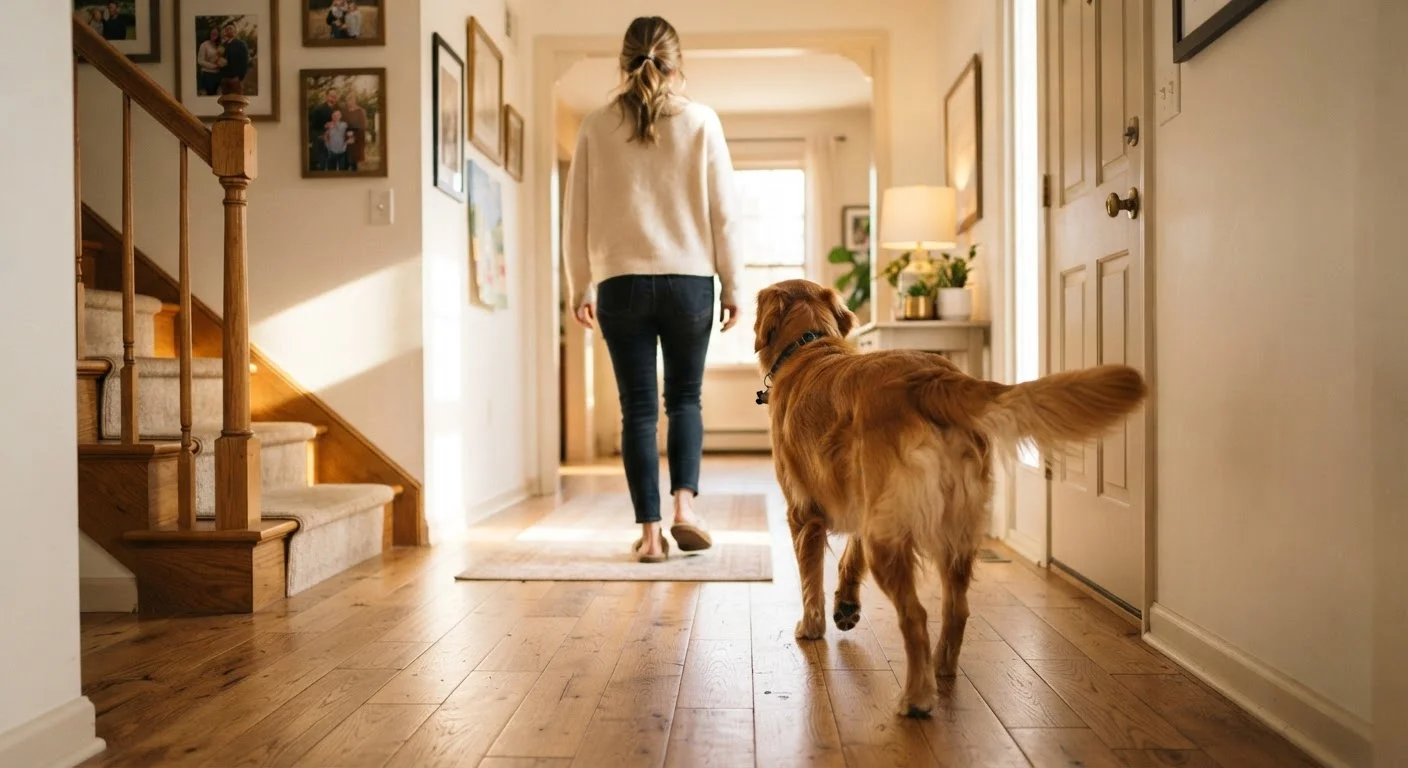
This evolutionary background means that following you isn't strange or pathological — it's deeply instinctual. When your dog pads after you into the kitchen or waits outside the bathroom door, they're doing what social bonds are designed to do: keeping the group together.
Research in canine cognition has shown that dogs track their owners' locations and emotions with remarkable precision. They read your movements, routines, and moods. Following you is partly how they stay informed about what's happening in their social world.
“The dog has long been shaped by selection to be attuned to human social cues in ways that even our closest primate relatives are not. Their attentiveness to us is not accidental — it is the product of millennia of co-evolution.”
— Alexandra Horowitz, Canine cognition researcher and author of 'Inside of a Dog'
Common Reasons Dogs Follow Their Owners
While the instinct to follow is universal in dogs, the specific trigger varies from one individual to the next. Here are the most common explanations:
- Attachment and bonding: Dogs form genuine emotional attachments to their caregivers. Following is a physical expression of that bond.
- Learned association: If good things — food, walks, play — consistently happen around you, your dog learns that staying close pays off.
- Breed disposition: Herding breeds were developed to monitor and respond to a handler's every move. Companion breeds were literally bred to be at your side. These tendencies run deep.
- Boredom or under-stimulation: A dog without enough physical or mental activity may latch onto you as their primary source of engagement.
- Anxiety: In some dogs, particularly those with a history of rehoming or trauma, following can reflect insecurity rather than affection.
Understanding the difference between calm, contented following and anxious shadowing is important. Our guide on reading your pet's body language can help you interpret what your dog's posture and expression are actually communicating.
When Following Signals Something More
Most dogs that follow their owners are simply well-bonded and socially motivated. But if the behavior comes with additional signs, it may point to separation anxiety or hyper-attachment that benefits from professional support.
Watch for these signals alongside the following behavior:
- Whining, panting, or pacing when you prepare to leave
- Destructive behavior only when alone
- Inability to settle even briefly in another room
- Loss of appetite or toileting accidents when separated
If any of these patterns are present, it's worth a conversation with your veterinarian or a certified veterinary behaviorist. Addressing anxiety early makes a meaningful difference in outcomes. For a deeper look at when repetitive behaviors become a concern, see obsessive and repetitive behaviors in pets.
It's also worth questioning some common assumptions. Many owners interpret following as a dominance behavior — a dog asserting control. This idea doesn't hold up well under current behavioral science. For more on widespread misconceptions, pet behavior myths are worth reviewing.
Building Independence Without Breaking Trust
If you'd like your dog to be more comfortable spending time alone or in a separate room, the goal is to build confidence gradually — never through punishment or forced isolation.
A few approaches that work well:
- Reward calm independence: When your dog settles on their bed or in another room on their own, quietly mark and reward that behavior. You're teaching them that being apart from you is safe and even pleasant.
- Practice short separations: Start with just a minute apart, then gradually increase duration. Keep departures and returns low-key so your dog doesn't associate them with high emotion.
- Provide enrichment: Puzzle feeders, chew toys, and sniff-based activities give your dog something absorbing to do that doesn't require your presence.
Keep Departures Low-Key
Enthusiastic goodbyes and hellos can inadvertently raise the emotional stakes of separation for your dog. A calm, matter-of-fact approach to leaving and returning helps your dog learn that your absence is temporary and uneventful — not something to dread.
The goal isn't a dog that doesn't want to be near you — it's a dog that feels secure whether you're present or not. That security is what actually strengthens your bond long-term.