
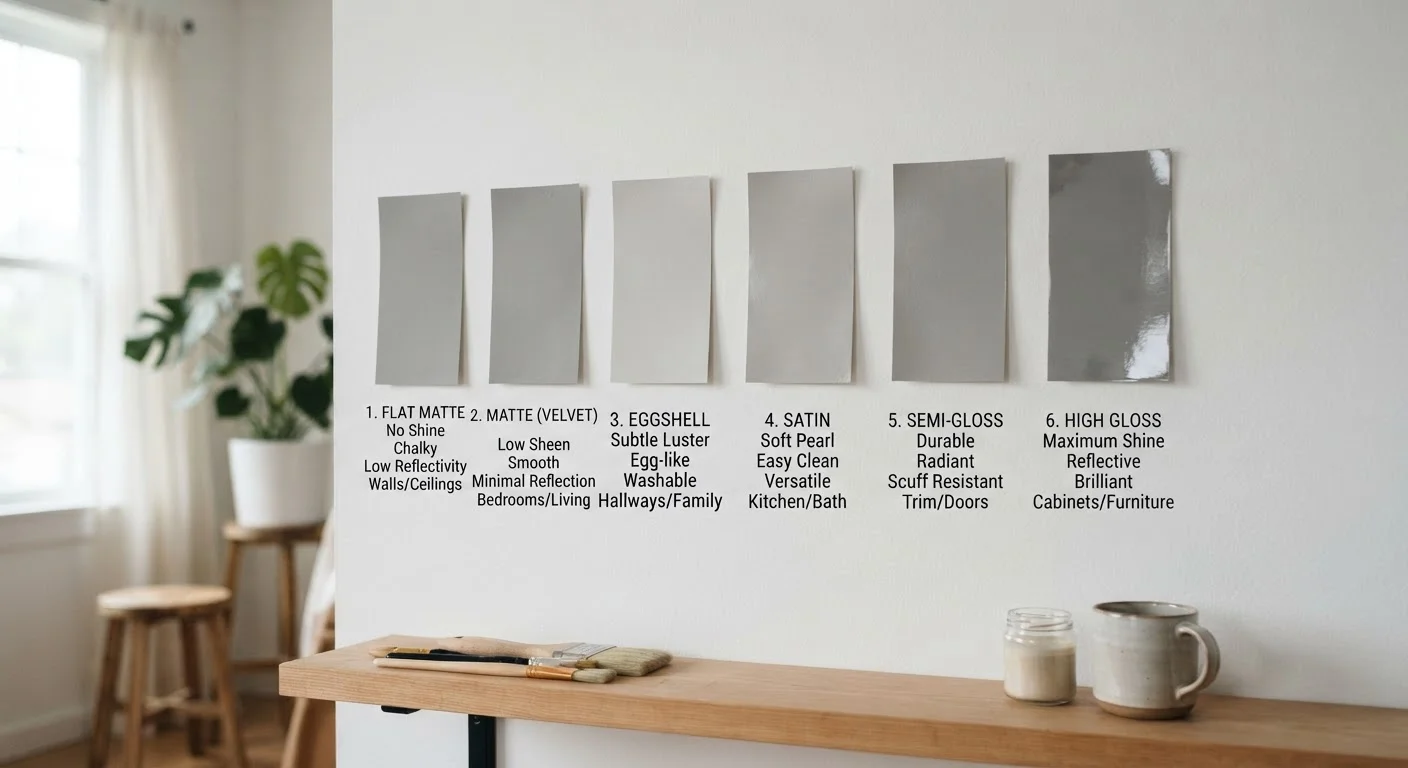
Why Sheen Level Is a Practical Decision, Not Just a Style One
Most homeowners choose a paint color and give little thought to the finish. That's a mistake that shows up months later — streaks on a bedroom wall that can't be wiped clean, or a flat kitchen ceiling that traps grease and moisture. Paint finish, also called sheen level, determines how much light a painted surface reflects and how resistant it is to moisture, scrubbing, and wear. Higher sheen means more durability and washability; lower sheen means softer appearance but less tolerance for humidity and cleaning.
The right finish in the right location extends the life of your paint job, reduces maintenance, and keeps surfaces looking intentional. The wrong one creates avoidable problems — and repainting a room because the finish wasn't appropriate is a cost that's easy to skip with a little upfront knowledge.
| Best finish for ceilings | Flat / Matte |
| Best finish for bathrooms & kitchens | Semi-Gloss |
| Best finish for high-traffic hallways | Satin |
| Best finish for trim & cabinetry | Semi-Gloss or High-Gloss |
| Most washable finish | High-Gloss |
| Best for hiding wall imperfections | Flat / Matte |
The Five Main Finish Types, Explained
Flat (Matte)
Flat paint reflects virtually no light, which means it hides surface imperfections like minor dents, uneven texture, and patched repairs extremely well. That makes it ideal for ceilings and low-traffic adult bedrooms where walls don't need frequent cleaning. The trade-off: flat finishes absorb moisture and don't hold up to scrubbing — a damp cloth can remove the paint itself.
Eggshell
Named for the subtle, low-luster sheen of an eggshell, this finish is one of the most widely used for living rooms and dining rooms. It's slightly more washable than flat and still soft enough to minimize wall imperfections. It strikes a balance that works well in spaces that see moderate foot traffic but don't face moisture or heavy soiling.
Satin
Satin has a smooth, velvety sheen that stands up to cleaning and mild moisture. It's the go-to finish for hallways, children's bedrooms, and family rooms — areas where handprints, scuffs, and general life happen regularly. Satin also works well on trim in low-humidity spaces. One caveat: application imperfections show more than with eggshell, so surface prep matters.
Semi-Gloss
With a noticeable sheen and strong moisture resistance, semi-gloss is standard for kitchens, bathrooms, and all trim work — baseboards, door frames, and window casings. It wipes clean easily, resists humidity, and gives trim a sharp, finished look. It will, however, reveal surface flaws clearly, so sanding and priming are non-negotiable before application.
High-Gloss
High-gloss is highly reflective and extremely durable, making it suitable for cabinetry, doors, and furniture that take daily contact. It's rarely used on walls because it amplifies every imperfection. In the right application — a kitchen island, front door, or accent furniture — it delivers a polished, professional result that holds up over years of use.
Sheen level
A measure of how much light a paint finish reflects after drying. Higher sheen means more reflectivity, greater durability, and easier cleaning.
Flat (Matte) finish
A paint finish with no perceptible light reflection. Ideal for ceilings and low-traffic areas; not suitable for surfaces that require frequent cleaning.
Eggshell finish
A low-luster finish with slightly more sheen than flat. Commonly used on living room and dining room walls for a soft, refined appearance.
Satin finish
A mid-level sheen finish that balances washability and aesthetic softness. Well-suited for hallways, family rooms, and children's spaces.
Semi-gloss finish
A noticeably shiny finish with strong moisture and abrasion resistance. Standard for kitchens, bathrooms, and all interior trim work.
High-gloss finish
The most reflective paint finish, delivering maximum durability and a hard, glossy surface. Typically reserved for cabinetry, doors, and furniture.
Common Mismatches and How to Avoid Them
Using flat paint in a bathroom is the most frequent mistake. Humidity causes it to bubble and peel within months. Conversely, applying high-gloss to a living room wall creates a harsh, institutional look and makes every skim-coat imperfection visible under natural light.
Another common error is using the same finish for walls and trim. Trim almost always benefits from a higher sheen — typically semi-gloss — while walls use a lower one. The contrast is intentional: it defines architectural detail and simplifies touch-ups, since trim takes more abuse than surrounding wall surfaces.
For those setting up a home workspace or creative area, finish choice matters there too. If you're painting a dedicated room for projects, a satin or semi-gloss finish on the lower half of the walls makes cleanup far more manageable. See our guide to setting up a small creative workspace at home for practical room-prep advice that pairs well with finish selection.
When in doubt, manufacturers and paint retailers typically provide finish guides on their product lines. A professional painter or interior designer can also help assess your specific surfaces and traffic patterns before you commit.