Why Your Setup Matters More Than Your Supplies
Most creative blocks aren't about inspiration — they're about friction. When your workspace is chaotic, poorly lit, or not protected from spills, starting a project feels like a chore before you've even picked up a brush. A thoughtful setup removes those invisible barriers.
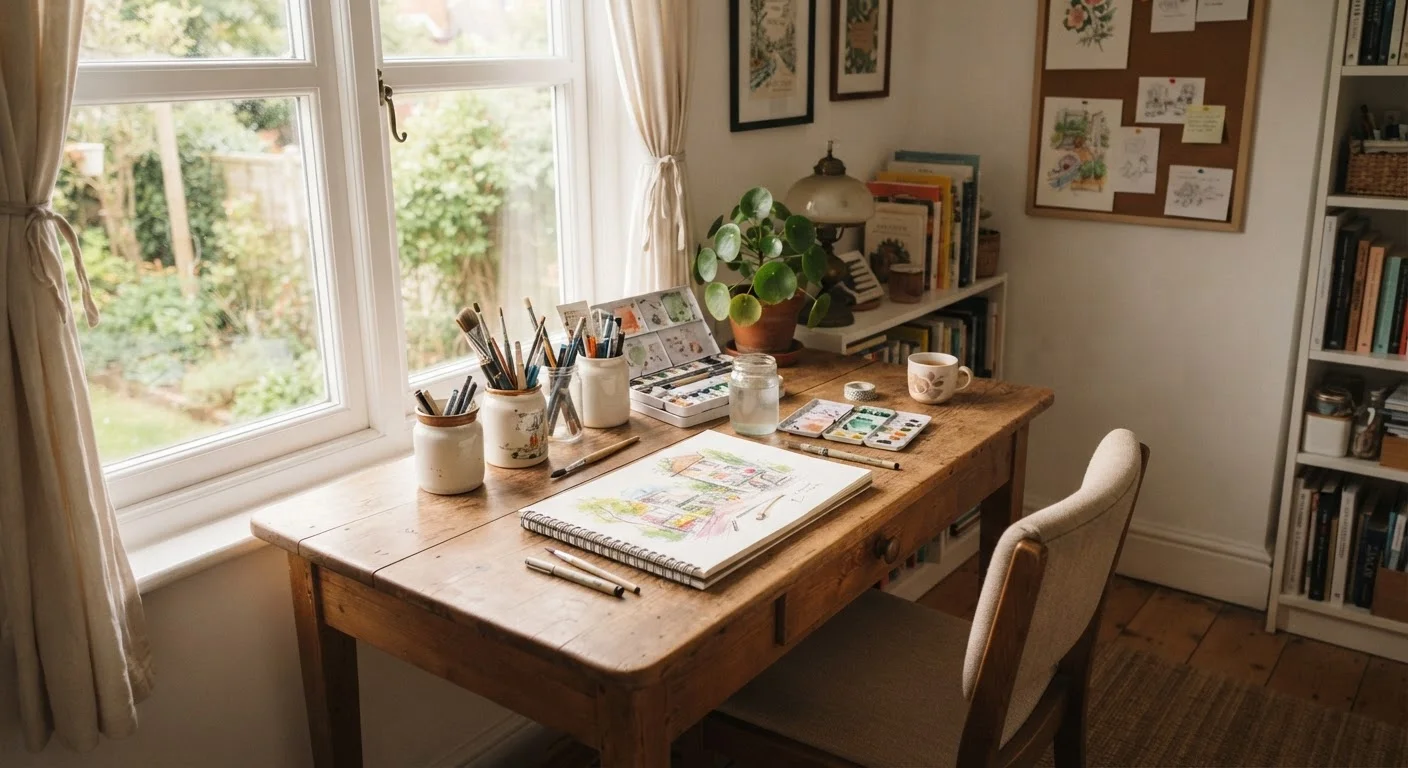
This checklist works whether you're carving out a corner of a bedroom, converting half a dining table, or fitting a rolling cart into a closet. The goal isn't a Pinterest-perfect studio — it's a functional, ready space that makes showing up easy. If you're still exploring what kind of making appeals to you, our full map of creative hobbies for adults is a great starting point before you commit to a specific setup.
Work through the checklist below in order — location and light first, storage and safety second, personalization last.
Location & Surface
Lighting
Ventilation & Safety
Storage & Organization
Comfort & Ergonomics
Final Readiness Check
Tools and Materials You'll Need for the Setup Process
Before you rearrange furniture or buy organizers, gather what you'll use to assess and build your space. Most of these items you probably already own.
Tape measure
Measure your available surface area and wall space before buying any storage or furniture.
Task lamp with daylight bulb
Provide consistent, shadow-free lighting suited to detailed craft work.
Surface protector (silicone mat or vinyl cloth)
Shield your table or desk from paint, glue, cutting, and other project hazards.
Clear storage containers or jars
Keep frequently used tools visible and accessible without rummaging through drawers.
Box fan
Improve ventilation when working with paints, adhesives, or other fume-producing materials.
Pegboard or wall-mounted organizer
Add vertical storage in small spaces to free up desk surface for active work.
Rolling cart
Create a mobile supply station that can be stored away when the workspace needs to serve another purpose.
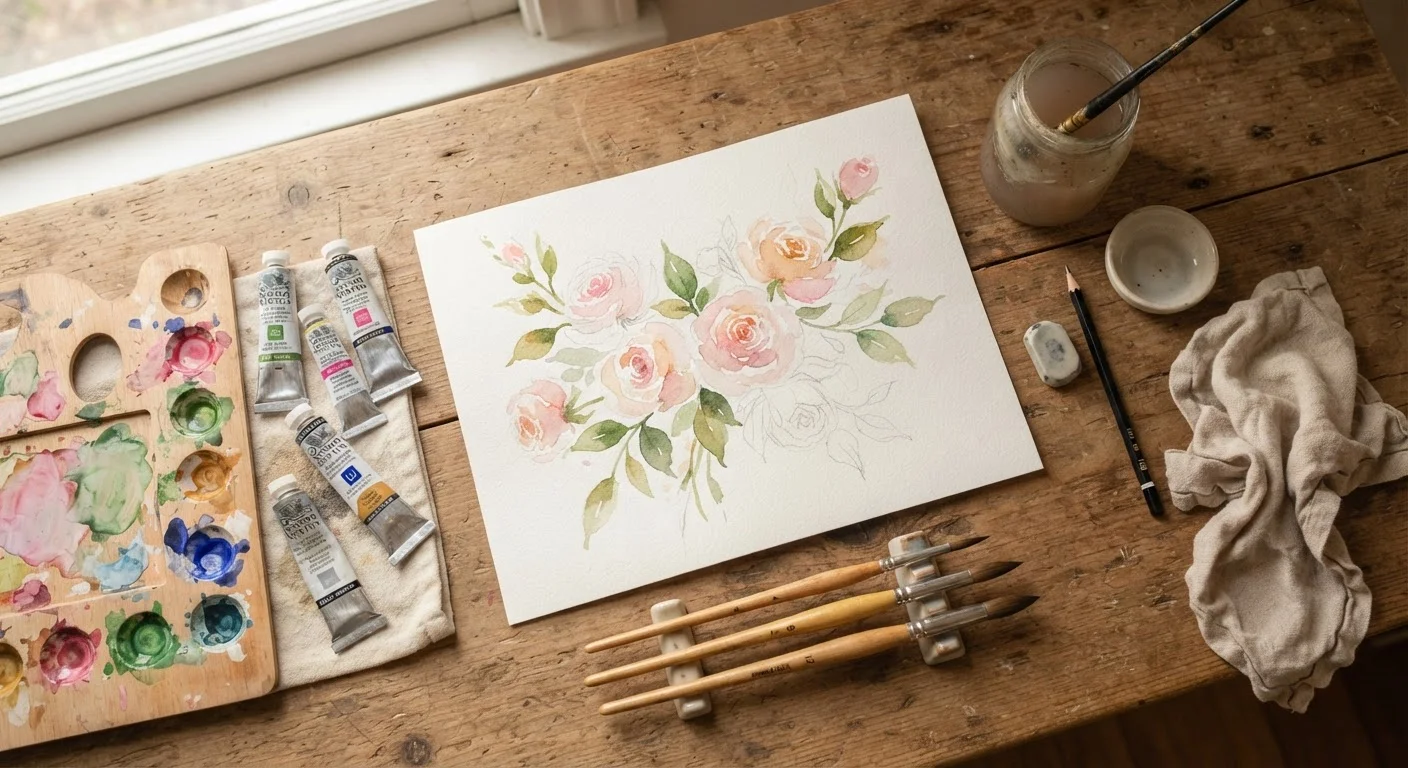
Once you've assembled these basics, you're ready to work through each checklist group systematically. For messy or wet crafts like paper marbling or watercolor painting, surface protection and water access are especially critical to plan in advance.
A Note on Safety and Ventilation
Fumes and Enclosed Spaces Don't Mix
Common craft supplies — including spray adhesives, resin, oil-based paints, and solvent-based inks — can release harmful fumes in unventilated rooms. Always work with a window open or a fan running outward, and check product labels for specific ventilation requirements. If you experience headaches or eye irritation while crafting, take that as a clear signal to improve airflow before continuing.
Many common craft materials — spray paint, mod podge, epoxy resin, rubber cement, and solvent-based inks — release fumes that can be harmful in enclosed spaces. Before your workspace is operational, confirm that the room has a window you can open, or that you have access to an exhaust fan. If you plan to work with resin or oil-based paints regularly, a box fan positioned to push air outward through a window is a practical and low-cost solution.
If you're interested in hands-on projects that make heavy use of found and repurposed materials, our piece on upcycling as a creative outlet outlines what to expect — including material prep and workspace considerations. And if you prefer a creative practice that needs almost no fixed space at all, check out creative hobbies that travel well for portable alternatives.