Why Creativity Thrives Away from Home
There's a common assumption that making art requires a dedicated studio — a fixed table, good lighting, the right shelf of supplies. In reality, many of the most portable creative practices flourish because of constraint, not despite it. A limited kit focuses your attention. A strange environment gives you fresh material. A quiet hotel morning, uncluttered by usual obligations, can yield some of your most honest creative work.
The hobbies below were chosen because they share three qualities: they travel light, they're genuinely absorbing, and they don't require expert-level skill to start enjoying. Whether you're a seasoned maker looking to keep momentum on a business trip or a curious beginner wondering what might stick, there's something here worth trying. If you're still exploring what kind of creative person you are, our full map of adult creative hobbies is a good place to start.
Travel Sketching and Urban Drawing
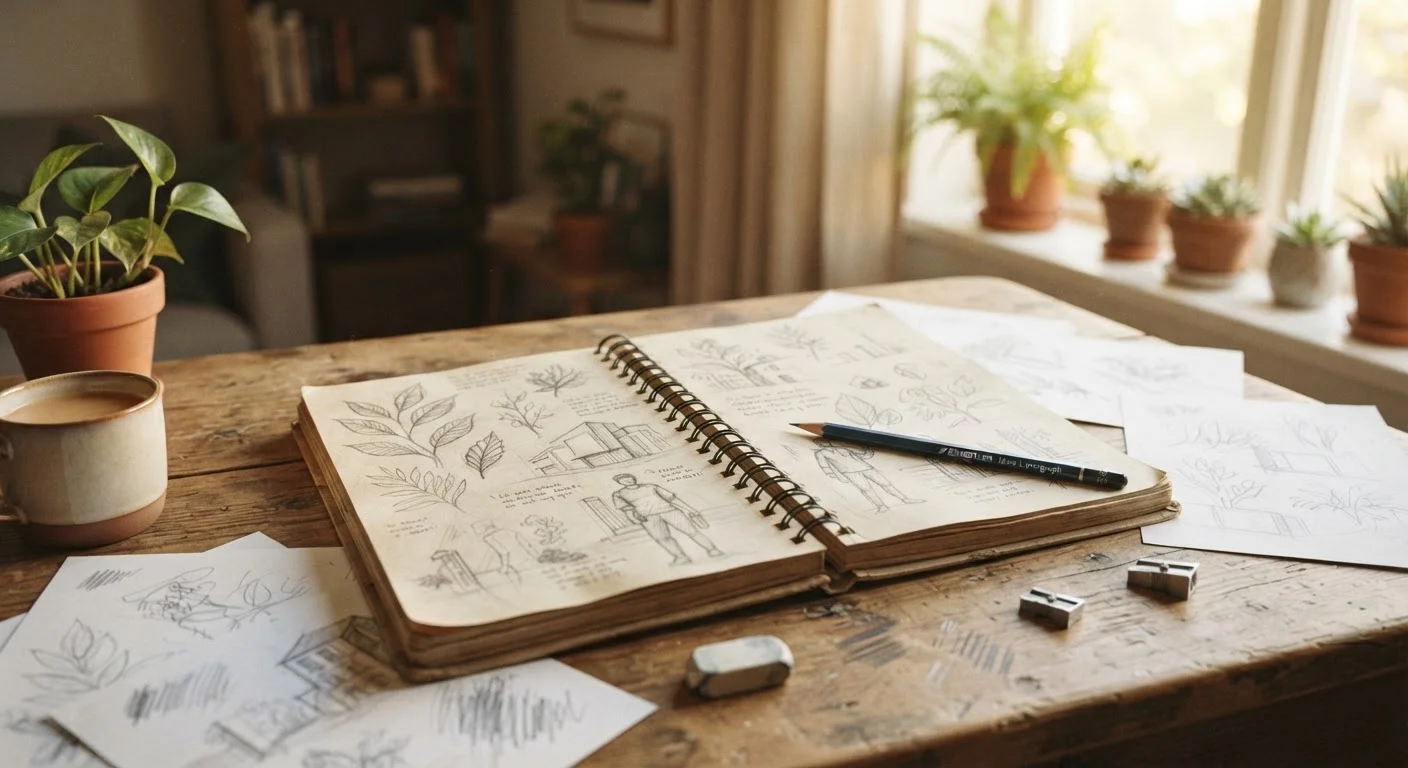
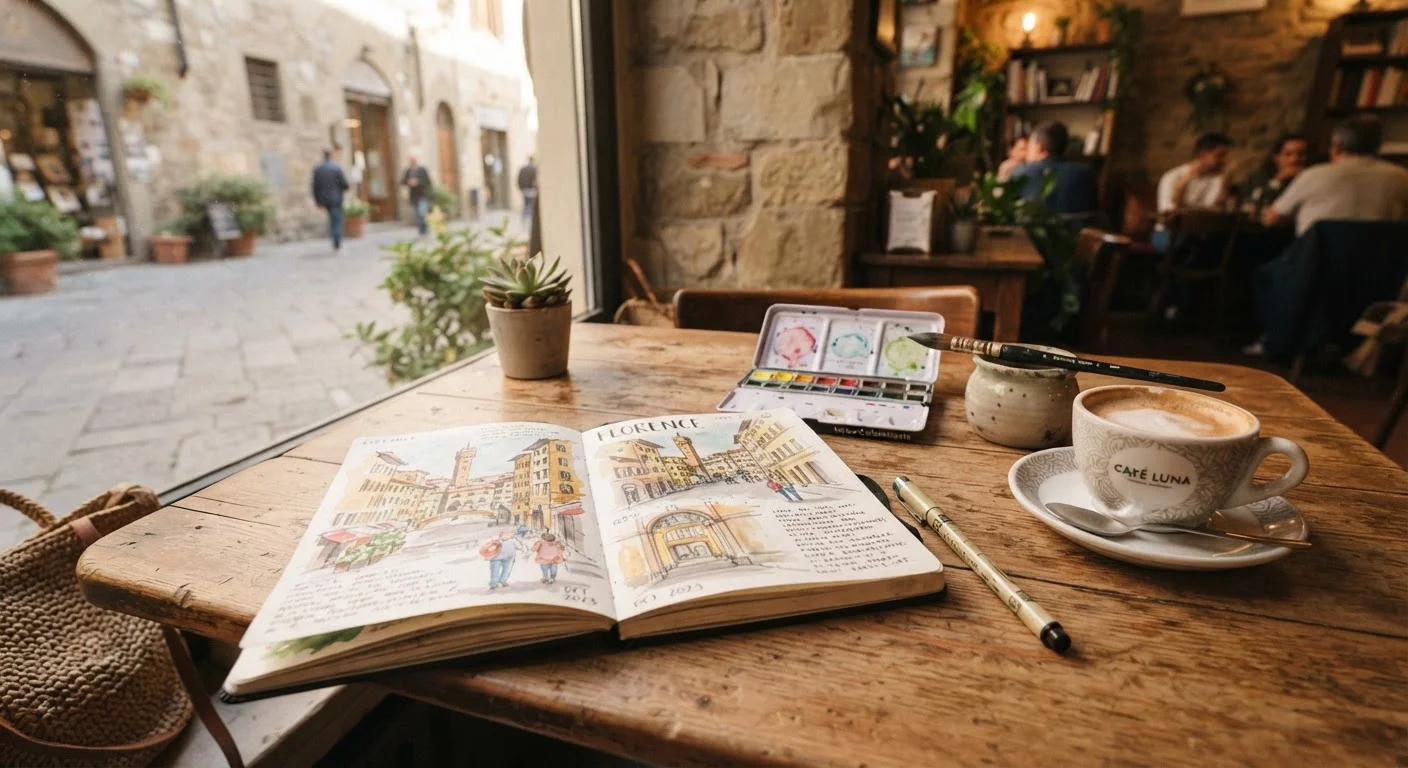
A small sketchbook and a handful of pens or a compact watercolor set are all you need to turn any destination into a subject. Travel sketching encourages you to actually look at your surroundings — a cathedral facade, a food market stall, the view from your hotel window — with the slow attention a phone camera never quite captures.
Watercolor pans are particularly travel-friendly: they're light, dry quickly, and clean up with water alone. Ink-only sketching is even simpler. Neither requires a flat worksurface; a hardbound sketchbook doubles as its own drawing board. See our sketchbook habit guide for tips on building consistency even in short sessions.
Sketching trains your eye to see a place deeply, not just document it.
Hand Embroidery
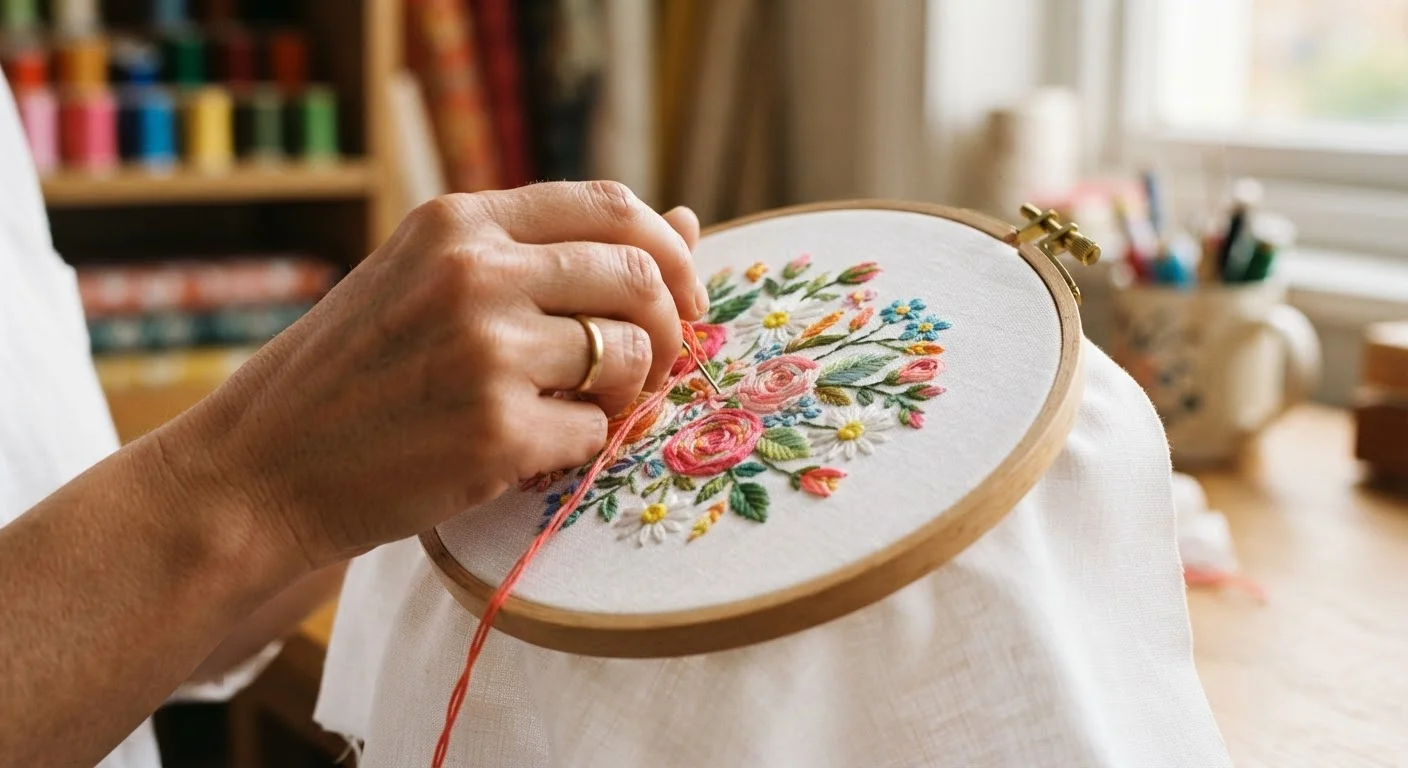
Embroidery packs into a zip pouch: a small hoop, a few skeins of floss, a needle, and fabric or a pre-printed pattern. It's screen-free, genuinely meditative, and produces tangible progress you can measure stitch by stitch. Airports, train rides, and slow hotel mornings are perfect for it.
Basic stitches — backstitch, satin stitch, French knots — can be learned in an afternoon and combined into endlessly varied designs. If embroidery is new territory for you, our embroidery primer covers where modern practitioners are taking the craft.
Embroidery fits in a zip pouch and produces real results one stitch at a time.
Journaling and Creative Writing
A blank notebook and a reliable pen are the ultimate travel creative kit — zero weight penalty, no TSA complications, infinite scope. Journaling on the road isn't just diary-keeping; it can mean flash fiction sparked by overheard conversations, poetry shaped by a new landscape, or detailed scene-writing that feeds a larger project back home.
The unfamiliar environments of travel are genuinely generative for writers. New sensory details, disrupted routines, and encounters with different cultures all loosen up habitual thought patterns. Even 20 minutes before breakfast can yield something worth keeping.
Travel's unfamiliarity dissolves creative ruts — a notebook becomes a powerful tool.
Portable Knitting or Crochet
A ball of yarn and a pair of needles or a crochet hook take almost no space and survive checked bags and carry-ons alike. Knitting in particular is well-suited to travel: a scarf, dishcloth, or small accessory project can be stuffed into any bag corner and picked up during any lull.
One practical note: double-pointed needles and circular needles are generally permitted through airport security in the US, though individual screener discretion applies — checking current TSA guidelines before you fly is wise. Crochet hooks are similarly low-risk. If you're curious how textile arts fit into a broader creative practice, our creative hobbies overview maps out the full landscape.
A single skein of yarn and a hook can fill a week of idle travel hours productively.
Linocut Printmaking (Simplified Kit)
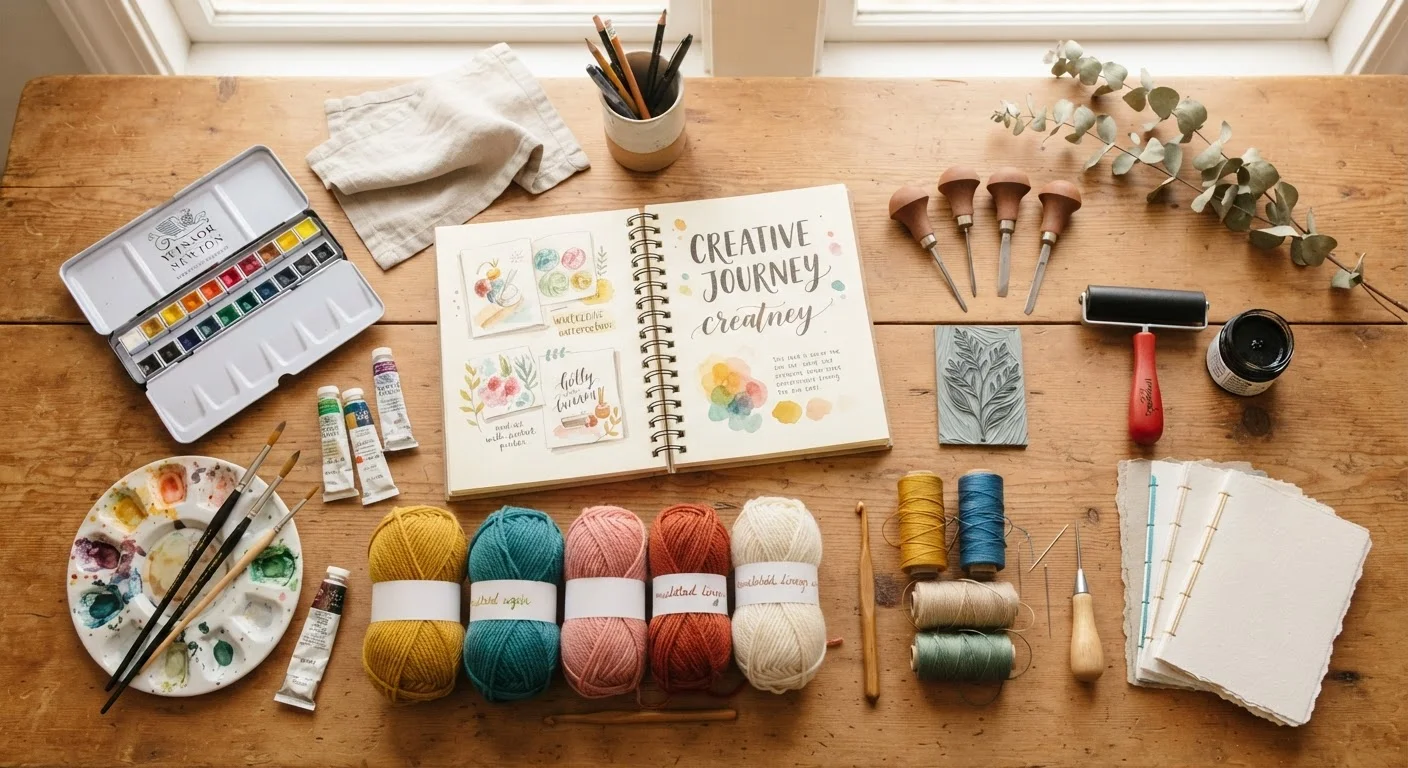
Linocut sounds like a studio-only pursuit, but a stripped-down travel version is entirely workable: a small lino or soft-cut block, a basic carving tool, a brayer (a small ink roller), a tube of block-printing ink, and a few sheets of paper. You can print onto hotel stationery, postcards, or journal pages.
The carving itself — the slow, deliberate removal of material — is absorbing and satisfying in quiet moments. Prints can be left to dry flat on any surface. If you normally work with messier mixed-media processes at home, this is a clean, contained alternative. For contrast, see how a dedicated home studio setup differs from the traveling creative's minimal kit.
A pocket-sized carving kit lets you pull original prints from a hotel room desk.
Digital Illustration and Lettering
For travelers already carrying a tablet, digital illustration or hand-lettering practice requires no additional packing whatsoever. A stylus and a single app open up drawing, painting, typography, and design work — all without a single physical supply to manage.
Digital tools are particularly forgiving for beginners: undo is always available, colors are infinite, and there's no drying time. The constraint of a smaller screen than a desktop monitor often encourages more focused, deliberate composition. This approach pairs naturally with letting go of perfectionism and just making things.
If you're already packing a tablet, you're already packing a full illustration studio.
Making It Work: Packing Smart and Staying Creative
Start With One Hobby, Done Well
Resist the urge to pack supplies for every medium. Choose a single travel-friendly hobby before each trip and commit to it — a focused kit takes less space, causes less decision fatigue, and tends to produce more satisfying work than a sprawling array of half-used materials.
Beyond choosing the right hobby, a few practical habits make the difference between a travel creative kit you actually use and one that stays in the bag. Keep your supplies in a dedicated pouch so setup takes under two minutes — friction is the enemy of spontaneous creative sessions. Choose projects that are genuinely in progress rather than aspirational; a half-finished embroidery hoop is far more likely to be picked up than a blank canvas waiting for inspiration.
Outdoor settings add another dimension. Sketching at a park, writing in a plaza, or crocheting on a beach all connect the creative act to the place itself — turning travel into something you actively process rather than passively consume. For ideas on pairing creativity with outdoor time, browse our outdoor activities hub. And if packing logistics feel daunting, seasoned travelers' packing wisdom offers a useful framework for deciding what's worth the suitcase space.
The goal isn't to replicate your home studio in a hotel room. It's to keep the creative habit alive — and let the road feed it something new.
A Word on Liquids and Security
If you're traveling with watercolor paints, inks, or block-printing supplies, be aware that liquid or gel-format materials may be subject to the TSA's 3-1-1 liquids rule for carry-on bags. Solid watercolor pans and dried media are generally unaffected. Always verify current regulations with the TSA or your carrier before you fly, and check any destination-country rules if traveling internationally.