Why Consistency Beats Inspiration Every Time
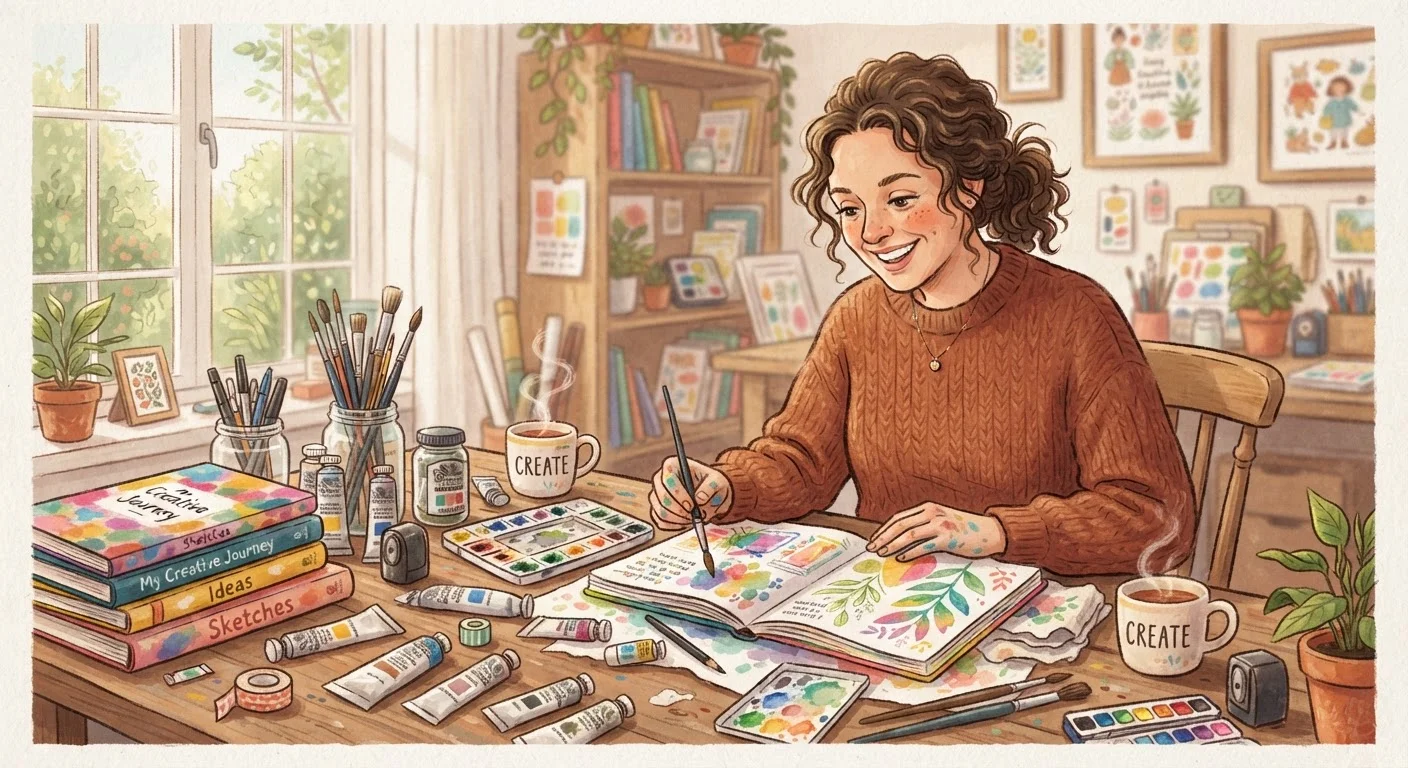
Most people who dream of being more creative aren't short on inspiration — they're short on a reliable system. The artist who fills three sketchbooks a year isn't necessarily more gifted than someone who fills half a page and abandons it. They've simply built habits that make showing up feel automatic.
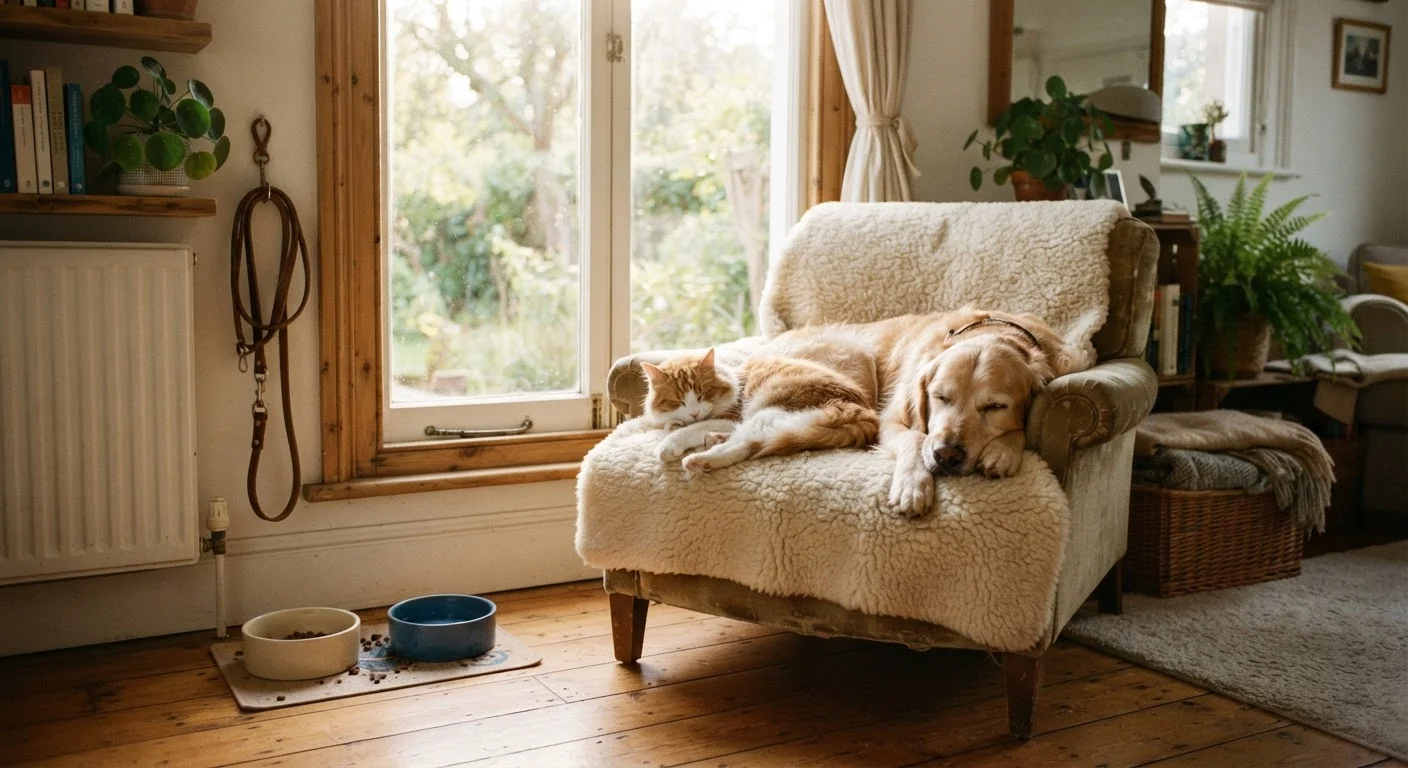
Research in behavioral science consistently suggests that habit formation depends less on motivation and more on environmental design and repetition. The same principle that helps a pet thrive on a schedule — as explored in building a healthy daily rhythm — applies surprisingly well to creative practice. Predictability reduces friction, and reduced friction means more pages filled.
If you've ever believed your inconsistency means you lack talent, the evidence says otherwise. What separates occasional sketchers from consistent ones is almost always habit architecture, not innate ability.
The Practices That Actually Work
These aren't abstract ideals — they're specific, tested behaviors that consistent artists use to keep their sketchbooks active and growing.
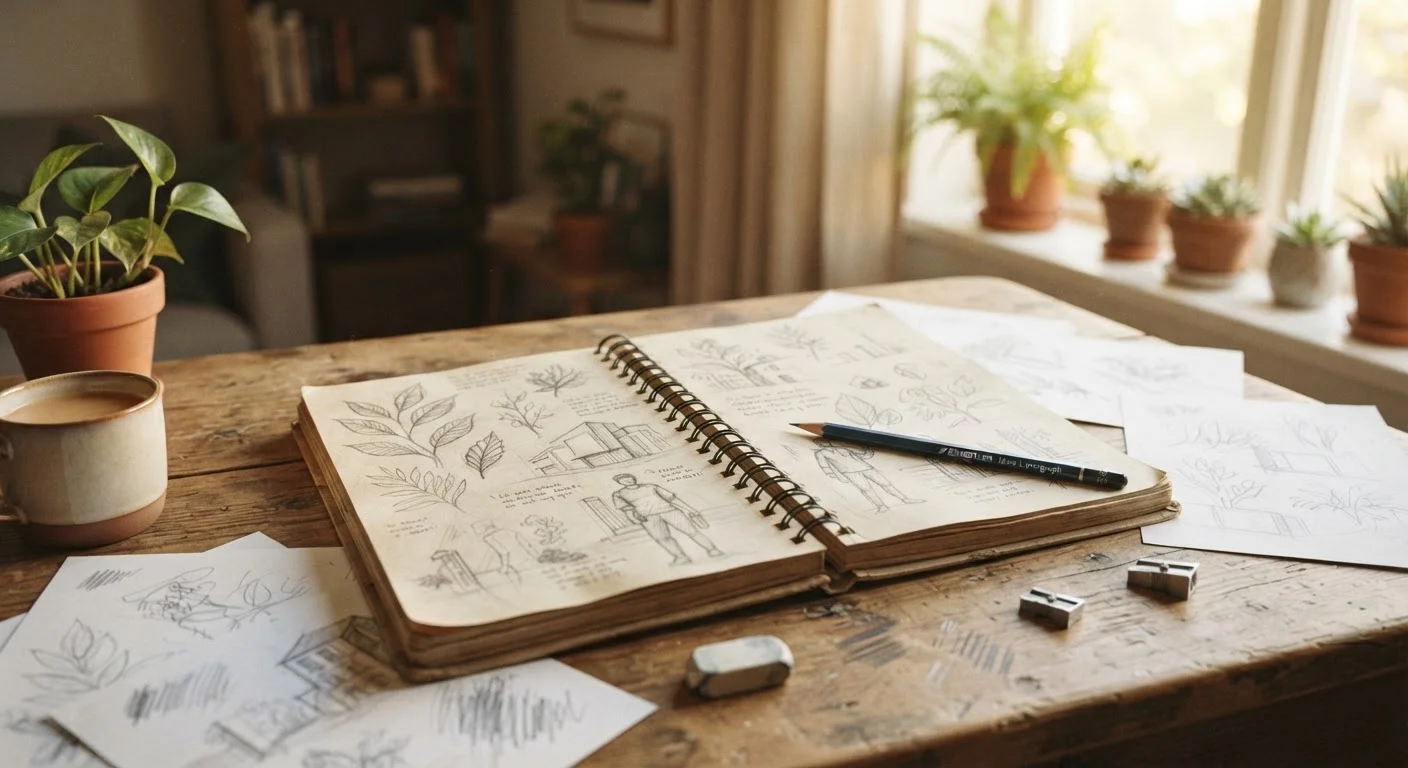
Keep your sketchbook and a single pen visible at all times
Out of sight truly means out of mind for creative habits. When supplies require setup or retrieval, even a small amount of effort becomes an excuse to skip. Visibility turns a sketchbook into an environmental cue that prompts action.
Anchor sketching to an existing daily habit
Habit stacking — attaching a new behavior to an established one — dramatically improves consistency. Your brain already has grooves worn into morning coffee, lunch breaks, or evening wind-downs. Attach sketching to one of them.
Treat your sketchbook as a practice space, not a portfolio
Perfectionism is the enemy of consistent output. When every page feels like it must be Instagram-worthy, the fear of a bad drawing stops you from drawing at all. A sketchbook used as a private lab removes that pressure entirely.
Set a time limit, not a quality goal
"I'll draw until I make something good" is a recipe for paralysis. A defined time limit — even just ten minutes — gives you a clear finish line and makes starting feel less daunting. Quantity of sessions builds more skill than the quality of any single one.
Review old pages regularly to track your own progress
Without visible evidence of improvement, motivation quietly erodes. Flipping back through earlier pages provides concrete proof that practice is working — even when today's sketch feels underwhelming.
Keep a running prompt list for blank-page moments
"I don't know what to draw" kills more sessions than lack of time does. A personal list of subjects — objects around the house, moods, places, textures — eliminates decision fatigue and gets the pen moving.
Start Today, Not Perfectly
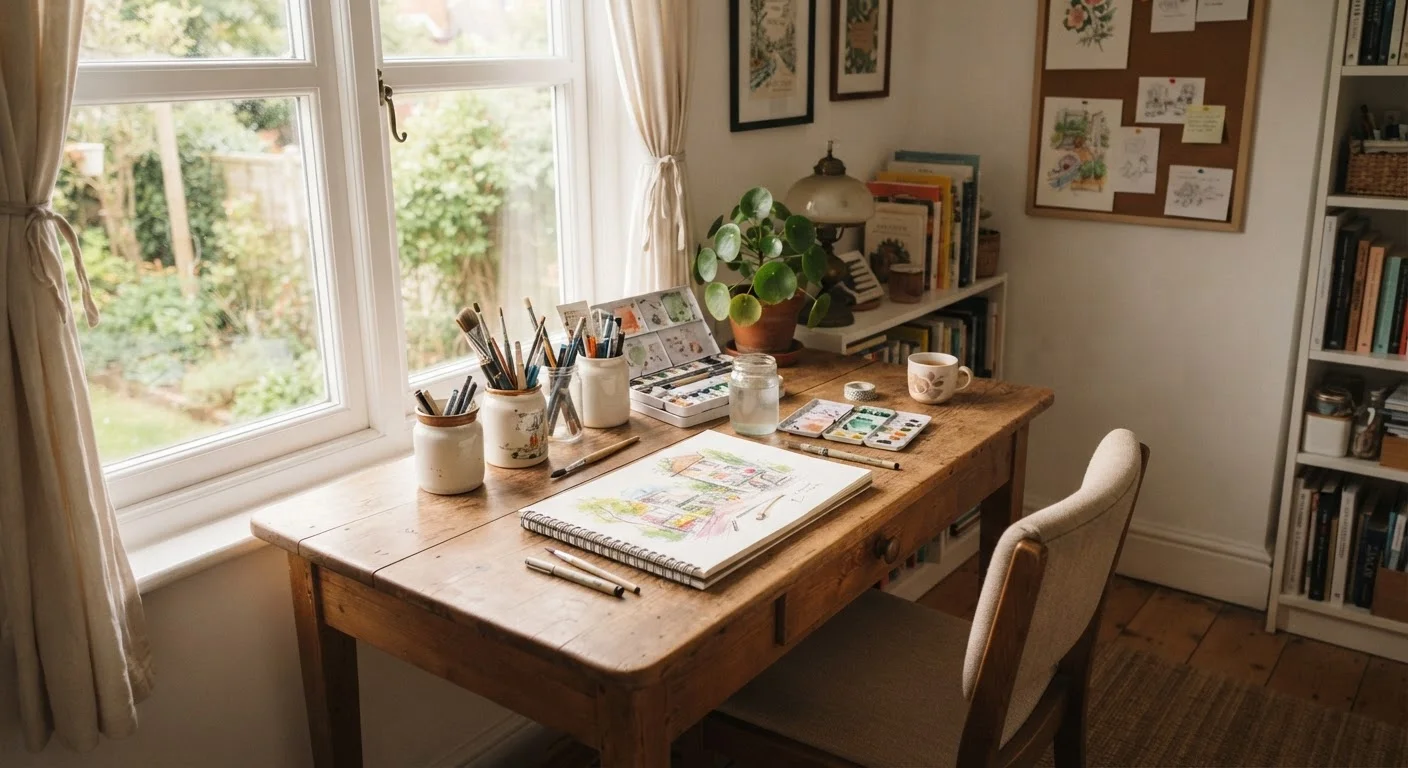
The biggest trap for aspiring consistent artists is waiting for the right moment — better supplies, more time, a cleaner workspace. None of those are the real barrier. A well-considered small creative workspace at home can help, but even a sketchbook on a kitchen counter beats a beautiful studio you never sit down in.
If you sketch while traveling, the habit travels with you. Making art away from your home studio is genuinely achievable with a compact sketchbook and a single pen. Whether you're working digitally or with traditional tools, the core habits described here apply — though digital and traditional media have their own rhythms worth understanding.