The Tools Are Different; the Fundamentals Are Not
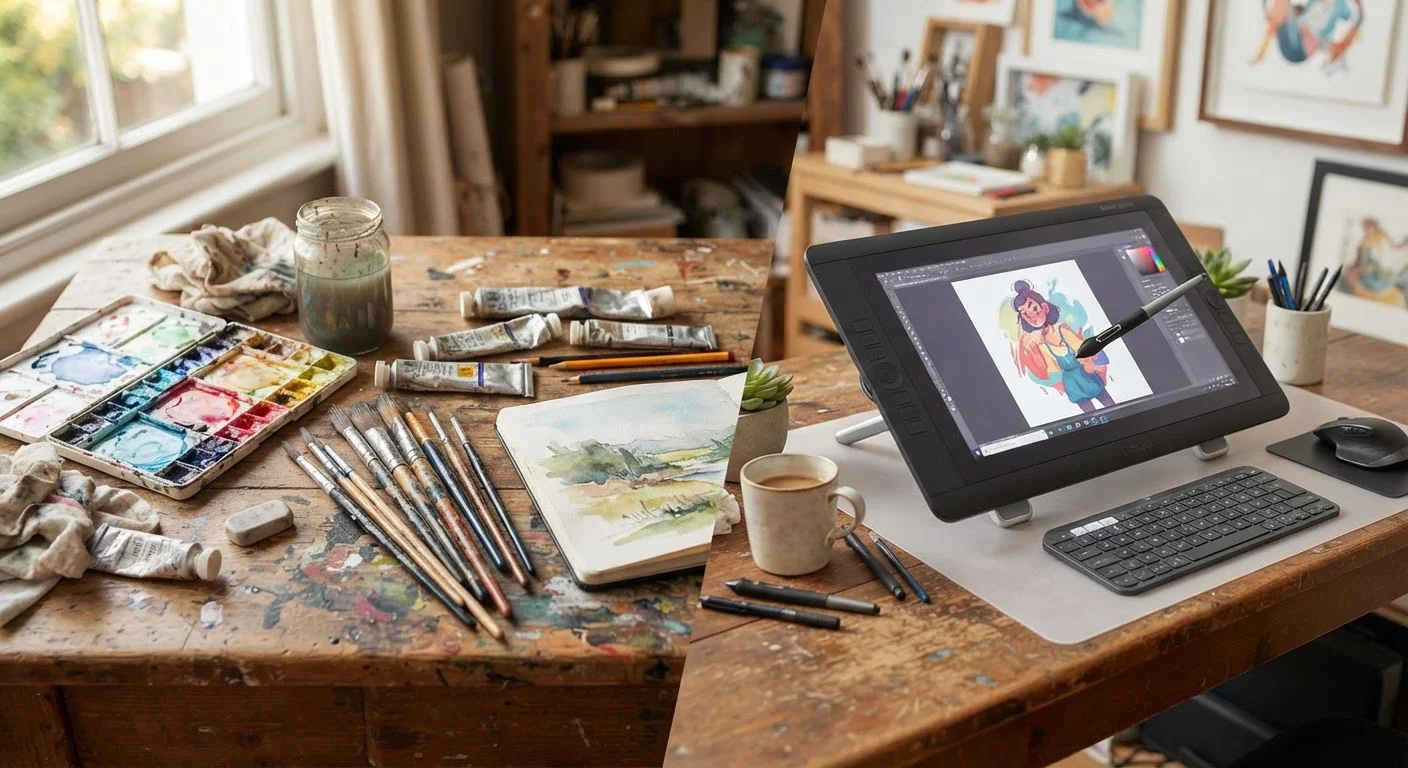
Here's the first thing any aspiring artist should know: the medium changes, but the principles don't. Whether you're working in watercolor or on a drawing tablet, you're still grappling with the same core concepts — composition, light and shadow, color relationships, and proportion. These aren't digital or traditional ideas; they're just art.
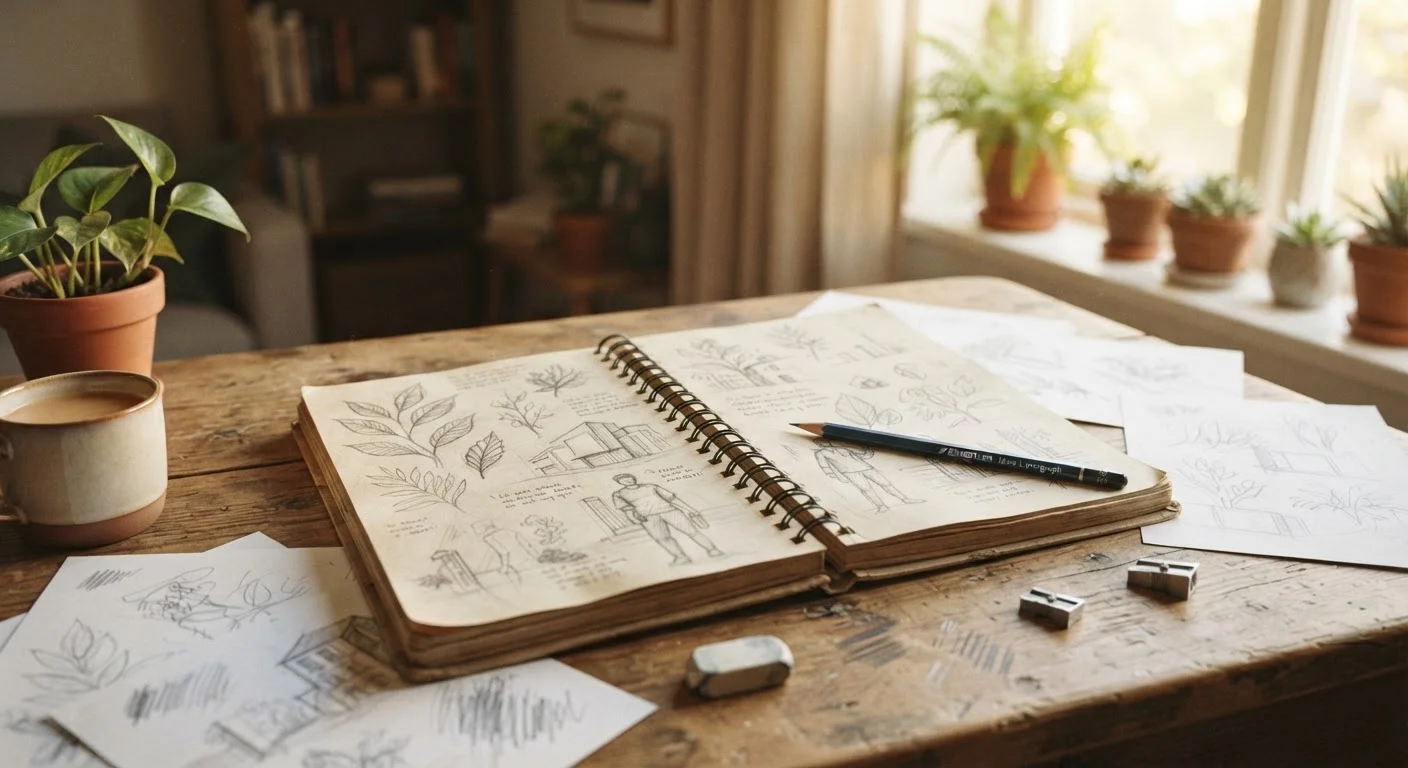
What changes is how you practice them. Traditional media like pencil, oil paint, or charcoal offer direct physical feedback. You feel the resistance of paper, watch pigment blend in real time, and develop muscle memory through sheer repetition. Digital tools — styluses, pressure-sensitive tablets, and drawing software — simulate much of this, but not all of it. The sensitivity settings in an app can approximate a brush's behavior, but the physical drag of bristles on canvas is genuinely different.
That said, artists who build strong observational skills in one medium tend to transfer those skills to the other more quickly than beginners starting from scratch. If you've been developing your eye for value and form through consistent sketchbook practice, switching tools won't feel like starting over.
| Criterion | Digital Art | Traditional Media |
|---|---|---|
| Error correction | Unlimited undo/redo | Must work with or paint over mistakes |
| Upfront cost | Higher (device + software) | Lower to start; scales with medium |
| Ongoing supply cost | Minimal once set up | Recurring (paint, paper, canvas) |
| Portability | High — works wherever device goes | Varies; messy materials limit travel |
| Tactile experience | Simulated; lacks physical texture | Fully physical and sensory |
| Core skill transfer | Strong — fundamentals apply universally | Strong — fundamentals apply universally |
| Sharing & publishing | Instant digital export | Requires scanning or photography |
| Learning curve | Software has interface learning curve | Material handling takes practice |
Cost, Access, and the Ongoing Commitment
One of the most practical differences between digital and traditional art is the cost structure. Traditional supplies often feel more approachable at first — a sketchbook and some pencils are inexpensive — but costs escalate quickly once you move into paint, quality paper, canvases, and specialty brushes. These materials get used up and need replacing.
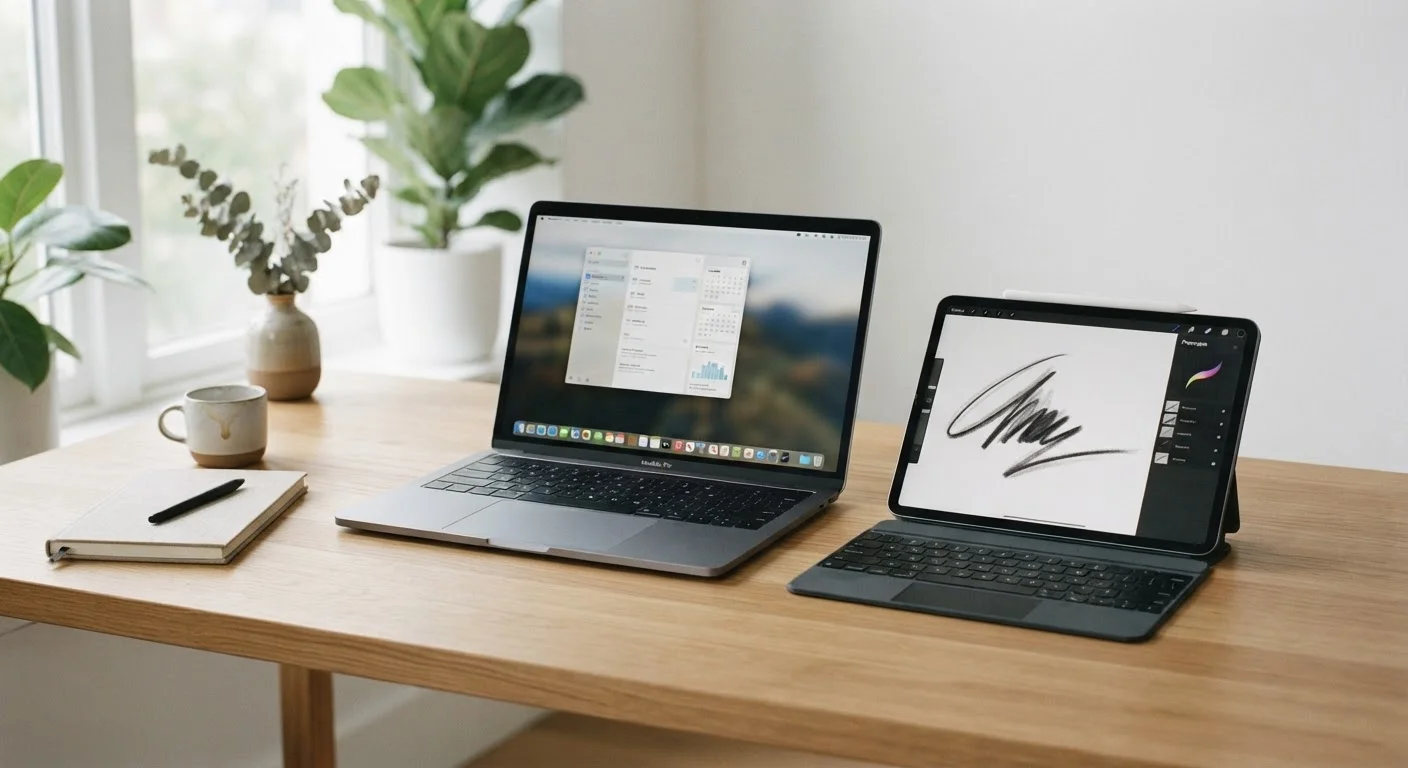
Digital art flips this model. The initial investment in a device and drawing software can be significant, and if you're wondering what hardware makes sense for creative work, the differences between tablets and laptops are worth understanding before you commit. Once you're set up, however, your "supplies" don't run out. No wasted paint, no ruined paper.
Access is also worth considering. Traditional art requires physical space — somewhere to spread out, store materials, and handle potential mess. Digital setups can be more compact, and work travels with you wherever your device goes.
~50%
Artists using both digital and traditional media
Surveys of working illustrators consistently suggest roughly half regularly combine both approaches rather than committing exclusively to one.
3–5x
Traditional supply cost multiplier over time
Art educators generally note that consumable traditional supplies (paint, paper, canvas) can cost several times more than digital tools over a multi-year hobby period.
Mistakes, Experimentation, and the Learning Curve
How each medium handles mistakes is one of the starkest contrasts. In traditional media, a misplaced mark or muddy color mix is a real consequence — you learn to solve problems, paint over them, or incorporate them. Many artists find this constraint actually deepens their skill because it demands more deliberate decision-making upfront.
Digital art's "undo" function is genuinely powerful for beginners. The ability to step back, try a different approach, and iterate rapidly lowers the emotional stakes and encourages experimentation. The risk is becoming dependent on it — some digital artists report that switching to traditional media feels harder because they've never had to commit to a line.
It's worth noting that this isn't a reason to avoid digital — it's just something to be aware of. Many artists who work digitally deliberately practice without undo to build the same intentionality that traditional work demands. This kind of creative discipline, like the broader question of what's lost and gained when moving between physical and digital formats, is a recurring theme across creative pursuits.
Can You Do Both? (Yes, and Many Artists Do)
The good news: this isn't really a binary choice. Many working artists use traditional media for ideation — quick sketches, loose thumbnail compositions, color studies — and then finish or refine work digitally. Others do the reverse, using digital tools to plan and then executing in paint or ink. The two approaches complement each other well.
If you're leaning digital and want to ensure your hardware handles creative software smoothly, it's worth understanding how your device's graphics capabilities affect performance. The difference between integrated and dedicated graphics can matter for rendering-heavy illustration work, especially at larger canvas sizes.
Ultimately, the medium that serves you best is the one you return to consistently. Curiosity and regular practice — not tool choice — are what move artists forward. Both digital and traditional paths have produced remarkable work, and both are wide open to everyday creators willing to show up and experiment.