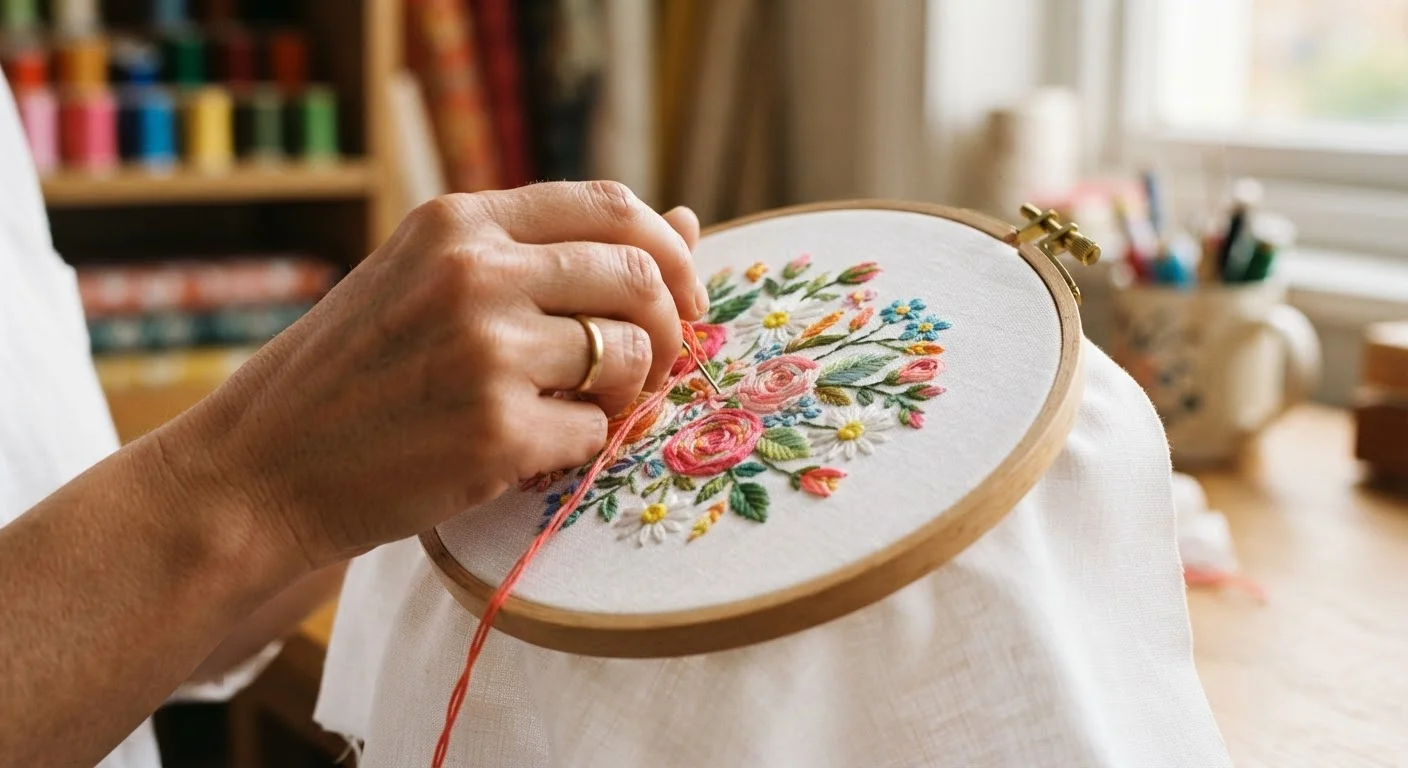
From Samplers to Social Media: A Craft Reimagined
For most of the 20th century, embroidery was quietly tucked away in attic boxes alongside doilies and decorative tea towels. Today, it's trending on social media, filling independent craft markets, and landing in contemporary art galleries. What changed?
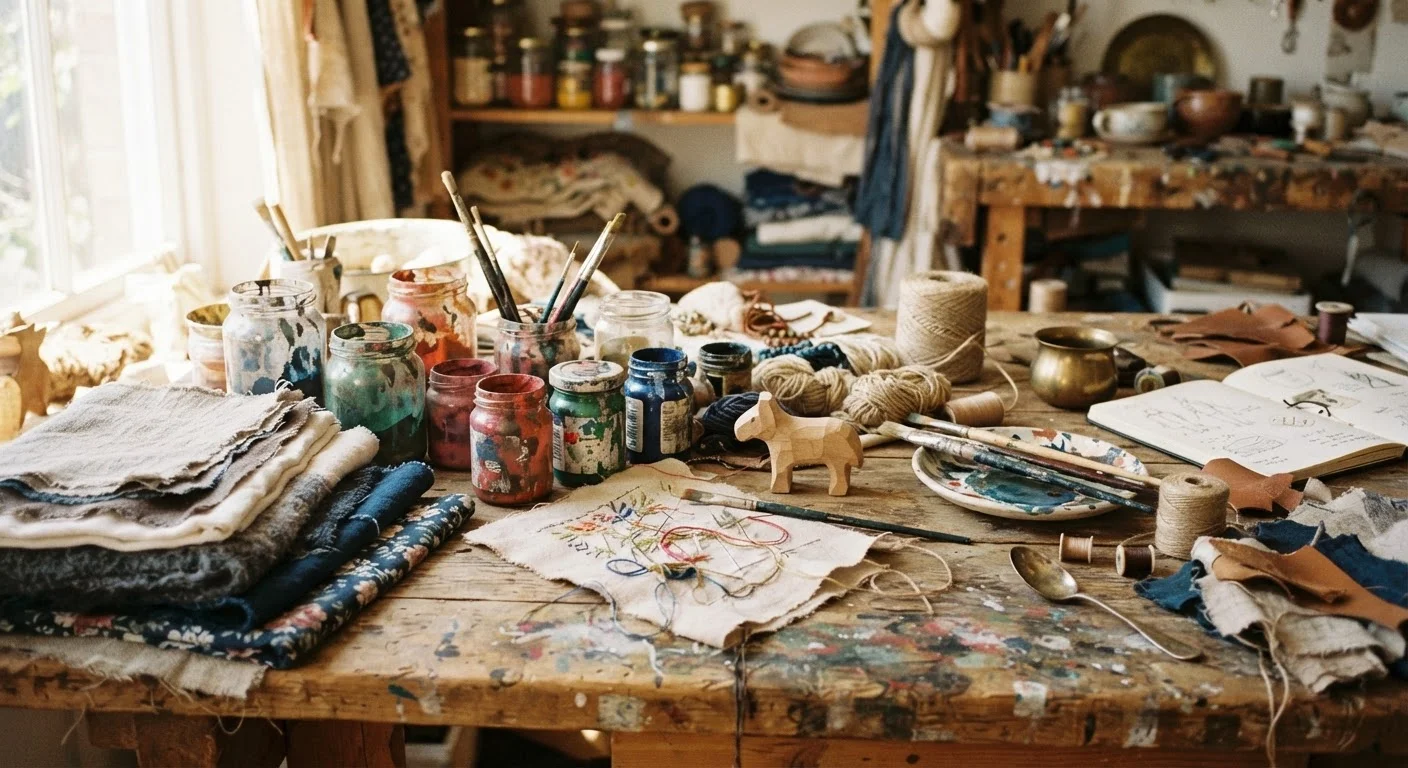
The short answer: embroidery grew up. Today's makers aren't replicating Victorian motifs on canvas — they're stitching bold botanical portraits, subversive slogans, and photorealistic landscapes onto everything from thrifted denim to museum-quality linen. The aesthetic has expanded dramatically, and so has the community. Younger makers in particular have reframed the craft as a form of genuine artistic expression rather than a domestic chore.
If you're curious about where embroidery fits among all the creative pursuits available to adults right now, our guide to creative hobbies for adults maps the landscape helpfully.
“Craft is not a retreat from the world — it is a way of engaging with it more deliberately, stitch by stitch.”
— Joanna Blythman, Food and culture writer, author on craft and slow living
Why People Are Picking It Up Right Now
Several converging factors explain the timing of embroidery's revival. First, the tools and tutorials have never been more accessible. Free, high-quality instruction is now a YouTube search away, and downloadable patterns from independent designers can be printed at home in minutes.
Second — and perhaps more importantly — people are actively seeking hobbies that feel slow and tactile in an increasingly fast, screen-saturated world. Embroidery demands focused attention in a way that's genuinely calming. Research into mindful crafting consistently points to reduced cortisol levels and improved mood in people who engage in repetitive hand-making activities, though individual experiences vary.
Third, embroidery is wonderfully portable. A small project kit fits into a purse or carry-on bag, making it a natural companion for commutes, flights, or afternoons in the park. For more ideas on creative hobbies that travel well, see our piece on making art away from your home studio.
~$20
Typical cost of a beginner embroidery starter kit
Basic hoops, needles, floss, and fabric are widely available at craft and general merchandise stores across the US.
100K+
Posts under major embroidery hashtags on Instagram
Active hashtag communities have helped normalize the craft among younger adults and hobbyist makers globally.
1 afternoon
Time to learn basic foundational stitches
Most beginners report feeling comfortable with backstitch, satin stitch, and running stitch after just a few hours of practice.
The Basics: What You Actually Need to Start
One of embroidery's greatest strengths is its low barrier to entry. At its most stripped-down, you need four things:
- An embroidery hoop — a two-ring wooden or plastic frame that keeps fabric taut while you stitch
- Embroidery floss — six-strand cotton thread sold in hundreds of colors for just a dollar or two per skein
- A needle — embroidery needles have a slightly larger eye than standard sewing needles to accommodate thicker thread
- Fabric — plain cotton or linen works well; even an old pillowcase is a perfectly good starting canvas
Transfer a design onto your fabric using a water-soluble pen or a printed template, and you're ready to stitch. Most beginners start by mastering the backstitch (great for outlines), the satin stitch (fills solid areas with color), and the French knot (creates small textured dots). Those three stitches alone can produce beautiful, finished pieces.
Start Small, Finish Something
Resist the urge to start with a complex, ambitious pattern. A single flower or a simple word stitched onto a small piece of fabric gives you a real finished object — and that sense of completion is enormously motivating. Once you've finished two or three small pieces, tackling a larger project feels far less daunting.
Embroidery Meets Sustainability
One of the most exciting intersections in the modern embroidery world is its overlap with sustainable fashion and upcycling. A worn denim jacket or a faded tote bag becomes a blank canvas rather than landfill fodder when you add stitched embellishment. This approach gives worn-out items a second life while producing something genuinely one-of-a-kind.
This connection to sustainable creative practice runs parallel to the broader upcycling movement. Our article on upcycling as a creative outlet explores this ethos across a range of materials and methods.
If you've been curious about other textile crafts and how they compare, it's also worth considering knitting versus crocheting — the skill curves and project types feel quite different from embroidery, so it's a useful comparison to make before committing to a craft.
Finding Your Community and Growing Your Skills
Embroidery's renaissance is as much social as it is creative. Online communities on Reddit, Instagram, and dedicated forums have made it easy to share work-in-progress photos, ask questions, and find encouragement from makers at every level. Hashtag communities around embroidery attract hundreds of thousands of posts, creating a real feedback loop that motivates learners to keep going.
Local craft guilds and yarn or fabric shops often run beginner embroidery workshops — a great way to learn proper technique hands-on and meet other makers in your area. Many public libraries also stock embroidery pattern books you can borrow before investing in your own.
The goal isn't perfection — it's making something with your hands that didn't exist before. Whether you stitch a tiny wildflower on a shirt collar or work up to a large framed piece, embroidery rewards patience with genuine, lasting satisfaction.