The Core Difference: Tools, Technique, and Feel
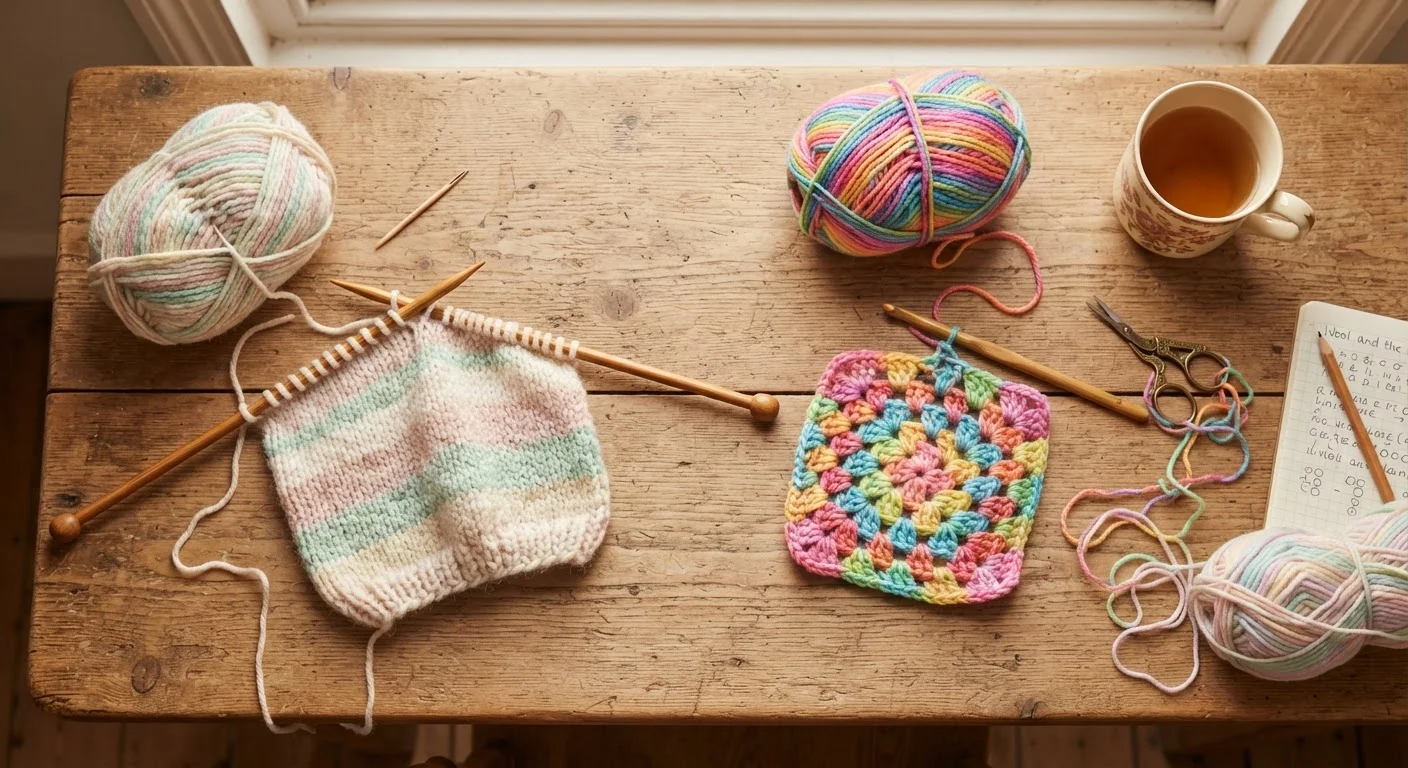
At its simplest, knitting uses two long needles to hold multiple live stitches at once, interlocking loops in a flowing sequence. Crocheting uses a single hook and works one stitch at a time, pulling yarn through loops before moving on. That structural difference shapes everything — how fabric looks, how errors are caught, and how quickly a newcomer feels capable.
Knitted fabric tends to be lighter, stretchier, and more drape-friendly, which is why it dominates garment making. Crocheted fabric is denser and holds its shape more rigidly, making it ideal for bags, dishcloths, and sculptural pieces. Neither quality is superior — they're just different tools solving different creative problems.
The feel while working also diverges noticeably. Knitting has a flowing, almost meditative rhythm once muscle memory kicks in, but the initial coordination of two needles plus yarn management can feel clumsy. Crocheting puts everything in one hand, so many learners find early sessions less frustrating.
Learning Curve: Honest Expectations for Both
Most craft educators place crocheting as the more accessible entry point. The basic stitches — chain, single crochet, double crochet — are fewer in number and easier to see. Mistakes are also much simpler to fix: pull the hook out, unravel the offending rows, and restart without worrying about dropped stitches cascading down your work.
Knitting's learning curve comes from managing live stitches across two needles simultaneously. Drop one off the needle and it can unravel several rows before you notice. That said, knitters often argue the "click" moment arrives and suddenly everything feels intuitive. The payoff — especially for wearable garments — is hard to overstate.
| Criterion | Knitting | Crocheting |
|---|---|---|
| Tools needed | Two needles | One hook |
| Beginner difficulty | Moderate | Easier |
| Error recovery | Tricky (live stitches drop) | Forgiving (easy to frog) |
| Fabric texture | Stretchy and drapey | Firm and structured |
| Best project type | Garments and lace | 3D objects and décor |
| Portability | Moderate (two needles) | High (single hook) |
| Speed to first project | Longer | Faster |
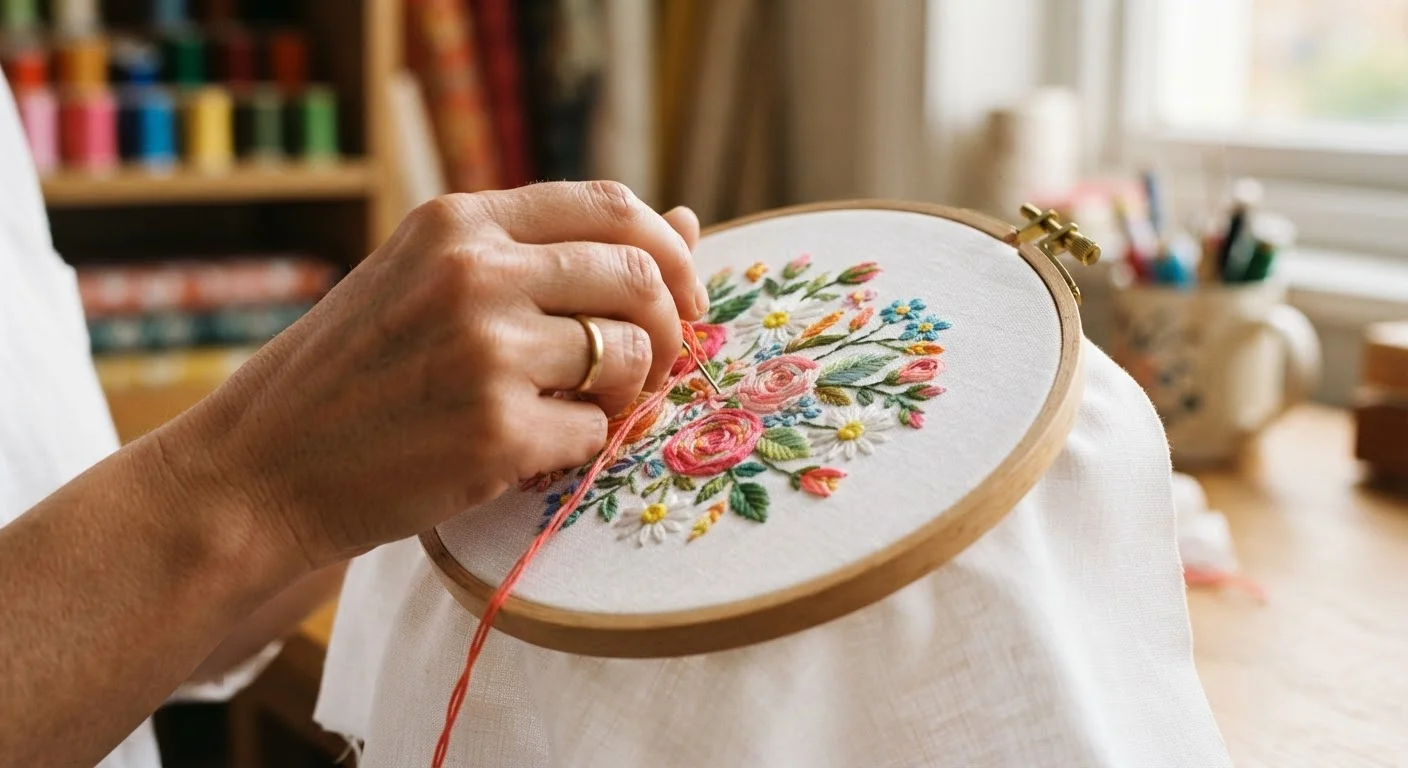
Both crafts reward consistent short practice sessions over marathon weekend attempts. Even 15 minutes of daily practice builds muscle memory faster than a three-hour Sunday session once a week. If you're drawn to the idea of fiber arts more broadly, it's also worth knowing that needle crafts share creative community space with embroidery — check out our piece on embroidery as a modern hobby for another angle on textile creativity.
Project Types and What Each Craft Does Best
Understanding which projects suit each craft helps you pick the one aligned with your actual goals — not just the craft that sounds appealing in theory.
- Knitting excels at: sweaters, cardigans, socks, shawls, baby clothes, and fine lace work
- Crocheting excels at: amigurumi (stuffed animals), granny squares, market bags, blankets, and textured home décor
Blankets are a interesting case — both crafts produce them, but crochet blankets typically work up faster because each stitch is taller, covering more area per row. Knitted blankets tend to have a softer, more pliable drape.
~50M
Americans who knit or crochet
The Craft Yarn Council has reported that approximately 50 million Americans participate in yarn crafts including knitting and crocheting.
2–3 days
Time to complete a beginner crochet dishcloth
Craft instructors commonly cite a basic single-crochet dishcloth as achievable in a few short sessions for most new crocheters.
~40%
Yarn crafters who practice both knitting and crochet
Surveys by the Craft Yarn Council suggest a significant share of yarn enthusiasts ultimately pursue both crafts over time.
If your vision board includes sculptural 3D projects or toys, crochet wins decisively. If you want garments that move and breathe with your body, invest the extra learning time in knitting. Many fiber arts enthusiasts eventually pick up both — and find that knowledge of one genuinely accelerates learning the other.