Why Creative Hobbies Matter for Adults
There's a persistent myth that creativity is something you either have or you don't — and that adults who missed the art-class boat have no business picking up a paintbrush. That's simply not true. Creative hobbies are practiced skills, and most of them are far more accessible than they first appear.
Research consistently links creative engagement with reduced stress, stronger sense of identity, and improved mood. Making something with your hands — or your cursor — gives the brain a different kind of workout than screens and productivity tasks. And unlike many hobbies, creative pursuits tend to grow with you: the more you practice, the more satisfying they become.
This guide maps the full landscape of creative hobbies adults can realistically start, grouped by category so you can find your corner. Whether you have a spare bedroom for a studio or just a kitchen table and thirty minutes before bed, something here will fit.
Visual and Drawing Arts
Drawing and painting remain among the most popular creative entry points — and for good reason. They require minimal equipment to start and offer immediate, visible results.
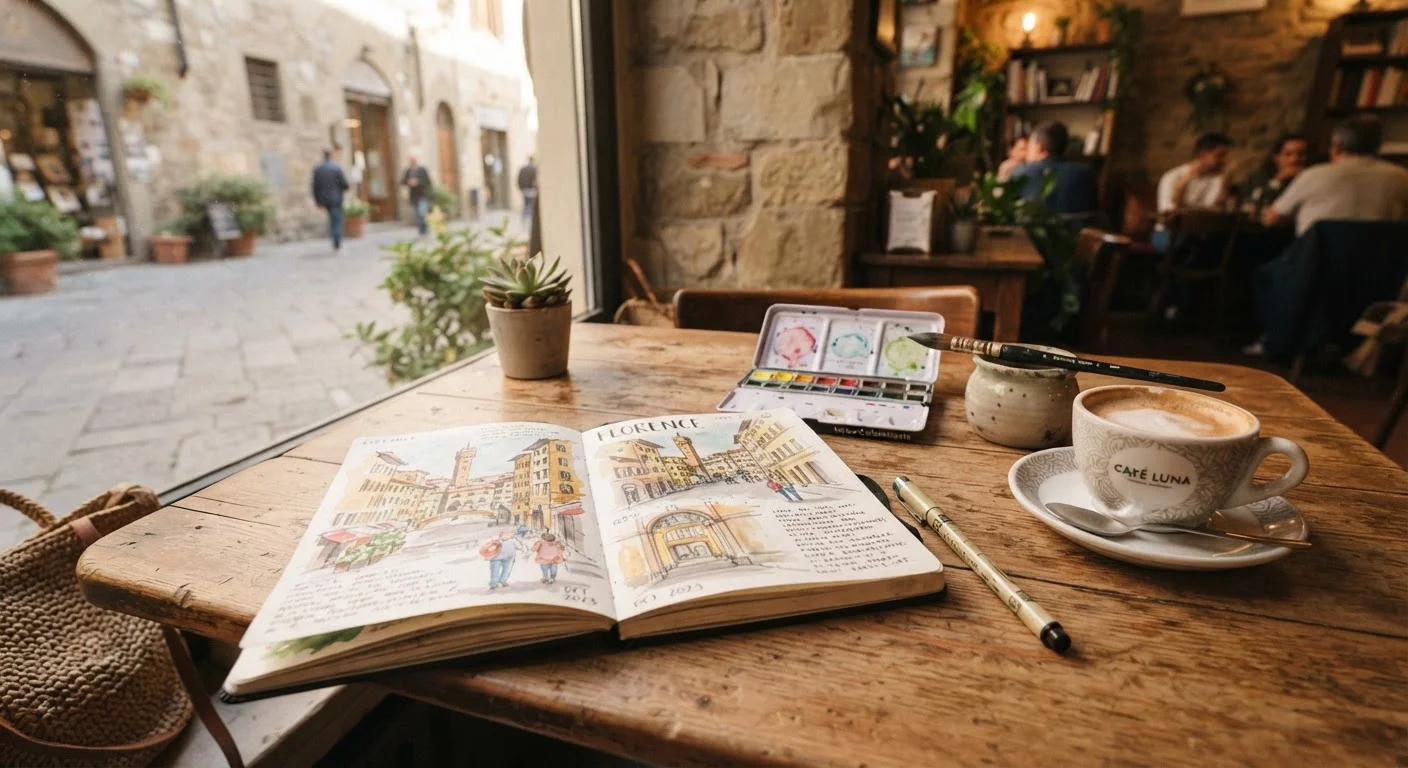
- Sketching and illustration: A pencil and a sketchbook are all you need. Urban sketching — drawing scenes from everyday life — has a particularly warm global community.
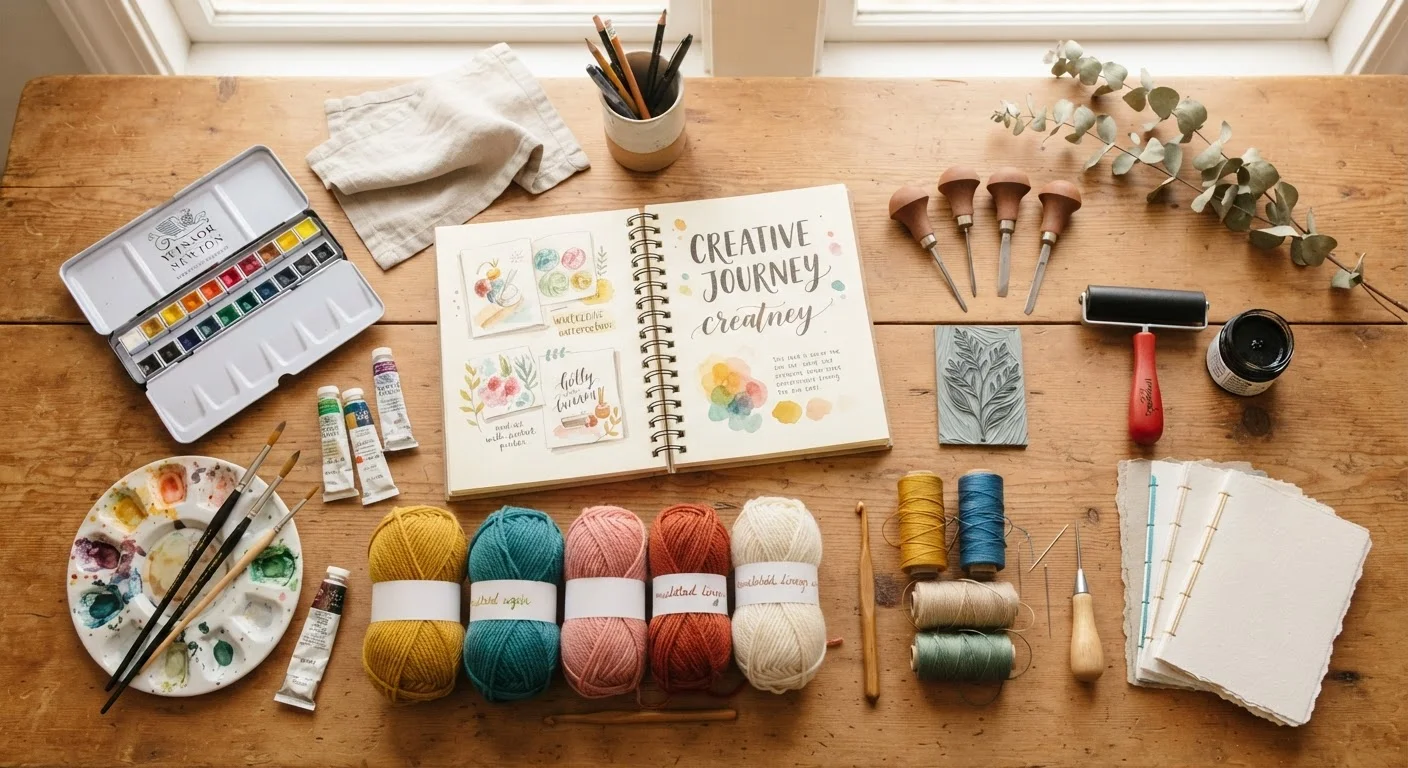
- Watercolor painting: Beginner-friendly, compact, and forgiving. Watercolor sets take up little space and clean up with water.
- Acrylic painting: Dries fast, blends well, and works on canvas, wood, paper, or fabric. A versatile medium for experimenters.
- Oil painting: Slower drying time rewards patient, layered work. Requires ventilation and solvents, so factor that into your space planning.
- Gouache: Opaque watercolor with a matte finish, popular with designers and illustrators for its bold, flat color.
- Ink and calligraphy: Hand-lettering and brush calligraphy are accessible arts with a strong online learning community.
When starting any visual art, spend your first sessions copying things you see rather than drawing from imagination — observation is the foundational skill everything else builds on.
Most instruction in drawing focuses on training the eye before the hand. Beginners who try to draw from imagination too early get discouraged when results don't match mental expectations.
Buy the smallest, cheapest version of any craft supply first. Quality matters more once you know you'll stick with the hobby.
A common beginner mistake is investing heavily upfront, then feeling guilty or locked in if the hobby doesn't click. Starting small keeps experimentation low-stakes.
For beginners unsure where to start visually, sketching with a simple pen for 10 minutes a day builds observation skills faster than any structured course alone.
Fiber and Textile Arts
Textile arts are having a genuine renaissance among adults of all ages. They're tactile, portable, and deeply satisfying — and the community around them is extraordinarily welcoming.
- Knitting and crochet: Both create fabric from yarn using needles or a hook. Crochet is often considered slightly easier for absolute beginners. Projects range from dishcloths to complex garments.
- Embroidery and cross-stitch: Precise, meditative, and endlessly customizable. A hoop, needle, floss, and fabric are all you need to begin.
- Weaving: Frame looms are inexpensive and apartment-friendly. Rigid-heddle looms are a popular step up for those who want to create actual cloth.
- Macramé: Knot-based fiber art using cord or rope. Wall hangings and plant hangers are common beginner projects.
- Spinning: Turning raw fiber into yarn using a drop spindle or wheel — a slower, more contemplative craft with strong roots in handcraft tradition.
If you travel frequently and want a creative outlet that comes along, fiber arts pack beautifully. See our guide to creative hobbies that travel well for ideas on keeping the momentum going away from home.
Paper, Book, and Print Arts
These crafts sit at the intersection of visual art and hands-on making — and they tend to appeal to people who love both books and process.
- Bookbinding: Creating handmade books using folded paper signatures, thread, and cover boards. Coptic stitch and Japanese stab binding are popular beginner formats.
- Origami and paper folding: Needs nothing but paper. Modular origami — building complex 3D forms from multiple folded units — can become genuinely intricate.
- Letterpress and printmaking: Linocut (carving designs into linoleum blocks and printing them) is a great entry-level print art requiring modest tools and no press.
- Collage: Assembling imagery from magazines, prints, found materials, or painted papers. Combines well with journaling and scrapbooking.
- Journaling and art journaling: A hybrid of writing and visual art, using sketchbooks as a personal creative space with no audience pressure.
Digital and Mixed-Media Creativity
Digital creative hobbies have lowered the barrier to entry dramatically — many tools are free or low-cost, and the learning curve is manageable with the tutorials available today.
- Digital illustration: Drawing apps on tablets have made this deeply accessible. Many professional illustrators recommend starting with free software before investing in hardware.
- Graphic design as a hobby: Creating posters, zines, or typography for fun — not necessarily for clients — is a legitimate and satisfying pursuit.
- Photography: A smartphone camera is genuinely sufficient to learn composition, light, and visual storytelling. Film photography has also seen a resurgence for those who enjoy the analog process.
- Video and stop-motion animation: Short-form creative video — claymation, paper cutout animation — can be made with household materials and a phone.
- Music production: Free digital audio workstations (DAWs) like GarageBand make basic music composition accessible to non-musicians.
3D and Sculptural Crafts
Working in three dimensions adds a physical, spatial challenge that many makers find uniquely absorbing.
- Pottery and ceramics: Hand-building (pinch pots, coil, slab) requires no wheel and can be done with air-dry clay at home. Wheel throwing typically requires a community studio, which also provides kiln access.
- Woodcarving: Whittling with a sharp knife and a piece of basswood is a slow, satisfying craft that produces spoons, small figures, and decorative objects.
- Candle and soap making: Approachable kitchen-table crafts with tangible, giftable results. Both involve melting and pouring — straightforward to learn safely.
- Leatherworking: Tooling, stamping, and stitching leather into wallets, bags, or belts. Starter kits are widely available and the craft scales in complexity.
- Sculpting with air-dry clay: No kiln required. A versatile material for figurines, vessels, and decorative objects.
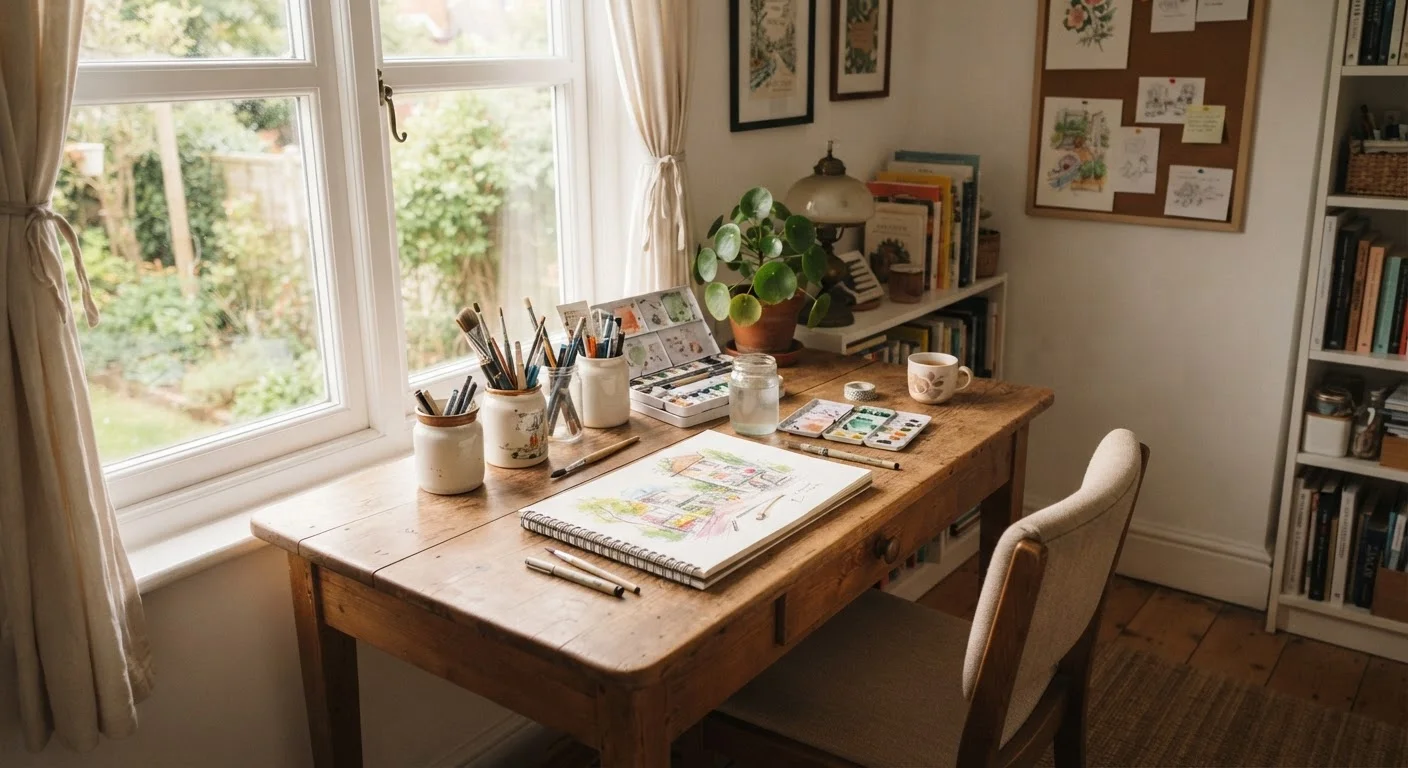
Before diving into any 3D hobby, it's worth thinking about your physical workspace. Our guide to setting up a small creative workspace at home walks through practical setup considerations for makers with limited space.
How to Choose and Get Started
With this many options, the real challenge isn't finding a creative hobby — it's narrowing it down. A few practical questions help:
- Do you prefer working alone or with others? Some crafts have strong local guilds and class cultures (pottery, knitting); others are naturally solitary (journaling, digital illustration). If you enjoy structured social creativity, look for beginner workshops at community centers, libraries, or local studios.
- How much space do you have? Sketching and embroidery need almost none. Weaving, woodworking, and ceramics need more. Be honest about your setup before buying supplies.
- What's your sensory preference? Some people love the tactile pull of yarn through their fingers; others prefer the clean precision of a stylus on a screen. Your medium should feel satisfying, not frustrating.
- Start with a sampler, not a commitment. Try a beginner class or a small starter kit before buying a full set of supplies. Many local libraries lend craft tools, and community workshops often offer single-session introductions.
Try Before You Commit to Supplies
Before purchasing a full set of supplies for any new creative hobby, look for a single beginner class, a library lending program, or a friend who already practices the craft. Many public libraries now lend tools ranging from knitting needles to sewing machines. This low-stakes approach lets you decide if the process genuinely appeals to you — not just the idea of it.
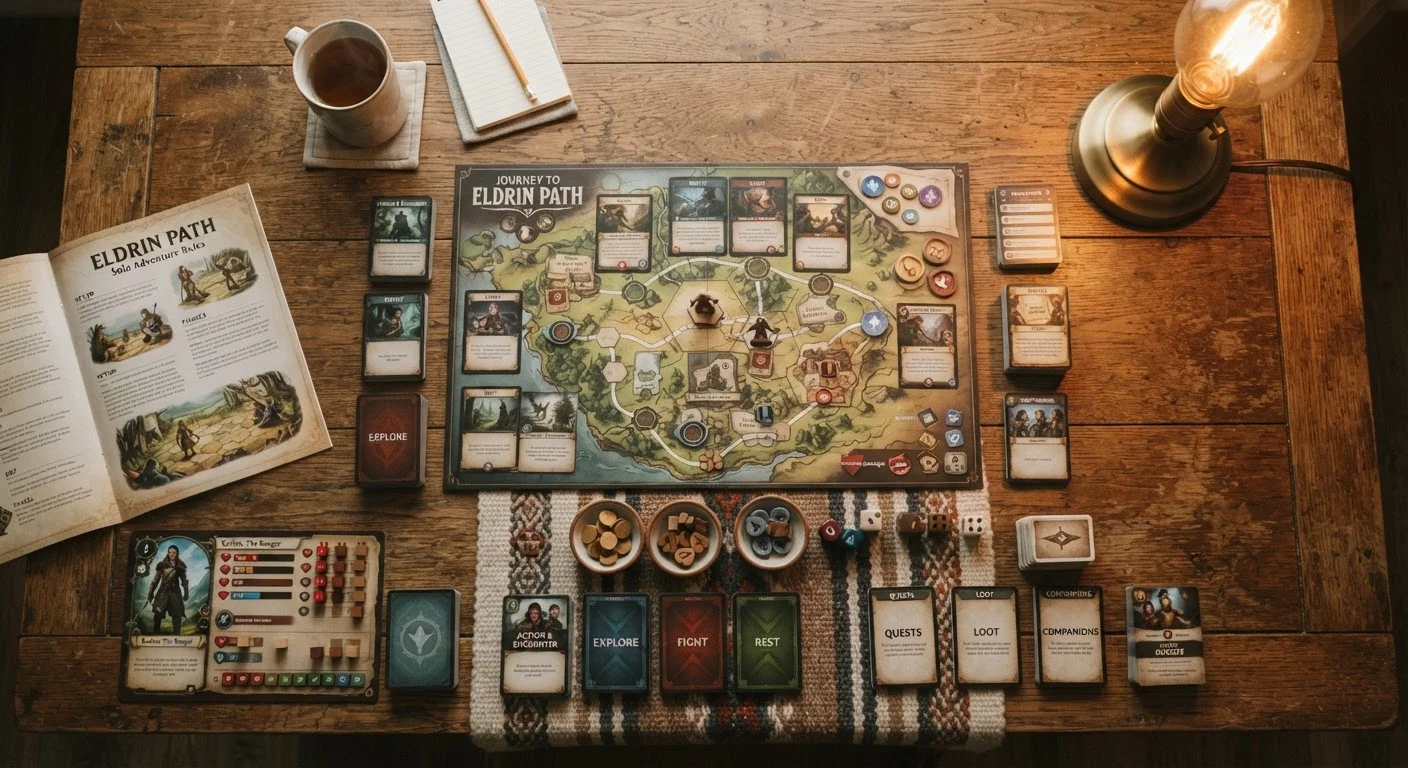
Creative hobbies don't exist in isolation from the rest of your leisure life. If you're equally drawn to puzzles and logic-based entertainment, our look at solo board gaming shows how strategic play can satisfy some of the same focused, self-directed enjoyment as making things.