What Upcycling as a Creative Practice Actually Looks Like
Upcycling — the practice of transforming discarded or worn-out materials into something new and useful — sits at a satisfying crossroads of creativity, sustainability, and resourcefulness. Unlike recycling, which breaks materials down, upcycling works with what's already there: the grain of an old wooden pallet, the pattern on a worn flannel shirt, the shape of a cracked ceramic bowl.
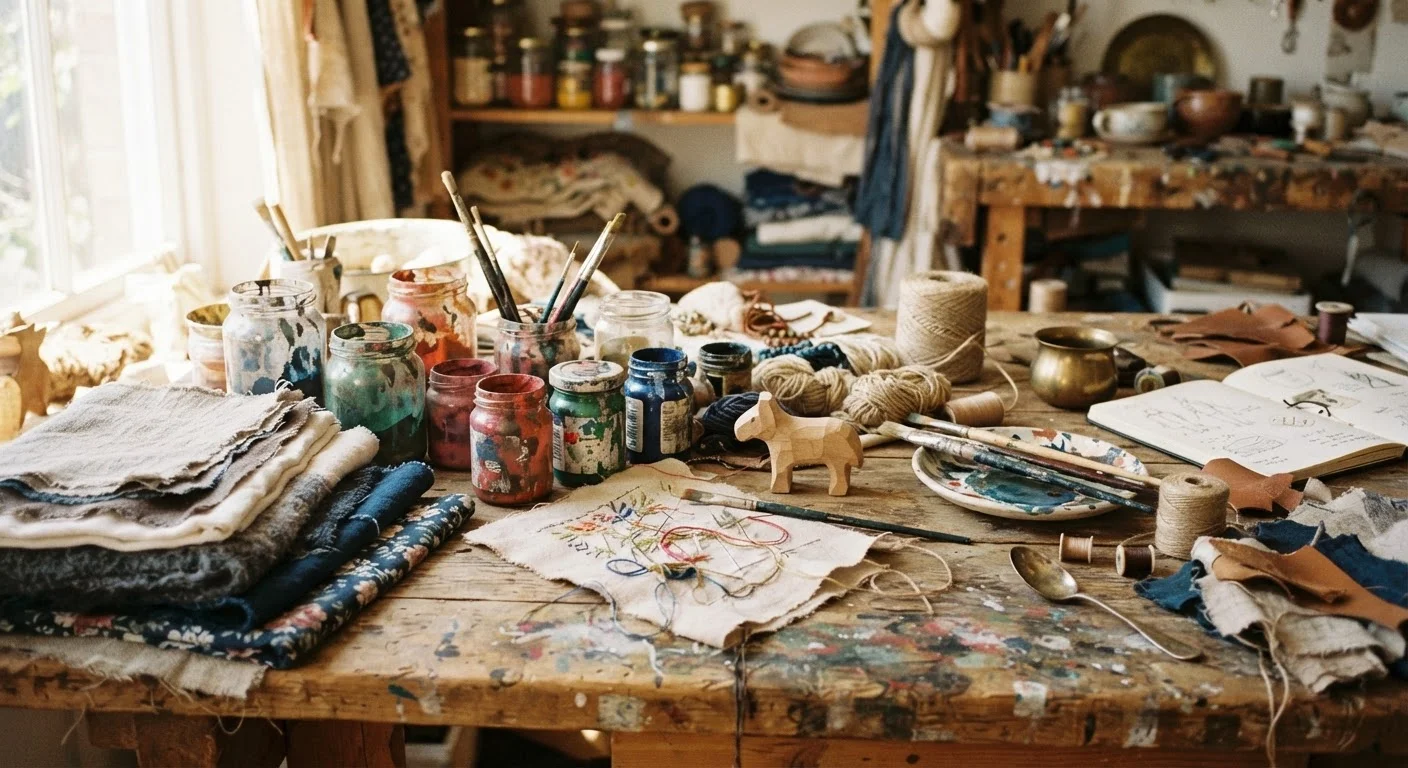
In practice, it might look like reupholstering a thrift-store chair with vintage fabric, turning wine bottles into pendant lamps, reshaping denim jeans into a quilted wall hanging, or reassembling broken furniture into a sculptural shelving unit. The starting point is almost always material you already have — or can find cheaply at estate sales, curbside pickups, or secondhand shops.
What makes it a creative practice rather than just a chore is the intentionality behind it. Upcyclers make deliberate aesthetic choices: about color, texture, form, and purpose. That's where this hobby overlaps with fine craft, and why it fits comfortably alongside other making pursuits. For a broader look at where upcycling sits among creative options, see Creative Hobbies for Adults.
The Real Advantages of Upcycling
Upcycling has earned its enthusiastic following for good reason. Here's what genuinely works in its favor:
Extremely low startup cost
The raw materials are things you already own or can gather for free — broken furniture, empty jars, old clothing. You may need a few basic tools, but the material cost is often near zero.
Produces tangible, usable objects
Unlike some creative hobbies that result in digital files or temporary experiences, upcycling yields real objects you can display, use, or give as gifts. That physicality is deeply satisfying for many makers.
No prior artistic training required
Upcycling rewards problem-solving and curiosity more than formal skill. Beginners can achieve genuinely good results by starting simple and learning through hands-on experimentation.
Each piece is inherently one-of-a-kind
Because the source materials are unique — this particular pallet board, that specific vintage scarf — no two upcycled objects are identical, which gives finished pieces a distinct authenticity.
Reduces waste in a meaningful, visible way
Diverting objects from landfill is motivating for many makers. The environmental benefit is concrete and personal rather than abstract, which adds purpose to the creative act.
Scales with your skill level
Simple jar painting is a 30-minute beginner project; ambitious furniture restoration can consume weeks of skilled work. The hobby grows with you rather than plateauing early.
One underappreciated advantage is the creative constraint itself. Working with a material that has an existing shape, texture, or history forces you to think differently than you would with a blank canvas. Many makers find that limitation liberating rather than frustrating — it's a puzzle with a satisfying solution.
The Honest Disadvantages Worth Knowing
Upcycling is rewarding, but it isn't without friction. Going in with realistic expectations will save you time and frustration.
Materials are unpredictable and inconsistent
Secondhand items may have hidden damage, structural weakness, or chemical treatments that complicate or derail a project. You often don't know what you're working with until you're deep into the process.
Projects take longer than expected
Sourcing materials, cleaning and prepping them, and adapting your approach as problems arise all add time. A single afternoon project can stretch across several sessions.
Can generate its own clutter
Collecting materials 'for future projects' is a common trap. Without discipline, a upcycling practice can add disorder to a home rather than reduce it.
Some techniques require specific tools
Woodworking, reupholstering, and metalwork each need dedicated equipment that carries its own cost and storage demand. Not every upcycling direction is as tool-free as it first appears.
Results are genuinely uneven at first
Early projects may not look the way you envisioned, and that gap between expectation and outcome can be discouraging. Managing expectations and accepting imperfection is part of the learning curve.
Safety Considerations for Older Materials
Some vintage or reclaimed materials carry hidden hazards. Older painted furniture may contain lead-based paint, and certain treated woods can release harmful compounds when sanded or cut. Before working with any old painted surface, consider testing with a lead-detection kit (available at hardware stores) and always work in a well-ventilated space. If in doubt about a material's composition, err on the side of caution and research before cutting, sanding, or burning it.
The unpredictability of secondhand materials is one of the hobby's most persistent challenges. A wooden board might look solid but harbor hidden cracks; old upholstery fabric can harbor dust or damage that only reveals itself mid-project. Building in extra time and material budget helps absorb these surprises without derailing a project entirely.
Getting Started: Your First Upcycling Project
The best first project is a small one with a clear finish line. A few approachable starting points:
- Glass jars: Clean and paint old pasta or jam jars to use as organizers or candle holders. Minimal tools, immediate results.
- Old denim: Cut worn jeans into strips and braid or weave them into a rug, tote bag, or patchwork panel.
- Wooden pallets: Sand a single pallet plank and use it as a shelf bracket, picture frame, or painted sign.
- Broken ceramics: Mosaic-style arrangements using ceramic shards make striking stepping stones or decorative trays.
You'll want a designated space to work — even a folding table in a spare corner helps keep projects organized and mess contained. The guide on setting up a small creative workspace at home walks through exactly how to do that practically.
~11.4M tons
Textile waste generated in the US annually
According to the US Environmental Protection Agency, Americans discard millions of tons of clothing and textiles each year, making fabric one of the most abundant upcycling source materials available.
~146 lbs
Furniture and furnishings discarded per person per year
EPA estimates suggest Americans discard large volumes of furniture annually, most of which ends up in landfills — representing a vast pool of raw material for upcycling projects.
If you're drawn to textile-based upcycling in particular — repurposing fabric, clothing, or fiber — it pairs naturally with other textile crafts. Embroidery as a modern hobby is a great companion practice that uses similar materials and the same patient, detail-oriented mindset.