What Is a Credit Report?
A credit report is a detailed record of your borrowing history compiled by credit reporting agencies — commonly called credit bureaus. The three major bureaus in the United States are Equifax, Experian, and TransUnion. Lenders, landlords, and sometimes employers use these reports to evaluate how reliably you've managed debt in the past.
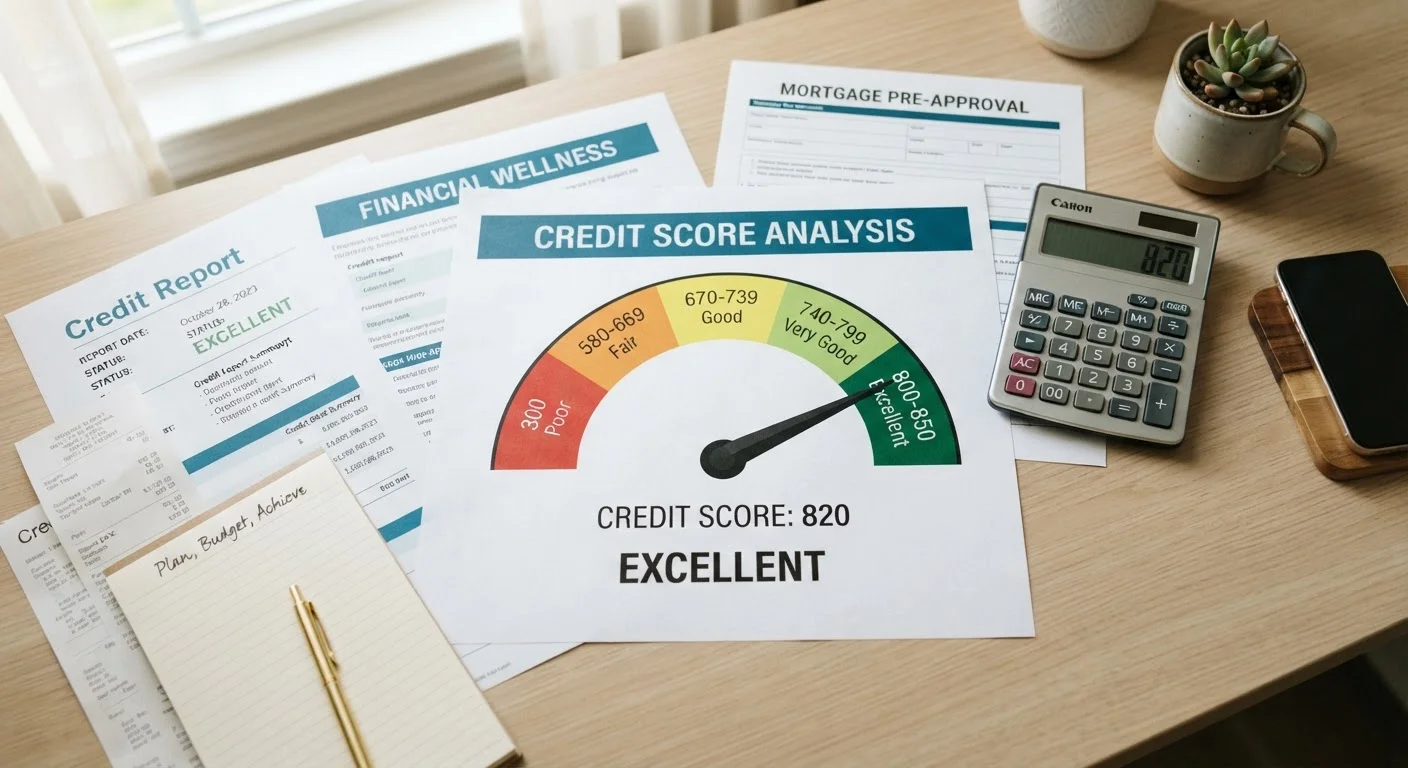
Your credit report is not the same as your credit score. The report is the raw data; the score is a numerical summary calculated from that data using models such as FICO or VantageScore. Understanding the underlying report gives you far more actionable insight than a single number ever can.
Under the Fair Credit Reporting Act (FCRA), you are entitled to a free copy of your report from each bureau annually through AnnualCreditReport.com, the official federally mandated source. This article is part of our broader credit and debt overview for borrowers who want a full picture of how credit works.
Credit bureau
A company that collects and maintains borrowing history on consumers and compiles it into credit reports. The three major U.S. bureaus are Equifax, Experian, and TransUnion.
Tradeline
Any individual credit account listed on your credit report, such as a credit card, mortgage, or auto loan, along with its full payment history and status.
Hard inquiry
A credit check triggered by an application for new credit. It is recorded on your report and can have a small, temporary effect on your credit score.
Soft inquiry
A credit check that does not affect your score, such as checking your own report or a lender pre-screening you for a promotional offer.
Fair Credit Reporting Act (FCRA)
A federal law that governs how credit bureaus collect and share consumer credit information, and gives consumers the right to dispute inaccurate data.
Collection account
A delinquent debt that the original creditor has transferred to a collections agency because it was not paid. It appears as a negative item on your credit report.
Section 1: Personal Information
The first section of your credit report contains identifying information the bureaus use to match accounts to you. This includes your full name (including any name variations previously reported), current and former addresses, date of birth, Social Security number (partially masked), and current or past employers.
This section does not affect your credit score. However, it's worth reviewing carefully. Unfamiliar addresses or name variations you don't recognize could indicate mixed files — where another person's information has been blended into your report — or even identity theft. Report anything suspicious to the bureau immediately.
Section 2: Credit Accounts (Tradelines)
This is the largest and most consequential section of your report. Each open or recently closed credit account appears here as a tradeline. Tradelines include revolving accounts (credit cards, lines of credit) and installment accounts (mortgages, auto loans, student loans, personal loans).
For each tradeline, your report typically shows:
- Creditor name and account number (partially masked)
- Account type and status (open, closed, in good standing, delinquent)
- Date opened and date of last activity
- Credit limit or original loan amount
- Current balance and payment history, often displayed month by month
- Responsibility — whether you are the sole account holder, a joint holder, or an authorized user
Payment history is the single most influential factor in most credit scoring models, typically accounting for roughly 35% of a FICO score. Even one missed payment can leave a mark. Before you apply for new credit, it pays to review your tradelines carefully — our pre-application checklist walks through exactly what to look for.
Section 3: Credit Inquiries
Every time someone accesses your credit report, it is recorded as an inquiry. There are two types, and they are treated very differently.
- Hard inquiries
- Generated when you apply for credit — a mortgage, auto loan, credit card, or similar product. Each hard inquiry can have a small, temporary negative effect on your score and remains on your report for two years.
- Soft inquiries
- Generated when you check your own report, when a lender pre-screens you for a promotional offer, or when an employer runs a background check. Soft inquiries are visible only to you and have no effect on your credit score.
Multiple hard inquiries for the same type of loan within a short window — typically 14 to 45 days depending on the scoring model — are usually grouped together and counted as a single inquiry. This rate-shopping allowance applies to mortgages, auto loans, and student loans, so comparison shopping does not have to cost you. For more on what really moves your score, check out our article on common credit score myths.
Section 4: Public Records and Collections
This section records serious financial events that have entered the public domain or been sent to collections. Historically it included judgments and tax liens, though major bureaus have removed most civil judgment and tax lien data in recent years following data quality reviews. Today, the primary public record remaining on most consumer credit reports is bankruptcy.
A separate subsection covers collection accounts — debts that an original creditor has sold or transferred to a collections agency after a period of non-payment. A collection account can significantly damage your score and remains on your report for seven years from the date of original delinquency, regardless of whether you later pay it off.
Beware of Paying Unverified Old Debts
Before paying a collection account, verify that the debt is actually yours and that it is still within the statute of limitations for your state. Making a payment on an old, time-barred debt can have legal and financial implications. A nonprofit credit counselor can help you evaluate your options without charging you a fee.
If you see a collection account you don't recognize, verify it carefully before paying. Paying an old, unverified collection account can sometimes reset the clock on how lenders perceive the debt, so consult a nonprofit credit counselor if you're uncertain about next steps.
How to Spot and Dispute Errors
The Consumer Financial Protection Bureau (CFPB) has noted that a meaningful share of consumers find at least one error on their credit reports. Common mistakes include: accounts that don't belong to you, incorrect payment statuses, outdated negative information that should have aged off, and duplicate accounts.
To dispute an error, contact the bureau reporting the inaccuracy directly. All three major bureaus offer online dispute portals. Under the FCRA, the bureau must investigate your claim — typically within 30 days — and correct or remove information it cannot verify. You may also dispute directly with the creditor that furnished the incorrect data.
Keep records of everything: submission confirmations, correspondence, and any supporting documents. If a bureau fails to correct a legitimate error after investigation, you have the right to add a brief consumer statement to your report explaining the dispute.
Understanding every line of your credit report is foundational — just as important as knowing how to read your credit card statement each month. Both documents, read together, give you a clear, honest picture of where you stand financially.
This article is intended for general informational and educational purposes only. It does not constitute personalized financial, legal, or credit counseling advice. For guidance specific to your situation, consult a qualified financial adviser or a nonprofit credit counselor.