What Actually Sets These Two Disciplines Apart
At first glance, mountain biking and road cycling share a simple common thread — two wheels and a rider. But the experience of each is dramatically different, shaped by terrain, equipment, pacing, and the skills you'll need to develop. Understanding those differences up front saves a lot of frustration (and potentially a lot of money).
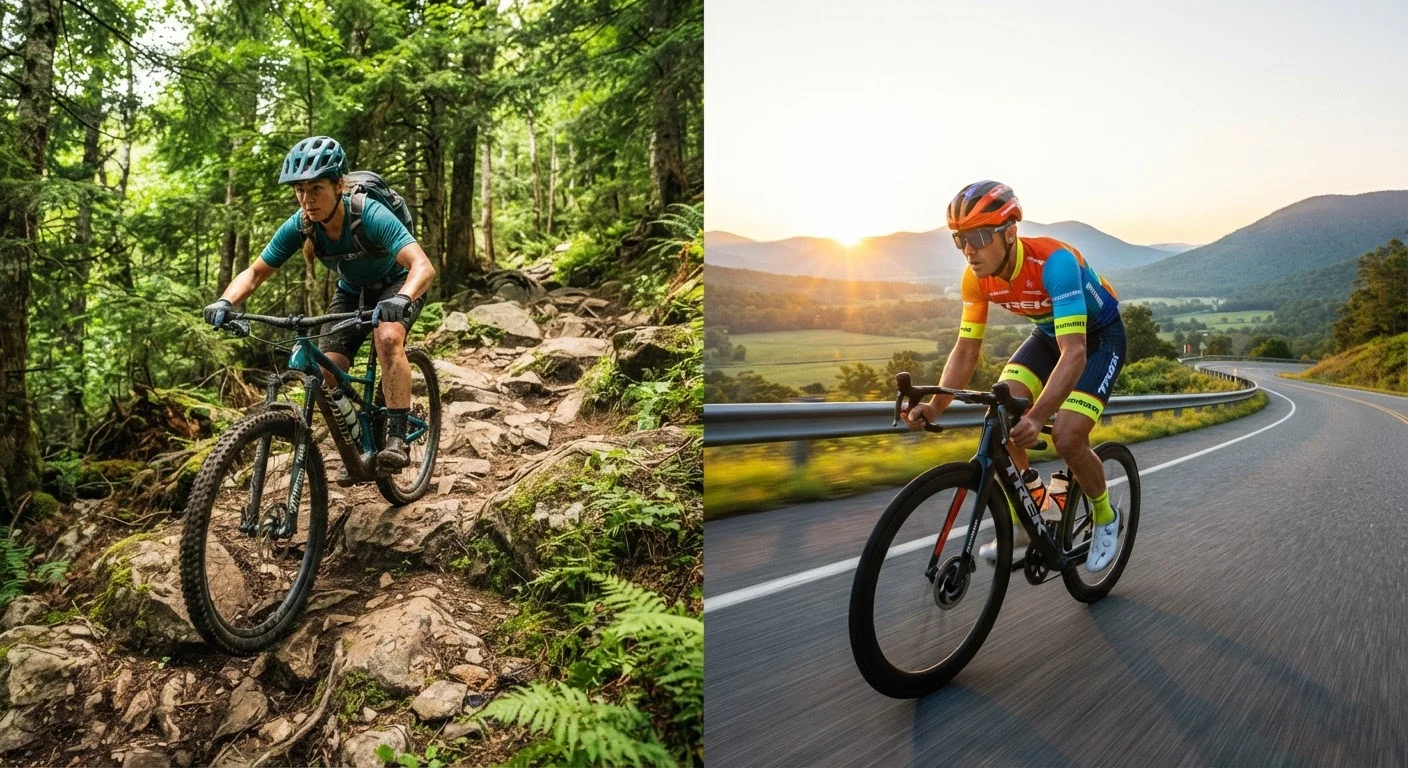
Mountain biking (MTB) takes place on unpaved surfaces: singletrack trails, forest roads, rocky descents, and rooted switchbacks. Bikes are built to absorb impact, with wide knobby tires, suspension forks (and often rear suspension), and upright geometry that gives riders control at slow, technical speeds. Road cycling unfolds on paved surfaces — from neighborhood streets to dedicated cycling routes — using lightweight bikes with narrow tires, drop handlebars, and geometry tuned for aerodynamic efficiency at sustained speeds.
Neither is objectively harder; they demand different things from you. MTB rewards balance, reflexes, and the willingness to walk a tough section now and then. Road cycling rewards consistency, pacing, and the mental discipline to push through long efforts. Knowing which challenge excites you is half the decision.
| Criterion | Mountain Biking | Road Cycling |
|---|---|---|
| Primary terrain | Unpaved trails, dirt, rocks | Paved roads and paths |
| Typical bike weight | Heavier (suspension adds mass) | Lighter (aerodynamic focus) |
| Entry-level gear cost | Moderate to high | Moderate |
| Fitness emphasis | Power, intervals, full-body | Aerobic endurance, leg strength |
| Technical skill required | High (balance, bike handling) | Moderate (drafting, pacing) |
| Protective gear need | Higher (pads, trail helmet) | Basic (road helmet, gloves) |
| Accessibility from home | Depends on nearby trail access | High (most areas have roads) |
| Community/club scene | Strong local trail groups | Extensive club and race scene |
Fitness, Skills, and the Learning Curve
Both disciplines deliver a serious cardiovascular workout, but they recruit your body differently. Road cycling builds exceptional aerobic capacity and leg endurance through sustained, rhythmic effort. Mountain biking is more interval-like by nature — explosive climbs, recovery on descents, sudden bursts to clear obstacles — which develops power and full-body strength alongside cardio fitness.
The technical learning curve is steeper on the trail. MTB beginners need to practice braking technique, body position, cornering on loose surfaces, and eventually features like drops and jumps. Progress is tangible and exciting, but it takes patience. Road cyclists learn bike handling, drafting in groups (called a peloton), and efficient gear shifting — skills that come faster on predictable pavement but require equal respect for safety around traffic.
If you're new to cycling altogether and want to build a fitness habit quickly, road cycling has a gentler early ramp. You can ride efficiently from your first hour. MTB beginners often benefit from structured skills clinics before tackling intermediate trails — many local bike shops and trail associations offer these.
Gear, Cost, and What You Actually Need to Start
Gear is where the two disciplines diverge significantly. A capable entry-level hardtail mountain bike (with front suspension only) typically costs more than a comparable entry-level road bike, partly because suspension components add expense even at the lower end. Full-suspension MTB frames push costs higher still. Protective gear — a full-face or trail helmet, knee pads, and gloves — adds to the MTB startup investment but is genuinely important when learning.
Road cycling's startup costs are lower overall. A solid entry-level road or fitness bike, a well-fitted helmet, padded shorts, and cycling-specific shoes covers the basics. Clipless pedals and cycling shoes are optional at first but become standard as riders progress.
~47M
US mountain biking participants
The Outdoor Industry Association has estimated tens of millions of Americans participate in mountain biking or trail cycling annually.
2×
Calorie burn spike on technical MTB
Research published in sports science literature suggests technical off-road riding can produce significantly higher peak heart rates than equivalent-duration road sessions due to the interval-like effort demands.
60%+
US cyclists riding paved surfaces primarily
Industry surveys consistently find that the majority of recreational cyclists in the US ride predominantly on pavement, reflecting the wider availability of road infrastructure.
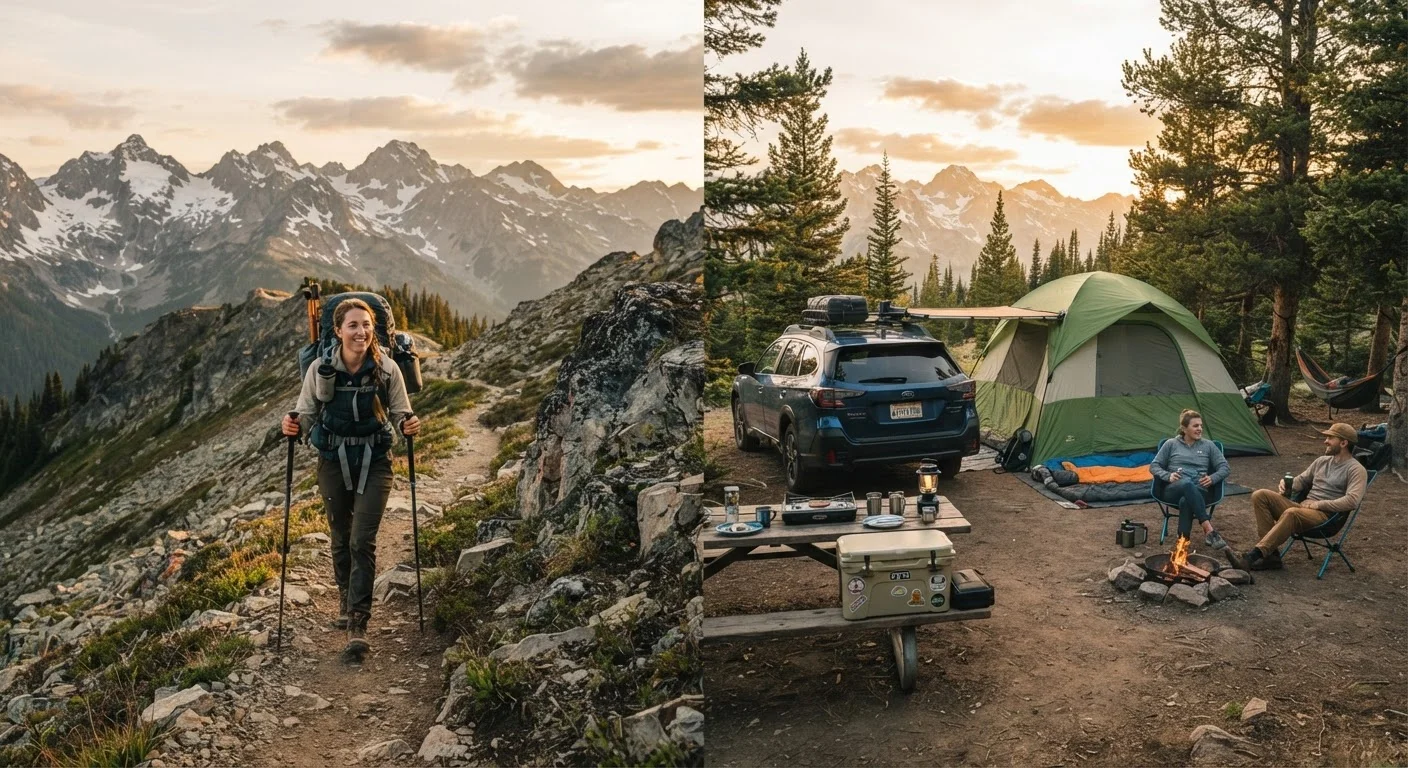
Maintenance patterns differ too. Mountain bikes take more abuse and need more frequent attention to suspension, brake pads, and drivetrain. Road bikes are easier to maintain day-to-day but require precise shifting setup. Either way, a good relationship with a local bike shop — or learning basic home maintenance — pays dividends in both disciplines. Beyond individual gear decisions, outdoor enthusiasts will find similar cost-versus-experience tradeoffs in other pursuits; see how that plays out in the backpacking vs. car camping comparison for another useful perspective.
Terrain Access and Where You'll Actually Ride
Your local geography matters enormously here. If you live near a trail network — look up IMBA (International Mountain Bicycling Association) trail resources or your regional trail coalition — mountain biking is genuinely accessible. If your nearest singletrack is an hour's drive away, the friction of getting out will wear on motivation fast.
Road cyclists can often ride from their front door, which is a real advantage for consistency. However, traffic is a legitimate safety consideration; riders should research local bike lanes, low-traffic routes, and group ride options before committing to roads with fast-moving vehicles. Many areas also offer dedicated paved cycling paths that give beginners a car-free environment to build confidence.
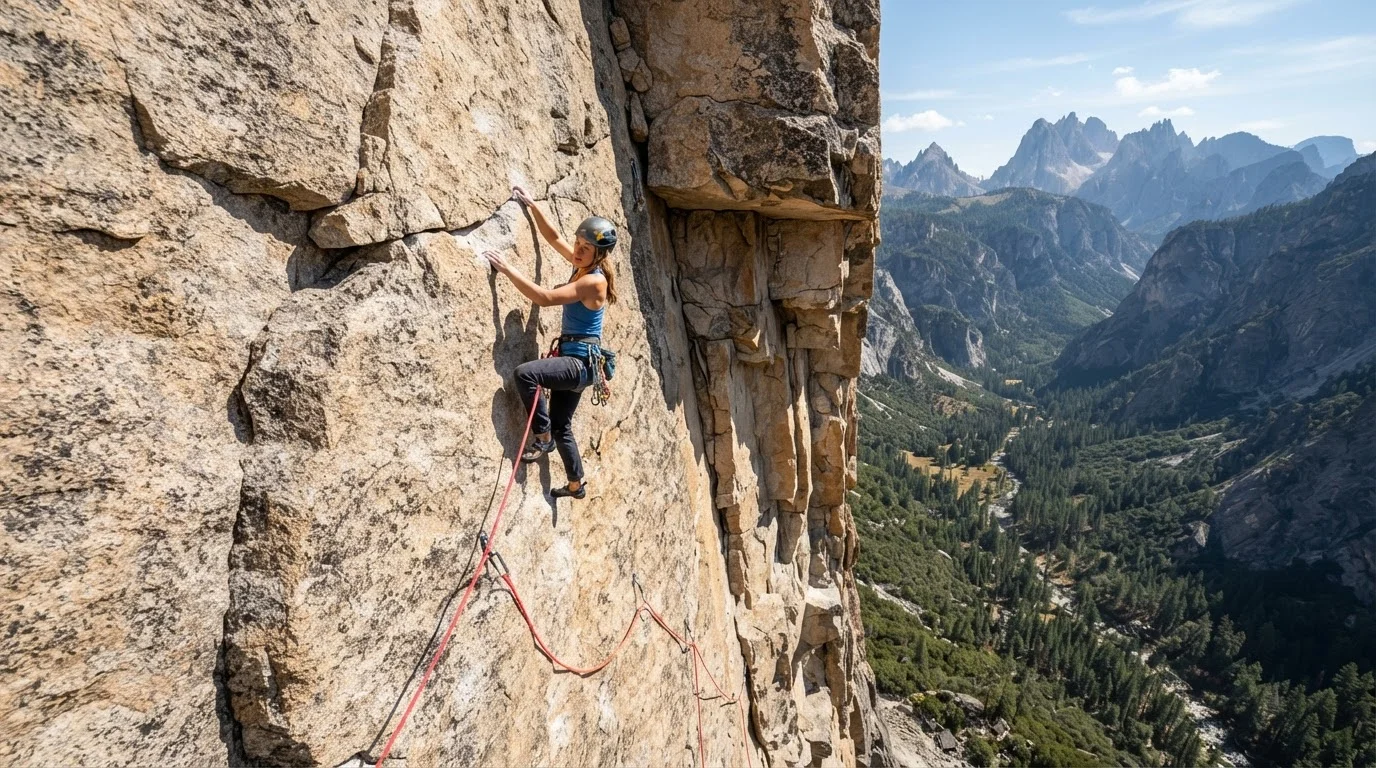
If you love exploring challenging outdoor pursuits more broadly, it's worth knowing that the mental focus mountain biking demands shares a lot in common with other technical outdoor disciplines. The rock climbing disciplines guide shows how different skill levels and risk tolerances shape which style of a sport suits you — a useful parallel when picking your MTB trail category.
The good news: these disciplines are not mutually exclusive. Many riders use road cycling for weekday fitness and hit the trails on weekends. Starting with one and adding the other over time is a completely valid approach — and both will make you a stronger, more well-rounded cyclist.