What Makes Each Climbing Style Different?
Rock climbing is one of those activities where the word itself barely scratches the surface. Ask a boulderer and a trad climber what they love about the sport, and you might think they're describing two entirely different hobbies — because in many ways, they are. The four main disciplines — bouldering, top-rope, sport, and trad — differ in gear requirements, height exposure, risk management, and the physical and mental skills they reward. Understanding those differences before you start helps you choose a path that genuinely excites you, rather than one that overwhelms or bores you from day one.
If you enjoy comparing outdoor pursuits to find your ideal fit, check out our guide to backpacking vs. car camping — the same principle applies: the activity that matches your goals and comfort level is the one you'll actually stick with.
| Bouldering | Top-Rope | Sport | Trad | |
|---|---|---|---|---|
| Rope/harness required | No | Yes | Yes | Yes |
| Typical height exposure | 15–20 ft | 30–100+ ft | 30–100+ ft | Unlimited |
| Gear cost to start | Low | Moderate | Moderate | High |
| Beginner friendliness | High | High | Moderate | Low |
| Lead climbing required | No | No | Yes | Yes |
| Outdoor anchor setup | None | Needed at top | Bolts pre-placed | Self-placed gear |
| Learning curve | Moderate | Low | Moderate–High | Very High |
| Physical focus | Strength & power | Technique & endurance | Technique & nerve | All-around + judgment |
Bouldering: Power, Puzzles, and No Rope Required
Bouldering strips climbing down to its purest form. Routes — called problems — are short, typically no taller than 15–20 feet, and climbers protect themselves from falls using thick foam crash pads placed on the ground and spotters who help guide a falling climber safely. No harness, no rope, no anchor system. That simplicity is genuinely liberating for beginners and keeps the gear costs low.
What bouldering lacks in height, it makes up for in intensity. Problems are graded on the V-scale (V0 being beginner-friendly, V17 being essentially superhuman), and they demand bursts of strength, balance, and creative problem-solving. Many climbers fall repeatedly on the same move for weeks before the solution clicks — which is half the fun. Indoor bouldering gyms have made this discipline enormously accessible across the U.S., making it a natural first step for curious newcomers.
Top-Rope Climbing: The Friendliest Entry Point to Roped Climbing
Top-rope climbing is exactly what it sounds like: the rope runs from the climber, up through an anchor at the top of the route, and back down to a belayer on the ground. If you fall, you drop only a few inches before the rope catches you. That forgiving setup makes top-rope the gentlest introduction to roped climbing — and the format used in virtually every climbing gym for beginners.
Outdoors, top-rope requires either hiking to the top of a cliff to set an anchor or having a lead climber establish one first. Learning to build safe anchors is a skill on its own and one worth learning from a certified guide or experienced mentor before attempting independently. The American Mountain Guides Association (AMGA) offers courses and resources for climbers at every stage.
Sport Climbing: Lead, Clip, and Commit
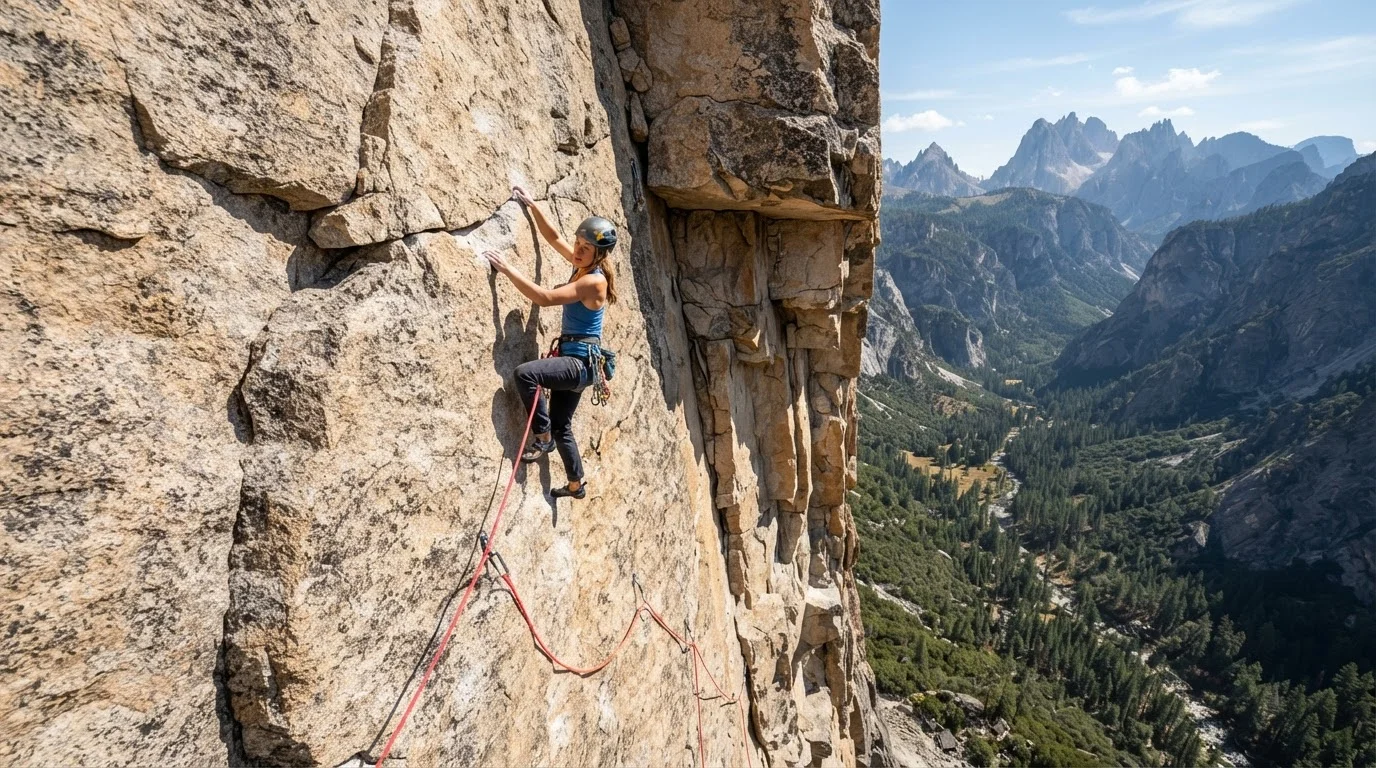
Sport climbing introduces lead climbing — meaning the rope runs from the belayer below, through the climber's harness, and up the wall as the climber ascends, clipping into pre-installed bolts along the route. Falls in lead climbing are real falls: if you're a body length above your last bolt, you'll fall twice that distance before the rope catches you. That exposure demands mental composure alongside technical skill.
The good news: sport routes outdoors are protected by permanent bolts drilled into the rock, so you don't need to carry or place protection gear. A standard sport rack is relatively light — a harness, rope, helmet, and a set of quickdraws to clip the bolts. Grades follow the Yosemite Decimal System (YDS) for roped routes in the U.S., starting around 5.0 and extending beyond 5.15 for elite climbers. Most beginners progress from gym top-rope to gym lead, then move outdoors from there — a logical, safe sequence.
Traditional Climbing: The Full Self-Sufficiency Challenge
Traditional — or trad — climbing is where full self-sufficiency meets the rock. Instead of clipping pre-placed bolts, trad climbers carry a rack of removable protective gear (cams, nuts, and hexes) and place that gear into cracks and features in the rock as they climb. After the pitch is complete, a follower removes the gear on the way up. The rock is left as found.
Trad demands not only lead climbing confidence but a deep understanding of gear placement, anchor building, route-finding, and risk assessment. The consequences of a poorly placed piece of protection failing are significant. Most climbers spend years developing trad skills under the mentorship of experienced partners before venturing onto serious multi-pitch routes. The reward, though, is extraordinary: access to some of the most remote, spectacular, and historically significant climbs in the country.
Much like choosing between mountain biking and road cycling, the trad vs. sport decision often comes down to how much technical complexity and gear commitment you genuinely want to take on.
How to Choose Your Starting Point
If you've never climbed before, start in a gym — nearly every major U.S. city has at least one climbing facility offering introductory lessons. Bouldering and top-rope are the natural entry points, and both allow you to build movement skills before worrying about equipment systems. From there, taking an indoor lead climbing course is a logical next step if sport climbing outdoors appeals to you.
Whatever discipline you pursue, please prioritize instruction over self-teaching on safety-critical skills. Belaying, anchor building, and gear placement are learnable — but the consequences of getting them wrong are serious. Seek out local climbing clubs, certified guides, or mentors through organizations like the AMGA or the Access Fund. The climbing community in the U.S. is famously welcoming to newcomers.