
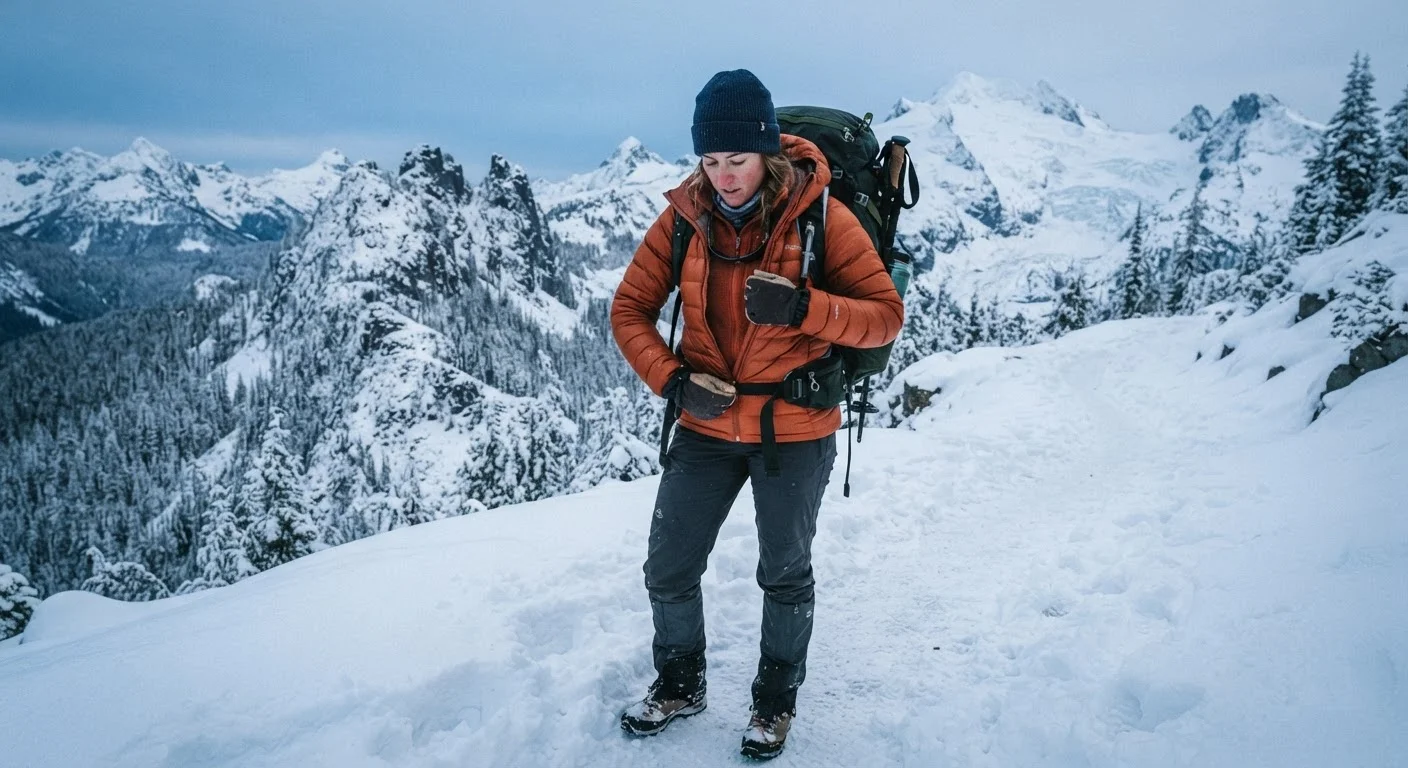
Why Layering Goes Wrong (Even for Experienced Hikers)
The three-layer system — base, mid, shell — sounds almost too simple. Yet every winter, outdoor enthusiasts end up soaked, shivering, or overheated within an hour of hitting the trail. The problem isn't the concept; it's the details that most people skip right past.
Whether you're snowshoeing in Vermont, winter hiking in the Rockies, or just bundling up for a cold-morning birdwatch, understanding why layering fails is the fastest way to fix it. The mistakes below are incredibly common — and entirely avoidable. If you're just starting to explore cold-weather activities, check out our guide to seasonal outdoor activities across America's climate zones to find the right adventure for your region first.
Wearing cotton as a base layer.
Why it happens: Cotton is affordable, comfortable, and familiar — most people own plenty of it. It's easy to assume what works for everyday life translates to the trail.
Overdressing at the start and then suffering through the sweat.
Why it happens: Standing still in cold air before activity makes people pile on layers instinctively. The problem is that once you start moving, body heat spikes fast and those layers become a liability.
Neglecting the mid layer or treating it as optional.
Why it happens: People tend to invest in a flashy shell jacket and then throw on whatever fleece is handy. The mid layer is easy to underestimate because it's hidden.
Ignoring fit between layers, leading to restricted movement or cold air gaps.
Why it happens: Shoppers often try on layers individually, not stacked. A base layer and mid layer that each fit perfectly can combine into something awkward and restrictive.
Skipping a waterproof or wind-resistant shell, or relying on one that's not breathable.
Why it happens: Non-breathable rain jackets are common and inexpensive. They keep rain out but trap moisture inside, leaving you just as wet from sweat as you'd be from rain.
Forgetting extremities — hands, head, and neck — until it's too late.
Why it happens: The focus on body layers means extremities get an afterthought. Gloves and hats often end up crammed at the bottom of a bag rather than worn proactively.
Putting It All Together: A Smarter Approach to Cold-Weather Dressing
The best layering system is a dynamic one. Before heading out, think through three questions: What's the temperature range (not just the starting point)? How hard will I be working? How quickly can conditions change?
Pack an extra mid layer you can stuff into a bag — you'll thank yourself on the descent. Keep your shell accessible, not buried. And when in doubt, start slightly cool; your body heat will catch up within the first ten minutes of movement.
~10%
Body heat lost through an uncovered head
This widely cited physiological estimate underscores why a lightweight hat is one of the simplest, highest-impact additions to any cold-weather kit.
~80%
Of hypothermia cases occur in above-freezing temps
According to wilderness medicine educators, most hypothermia cases happen in mild-to-cool rather than extreme cold conditions, often due to moisture and wind rather than temperature alone.
Moisture management is the throughline connecting every layer. Even the best shell can't save you if a sweaty cotton tee is pulling warmth away from your core. Treat each layer as part of a system, not a standalone item, and the whole setup performs dramatically better.
Cold-weather outdoor activities are genuinely accessible to most people — the gear doesn't have to be expensive or complicated, just chosen thoughtfully. Get the layering right and you'll spend a lot more time enjoying the view and a lot less time retreating to the car.