
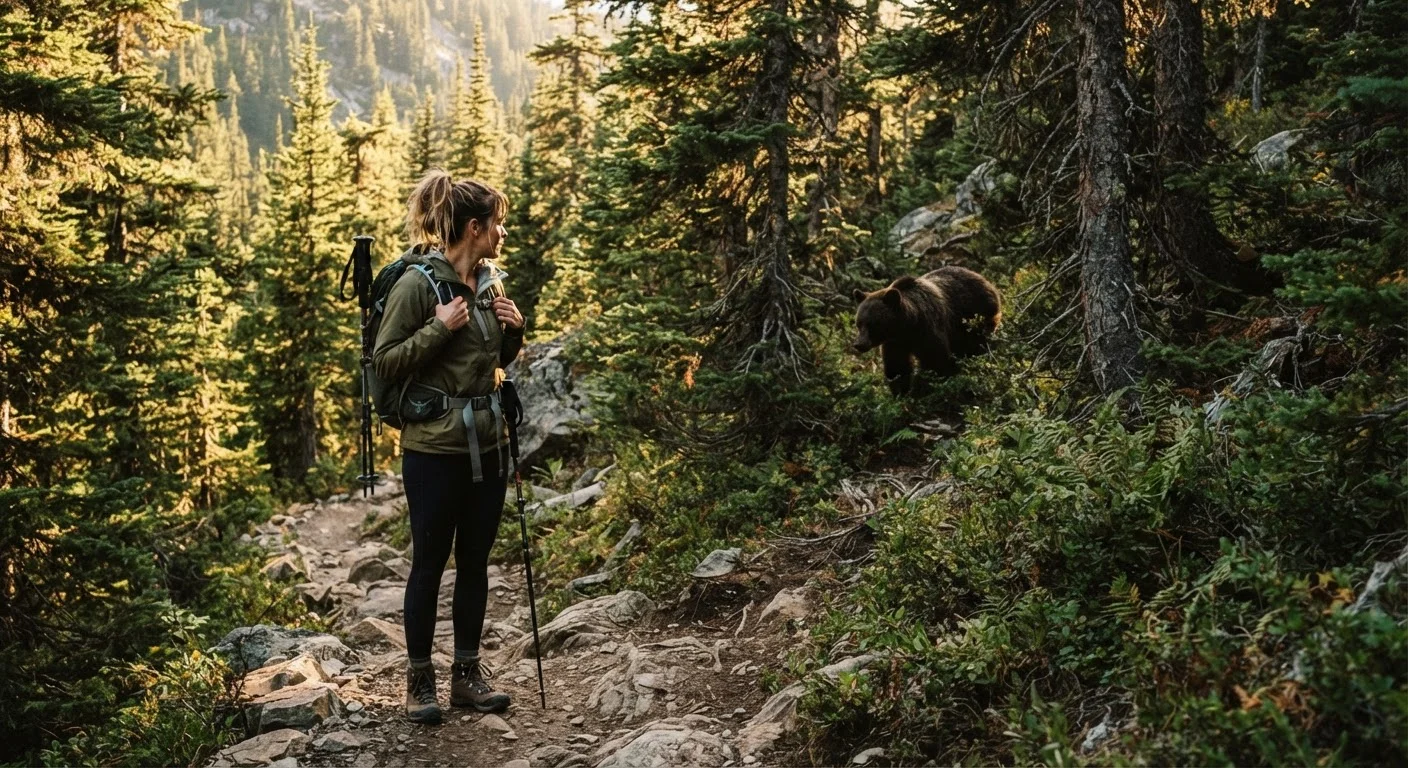
Why Trail Wildlife Myths Are More Than Just Harmless Folklore
Getting outside is one of the best things you can do — for your health, your mood, and your sense of the world. But the same enthusiasm that sends hikers into bear country or snake habitat can go sideways fast when it's guided by misinformation. Myths about wildlife behavior aren't just wrong; they can actively lead people into dangerous decisions at exactly the wrong moment.
The encouraging news is that genuine wildlife attacks on hikers are statistically rare. Animals almost always prefer to avoid conflict. Most encounters that turn dangerous involve a human doing the wrong thing — running from a predator, cornering a snake, or surprising a bear on a narrow trail. Understanding what's actually true about animal behavior gives you real tools to stay safe, not just the illusion of preparedness.
Myth
You should play dead whenever a bear attacks you.
Fact
Playing dead is only appropriate for defensive grizzly bear attacks — with black bears or predatory attacks of any bear, you should fight back aggressively.
This is arguably the most dangerous myth on the trail. Playing dead makes sense only when a grizzly bear is acting defensively — for example, if you've surprised a mother with cubs. In that scenario, lying flat on your stomach with your hands protecting your neck can signal that you're not a threat, causing the bear to disengage.
With black bears, or if any bear is stalking you and attacking in a predatory manner, playing dead is the wrong move entirely. Wildlife agencies such as the National Park Service recommend fighting back with everything you have — targeting the bear's nose and eyes. Knowing which situation you're in requires awareness and preparation, not a one-size-fits-all rule.
Myth
Snakes will actively chase you if you startle them.
Fact
Snakes almost never pursue humans — they retreat when possible, and most bites occur when people handle, corner, or step on them accidentally.
Snakes are far more interested in escaping than in confronting a creature many times their size. The chasing-snake story is a persistent cultural myth, but herpetologists consistently note that defensive strikes happen when a snake feels cornered or is surprised at close range — not as pursuit behavior.
The practical takeaway: watch where you step, especially around rocks, logs, and tall grass. If you spot a snake on the trail, give it a wide berth and let it move along. Most snakebites in the US involve someone trying to pick up or kill the snake, which is unnecessary and dramatically raises your risk.
Myth
Making loud noise will provoke wildlife and make encounters more likely.
Fact
Making noise on the trail is one of the most reliable ways to prevent wildlife encounters, especially with bears.
Wildlife generally wants to avoid people just as much as you want to avoid them. The problem is when an encounter comes as a surprise — a hiker rounds a bend and nearly collides with a bear that had no warning. Talking, clapping periodically, or using a bear bell gives animals time to move away before you arrive.
This is especially important on dense, winding trails where sight lines are short, or near streams where the sound of water can mask your approach. Before your next outing, check out our guide to trail terrain and difficulty ratings to understand which trail types carry higher wildlife encounter risk.
Myth
If you don't approach wildlife, you're not putting it at risk.
Fact
Leaving food scraps, feeding animals directly, or camping carelessly can habituate wildlife to humans — creating dangerous situations for both animals and future hikers.
Habituation is a serious, documented problem in national parks and wilderness areas. When animals associate humans with food, they lose their natural wariness and begin approaching people — a behavioral shift that often ends with the animal being euthanized for public safety.
Leave No Trace principles aren't just about keeping nature tidy; they're about preserving the behavioral health of wildlife populations. Store food in bear canisters or hang it properly, pack out all waste, and never feed any wild animal — not squirrels, not deer, and certainly not bears. The impact compounds over time and across thousands of visitors.
Myth
Cougars (mountain lions) always give warning before attacking.
Fact
Mountain lions are ambush predators and typically do not give visible warning signs before a strike — awareness and deterrence are your best tools.
Unlike bears, which may bluff-charge or vocalize, cougars evolved to hunt by stealth. If you see a cougar, it may already have been watching you. Wildlife managers advise making yourself look large, maintaining eye contact, speaking firmly, and backing away slowly — never run, as running can trigger a predatory chase response.
Cougar attacks on humans are rare, but they are more likely to occur with solo hikers, children, or joggers. Hiking in groups, keeping children close, and staying alert in cougar country (especially at dawn and dusk) dramatically reduces risk.
Putting the Facts Into Practice Before You Hit the Trail
Knowing the myths is the first step; building habits around the facts is what actually protects you. A few practical moves can make a meaningful difference:
- Carry bear spray and know how to use it. Research consistently shows bear spray is highly effective at deterring aggressive bears when deployed correctly. Practice the motion of drawing it before you need it.
- Hike in groups when possible. Solo hikers are more vulnerable to mountain lion encounters and are less likely to deter wildlife through presence alone.
- Learn to identify your local wildlife. A black bear and a grizzly require different responses — and knowing the difference before the encounter, not during it, is what matters.
- Stay on marked trails. Bushwhacking increases the chance of surprising animals in their core habitat zones.
Preparation also means understanding the terrain you're entering. The type of trail — its density, elevation, and ecosystem — shapes what wildlife you're likely to encounter and how animals in that area behave. Our overview of trail ratings and terrain types can help you assess what you're walking into.
Never Attempt to Capture or Relocate an Injured Animal
An injured animal is a frightened animal — and a frightened animal bites, scratches, or strikes. Even species that seem docile under normal circumstances can cause serious injury when cornered or in pain. If you encounter an injured wild animal on the trail, note the location and contact the nearest ranger station or wildlife agency. Do not attempt to help it yourself.
Ultimately, wildlife encounters are a feature of the natural world, not a flaw. Respecting the facts — rather than leaning on myths — lets you experience that world safely, confidently, and with genuine wonder intact.