
Why Trail Ratings Exist — and Why They're Imperfect
Pick up a trail guide or open a hiking app and you'll almost always see a label: easy, moderate, strenuous, or some variation of those words. These ratings exist to help hikers make a quick, informed decision about whether a particular trail is a good match for their abilities. That's a genuinely useful function — especially for beginners who don't yet have a library of trail experiences to compare against.
The catch is that no federal body sets a binding national standard. The National Park Service, the US Forest Service, Bureau of Land Management units, state park systems, and third-party trail databases each define these categories differently. One agency's moderate may lean closer to another's easy, and a trail app's algorithm may weight distance more heavily than a ranger's on-the-ground assessment does. This isn't a flaw in the system so much as a reflection of how genuinely varied American terrain is — a "strenuous" hike in Florida looks nothing like a "strenuous" hike in Colorado.
The practical takeaway: treat a difficulty label as a starting point, not a complete picture. Always read the full trail description that accompanies the rating.
The Three Common Tiers — What They Generally Signal
Despite the lack of a universal standard, most rating systems cluster around three broad tiers. Here's what each typically implies:
- Easy: Well-maintained, relatively flat trails with minimal elevation change — often under 500 feet of gain — and a short to moderate distance, usually under 5 miles round trip. Surface conditions are predictable: packed dirt, gravel, or pavement. Good for families with young children, older adults, or anyone new to hiking.
- Moderate: Longer distances and/or meaningful elevation gain, typically in the 500–1,500-foot range. Terrain may include rocks, roots, and steeper grades. Most reasonably fit adults can complete these trails comfortably with some preparation, though they're not a casual stroll.
- Strenuous: High elevation gain (often exceeding 1,500 feet), significant distance, technical footing, exposed sections, or some combination of the above. These trails demand solid cardiovascular fitness, proper gear, and genuine trail experience.
Some systems add sub-tiers — "moderately strenuous" or "very strenuous" — to capture the wide range within those middle and upper categories. When you see those labels, pay close attention to the elevation profile.
57.8M
Americans who hiked at least once in a recent year
According to the Outdoor Foundation's Outdoor Participation Trends report, hiking consistently ranks among the most popular outdoor activities in the United States.
~1,000 ft
Elevation gain where many agencies begin labeling trails strenuous
While no universal rule exists, many land management agencies and trail guides treat 1,000–1,500 feet of gain as a rough threshold for strenuous classification, particularly over shorter distances.
158,000+
Miles of hiking trails on US public lands
The US Forest Service alone manages over 158,000 miles of trails across national forests and grasslands, representing a wide spectrum of terrain types and difficulty levels.
Elevation Gain: The Factor Most Beginners Underestimate
Distance is intuitive. Elevation gain is where new hikers most often get caught off guard. A 4-mile trail that climbs 2,000 feet is dramatically harder than a 6-mile trail that stays flat — yet a pure-distance view might make the longer hike look more daunting.
Land managers often express this relationship using net elevation gain (the difference between start and highest point) or cumulative gain (total feet climbed, counting every uphill regardless of subsequent descents). Cumulative gain is the more demanding figure and the more honest one for out-and-back trails with rolling terrain. When researching a trail, look for both numbers if available.
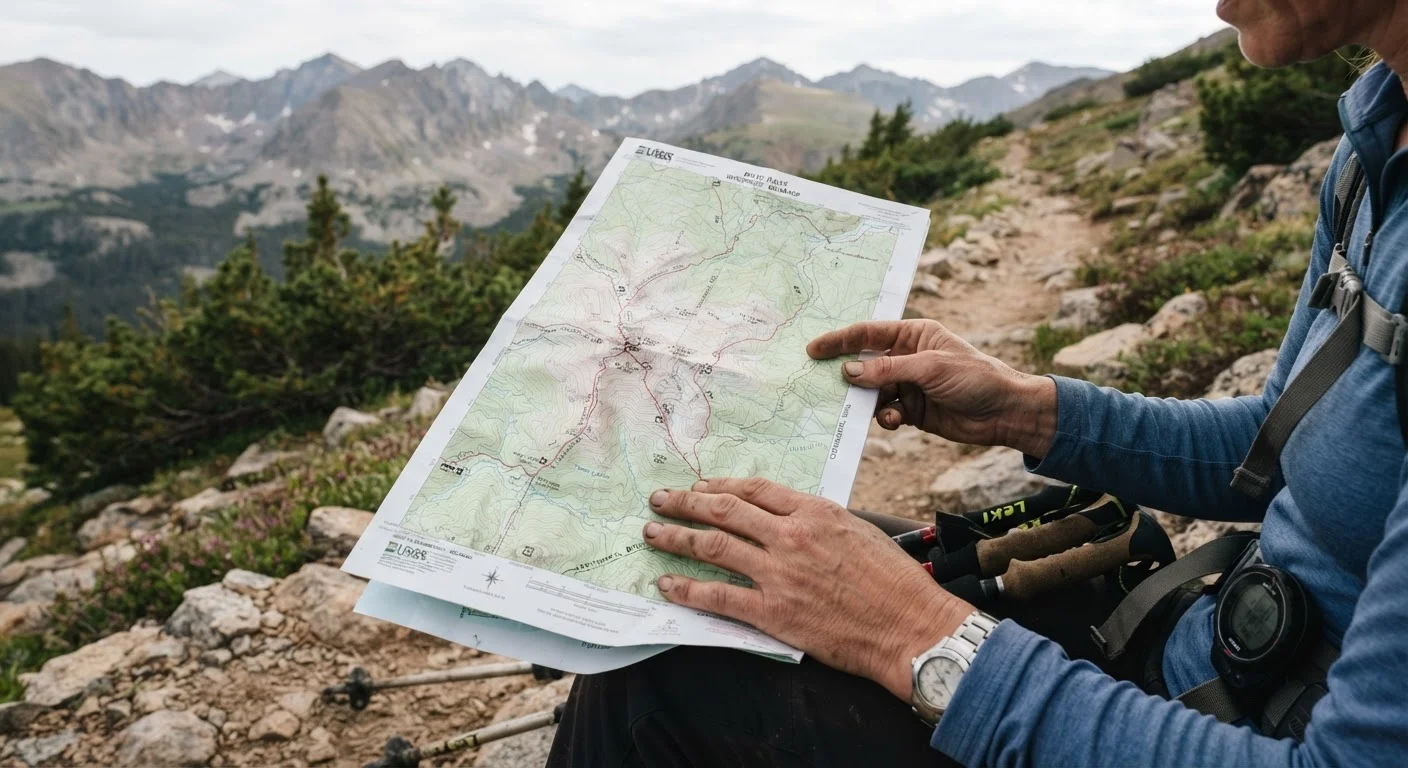
A helpful rule of thumb used by many hikers: add one hour of expected hiking time for every 1,000 feet of elevation gain beyond the baseline time you'd estimate for flat distance. It's a rough guide, but it helps calibrate expectations. For more on reading the landscape before you hike, learning to read a topographic map is one of the most practical skills you can build.
Terrain, Surface, and the Modifiers That Change Everything
Two trails can share the same elevation gain and distance and still feel worlds apart based on surface conditions. Smooth, well-graded switchbacks are far easier on the body than a scramble over loose talus or a route through knee-deep mud after rain. Ratings often can't capture this nuance fully, which is why recent trail reports from other hikers are invaluable.
A few terrain factors that meaningfully shift difficulty beyond the base rating:
- Trail surface: Packed dirt, boardwalk, and gravel are forgiving. Loose rock, wet roots, and scree demand more energy and concentration.
- Exposure: Open ridgelines and cliff-edge paths may have easy elevation profiles but introduce wind, weather risk, and psychological challenge.
- Altitude: Higher elevation reduces oxygen availability. A moderate trail at 9,000 feet can feel significantly harder than the same profile at 500 feet, particularly for visitors not yet acclimatized.
- Seasonal conditions: Snow, ice, or high water at stream crossings can elevate any trail's effective difficulty. Timing matters — explore how America's climate zones shape outdoor conditions in our piece on seasonal outdoor activities across America.
How Personal Factors Shift the Equation
Difficulty ratings describe a trail, not the person hiking it. Your fitness level, recent activity history, pack weight, footwear, and even how well you slept the night before all affect how a trail feels. Two people standing at the same trailhead with the same rating in hand can have genuinely different experiences.
Be honest with yourself about your current conditioning, not your peak fitness from years ago. If you're new to hiking or returning after a long break, start at least one tier below what you think you can handle. Trails have a way of revealing gaps in preparation that a flat gym workout doesn't.
Build Your Baseline Before Pushing Up
If you're new to hiking, complete at least two or three easy-rated trails before attempting anything moderate. This gives you a genuine reference point for how your body responds to sustained uphill effort, varying terrain, and time on your feet. Building that experience gradually is far more valuable than chasing a harder trail too soon.
If you're deciding between a day hike-focused adventure and a more immersive outdoor experience, our overview on backpacking vs. car camping can help you think through the bigger picture. And before any hike, run through the day hike preparation checklist — it covers navigation, water, safety gear, and more.