
The Aggression Ladder: It Starts Long Before a Growl
Most dog bites feel like they come out of nowhere — but they almost never do. Dogs communicate discomfort through a progression of signals that behaviorists sometimes call the aggression ladder (also referred to as a stress or bite ladder). By the time a dog growls or snaps, they've typically already sent several quieter messages that went unnoticed.
The earliest signals are easy to miss: a sudden stillness, a yawn in a tense situation, lip licking, or a slight turn of the head away from what's bothering them. These are appeasement signals — the dog's attempt to defuse tension before it escalates. If those signals fail, the dog moves up the ladder: whale eye (showing the whites of their eyes), a tucked tail, ears pinned flat, or a low growl.
Understanding this progression is the foundation of safe dog ownership. See our guide to pet body language for a broader breakdown of what posture, ear position, and tail movement communicate across dog breeds.
Five Key Warning Signals to Recognize
The following signals, taken in context, are meaningful indicators that a dog is uncomfortable and potentially moving toward aggression:
Recognize sudden stillness as a pre-aggression signal.
A dog that abruptly freezes — especially mid-activity — is often processing a threat. This 'freeze' is a holding pattern before the dog decides to fight or flee, and it frequently precedes a snap or lunge.
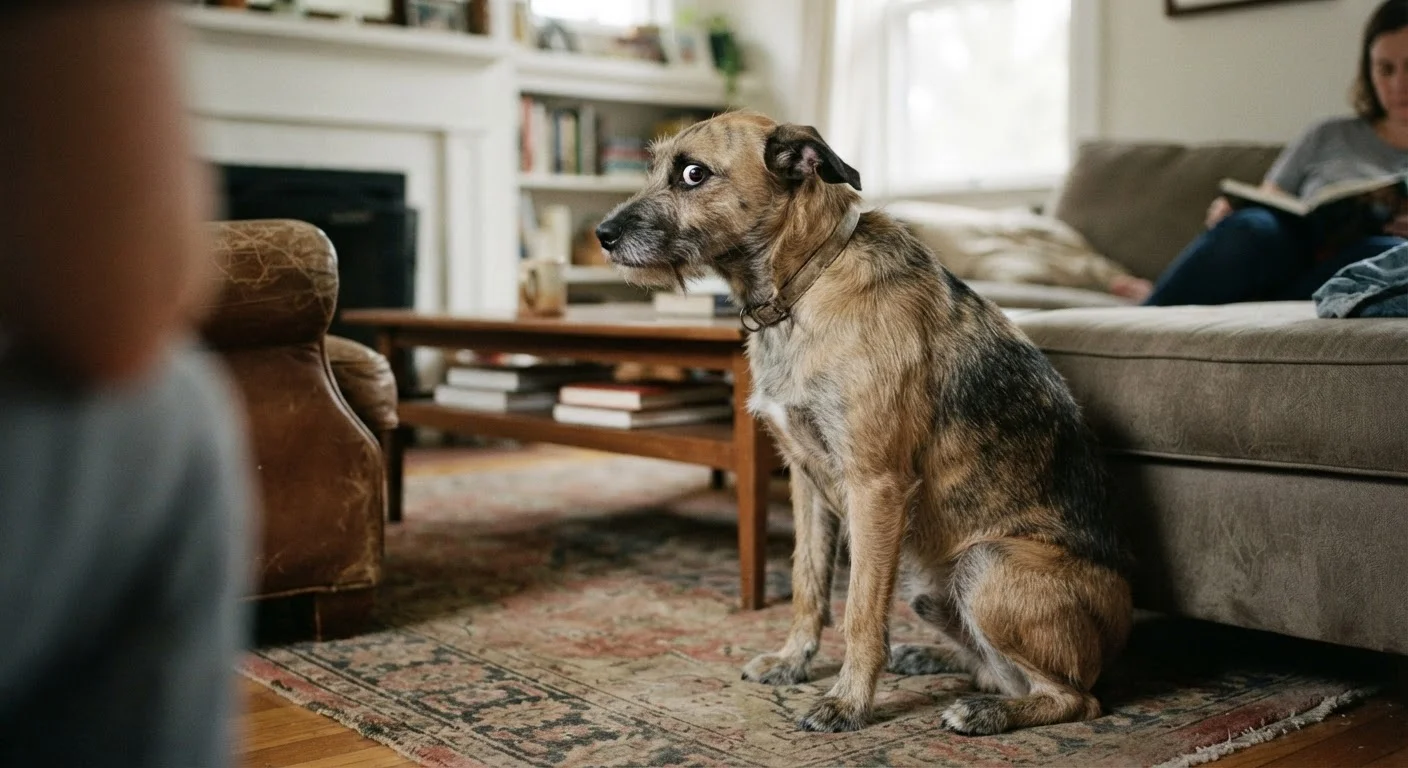
Watch for 'whale eye' — the crescent of white around a dog's iris.
When a dog turns their head slightly away but keeps their eyes fixed on a person or stimulus, the visible whites of the eye signal high stress. It often appears alongside a stiff body and signals the dog is very close to threshold.
Note excessive yawning or lip licking in tense situations.
These are classic appeasement signals dogs use to communicate that they feel pressured or anxious. They appear early in the stress sequence, well before growling, making them valuable early-warning indicators.
Observe posture: a stiff, forward-leaning stance signals offensive arousal.
A dog whose weight shifts forward, tail is held high and rigid, and ears are erect is displaying offensive arousal — the precursor to an assertive or territorial bite. This is distinct from the low, tucked posture of fear-based aggression.
Treat a low growl as communication, not defiance.
Growling is the dog's final verbal warning before escalating to a snap or bite. Suppressing it — through punishment — removes the signal without addressing the cause, increasing bite risk significantly.
Context matters enormously. A dog yawning after a nap is tired. A dog yawning while a toddler approaches them is communicating stress. Train yourself to read clusters of signals, not individual behaviors in isolation.
It's also worth noting that aggression can sometimes stem from physical discomfort. A dog who snaps when touched in a specific area may be in pain — not simply reactive. Our article on how animals communicate pain covers those quieter signals in depth.
How to Respond When You See the Warning Signs
Your response in the moment matters as much as your ability to recognize signals. The instinct to correct or punish a growling dog is understandable but counterproductive. As explored in our piece on why punishment-based training often backfires, suppressing a warning signal doesn't remove the underlying discomfort — it just removes the warning. A dog that has been punished for growling may skip that step entirely and go straight to biting.
If the dog's triggers are specific — strangers, children, other dogs — work with a certified applied animal behaviorist or a veterinary behaviorist to develop a desensitization and counter-conditioning plan. This is a gradual process of pairing the trigger with something positive, reducing the dog's emotional response over time.
When Aggression Is New or Sudden
A dog that was previously calm and now shows aggression warrants a veterinary visit before any behavioral intervention. Thyroid disorders, neurological conditions, arthritis, dental pain, and other medical issues can all manifest as irritability or aggression. Rule out a physical cause first.
For newly adopted dogs, give extra patience. Shelter environments can suppress or distort behavior — a dog may seem calm in a kennel but show stress responses once in a home with new stimuli. Our guide to reading a shelter animal's behavior before you adopt explains what those early weeks might reveal.
Aggression in dogs is manageable in most cases — but it requires honest assessment, consistent management, and professional support when needed. Reading the signals early is the most powerful tool you have.