
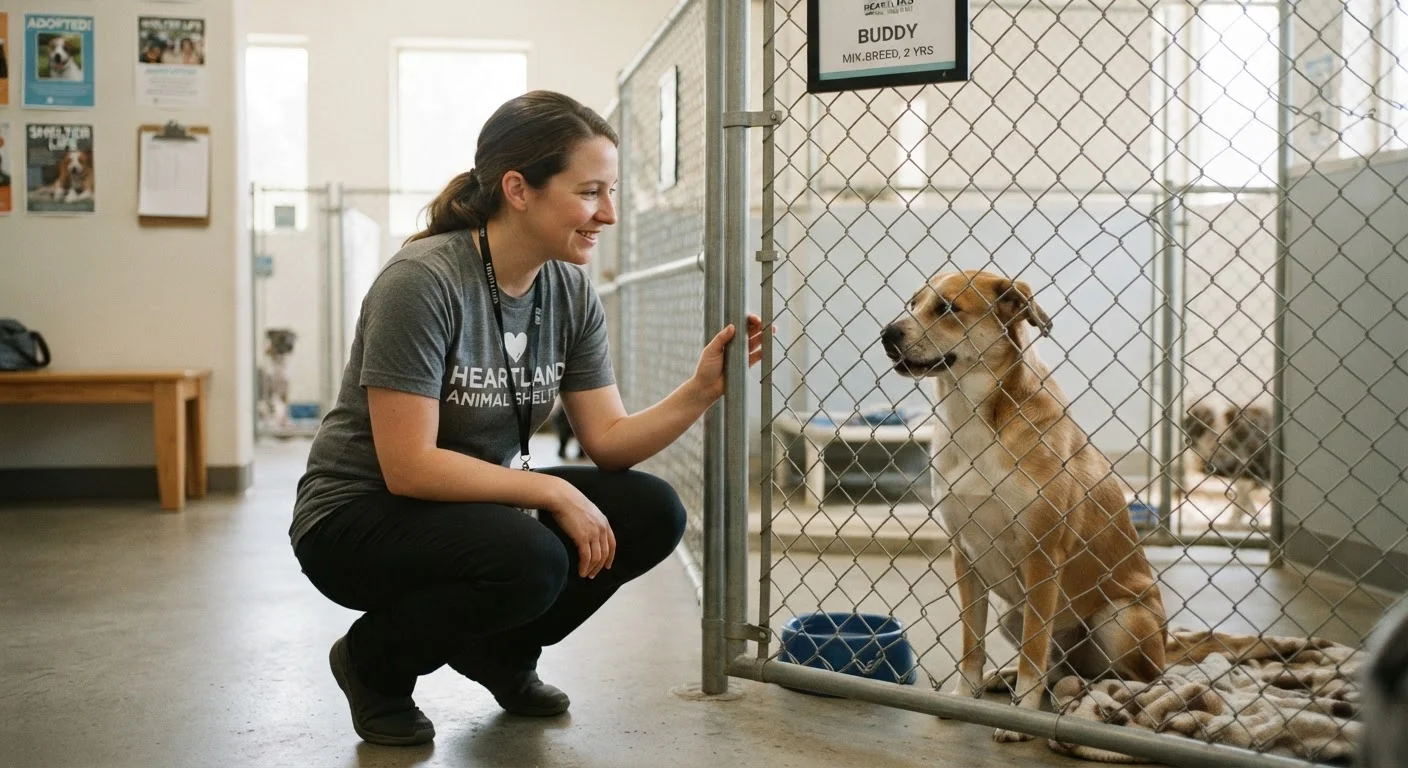
Why Shelter Behavior Is Not Home Behavior
Shelters are loud, unfamiliar, and socially disorienting environments. For most animals — dogs especially — a kennel setting triggers stress responses that can look like poor temperament but are actually a normal reaction to confinement. A dog that barks relentlessly at the front of its run may be perfectly calm in a quiet living room. Conversely, a dog that appears shut down and withdrawn isn't necessarily easy-going; it may be in behavioral freeze, a state of overwhelm that masks its actual personality.
Cats in group housing or small cages often hide, hiss, or appear antisocial. This is especially common in cats who were previously outdoor-only or who have had minimal positive human contact. Neither reaction predicts how they'll behave once they've had two weeks to decompress in a stable home.
Understanding this gap is the most important frame you can bring to a shelter visit. Rather than asking "Is this animal well-behaved?" ask "What is this animal telling me right now, given where it is?" Our guide to reading pet body language gives you the foundational vocabulary to do exactly that.
What to Watch For on Your Visit
Start by observing before you interact. Stand quietly outside the kennel or enclosure for two to three minutes. Note the following:
- Posture: Is the animal's weight forward (curious or assertive) or shifted back (fearful or uncertain)? A loose, wiggly body in a dog signals comfort; a stiff, rigid stance warrants more attention.
- Ear position: Ears pinned flat signal stress or fear in dogs and cats. Relaxed, neutral ears are a better sign.
- Tail: In dogs, a low, fast wag often indicates anxiety, not happiness. A slow, mid-height wag with a loose body is friendlier. Cats with a puffed or tucked tail are stressed.
- Eye contact: Soft, blinking eyes are comfortable. Hard, unblinking stares — especially with a tense body — are worth noting. Whale eye (showing the whites) in dogs indicates stress.
- Response to your presence: Does the animal approach the barrier with curiosity, retreat to the back of the enclosure, or escalate in behavior (barking, lunging, hissing)?
If you're evaluating a dog for potential aggression signals specifically, our article on reading aggression before it escalates covers the subtle cues that precede serious warning behaviors.
Visit During Off-Peak Hours
Shelters are noisiest and most chaotic during weekend afternoons when foot traffic peaks. Visiting on a weekday morning, when the environment is quieter, gives you a calmer animal and more staff attention. You'll get a truer read of temperament in the relative calm.
Asking the Right Questions
Shelter staff and volunteers are often your best data source. Ask specifically:
- How long has the animal been here, and how has its behavior changed over time?
- Does it eat readily in the kennel? (Appetite suppression is a stress indicator.)
- How does it behave during walks or in a quiet room outside the kennels?
- Has it lived with other animals or children?
- Why was it surrendered, if known?
A well-run shelter will also offer a meet-and-greet in a neutral space away from the kennels — always take this opportunity. Behavior in a quiet room is more representative than behavior in a kennel corridor. If you have other pets at home, read our guidance on how animals adjust to a new companion before making your decision.
Plan to visit more than once, ideally at different times of day. Morning kennels can feel very different from afternoon visits after animals have had exercise and interaction. What looks like incompatibility on a Tuesday morning may reveal itself as a much calmer animal by Saturday afternoon.
Red Flags Versus Normal Stress Responses
Not every difficult behavior is a dealbreaker, but some signals do warrant serious consideration. Behaviors that may indicate deeper challenges include: repeated, redirected aggression during handling (not just flinching or pulling away), resource guarding escalating to snapping with minimal provocation, and persistent predatory fixation on small animals if you have existing pets.
Behaviors that are commonly misread as red flags but are usually normal stress responses include: hiding, trembling, reluctance to make eye contact, excessive vocalization in the kennel, and even mild growling when startled. These often resolve within a few weeks of home adjustment — a period sometimes called the "3-3-3 rule" in adoption communities (roughly three days to decompress, three weeks to learn routine, three months to feel at home).
Impulse is one of the biggest risks in adoption decisions. If you feel pulled toward an animal primarily by looks or a single emotionally charged interaction, pause and revisit. Our piece on why impulse adoptions end in returns walks through what goes wrong — and how to avoid it.
Don't Adopt on Your First Visit
One visit to a shelter is rarely enough to make an informed adoption decision. Animals behave differently across days, times, and contexts. Committing after a single interaction — no matter how positive it feels — significantly increases the risk of a poor match. Give yourself and the animal at least one more meeting before signing paperwork.