
The Basic Mechanics: What You're Borrowing and Why
Most Americans cannot pay for a home in cash, so a lender — a bank, credit union, or mortgage company — fronts the purchase price minus whatever you put down. You then repay that amount, plus interest, in equal monthly installments over the loan term. Because the home secures the debt, a mortgage is what's known as secured debt. For a fuller picture of how secured borrowing differs from credit cards or personal loans, see Secured vs. Unsecured Debt: How They Differ and Why It Matters.
The loan term determines your repayment timeline. A 30-year mortgage spreads payments over 360 months, keeping individual payments lower but resulting in more total interest paid. A 15-year mortgage costs more per month but builds equity faster and dramatically reduces total interest. Neither is universally better — the right choice depends on your income, savings cushion, and long-term plans.
30 years
Most common U.S. mortgage term
The 30-year fixed-rate mortgage remains the dominant loan structure for American home purchases, according to Freddie Mac historical data.
~43%
Maximum typical debt-to-income ratio
Most conventional lenders use a 43% DTI ceiling as a standard qualifying threshold, though some government-backed loan programs allow exceptions.
620
Minimum credit score for most conventional loans
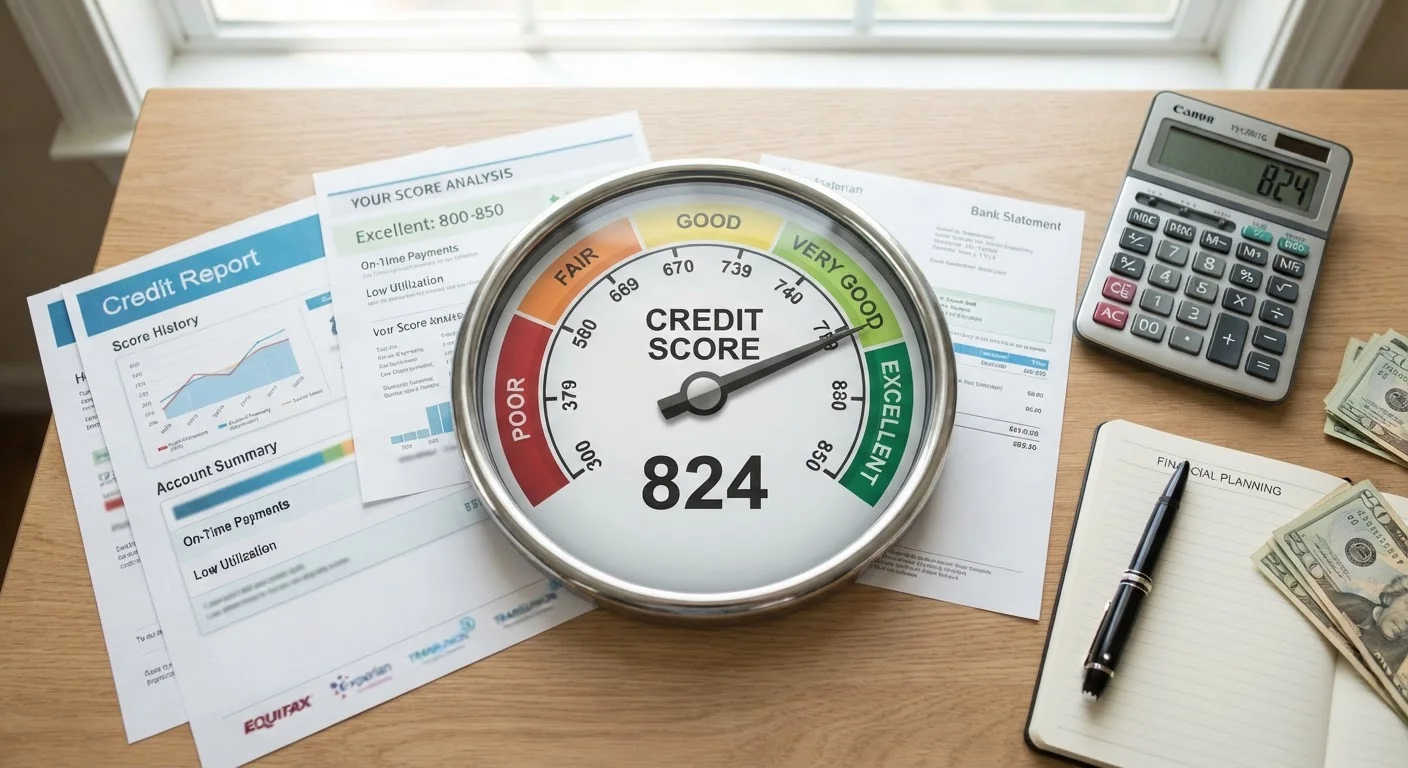
The Consumer Financial Protection Bureau notes that conventional mortgage lenders typically require a minimum score of 620, with better rates reserved for scores above 740.
Principal, Interest, and Amortization Explained
Every mortgage payment you make is split between two things: principal (the portion of the original loan you're paying back) and interest (the lender's fee for lending you money). In the early years of a standard mortgage, interest consumes the bulk of each payment. This is not accidental — it's the result of amortization, the mathematical schedule that keeps monthly payments consistent while gradually shifting the balance toward principal reduction.
Here's a simplified illustration: on a $300,000 loan at 6.5% interest, your first monthly payment might include roughly $1,625 in interest and only $275 in principal. By year 20, that same payment might be split closer to $900 in interest and $1,000 in principal. The payment amount hasn't changed — what changes is how it's allocated.
This structure matters practically: it means that refinancing or paying extra early in a loan's life has a much bigger impact on total interest paid than the same actions taken later.
What Lenders Evaluate Before Saying Yes
Mortgage underwriting — the process by which a lender evaluates your application — typically examines four core factors:
- Credit score: A measure of your borrowing history. Most conventional lenders look for a score of at least 620; better rates generally require 740 or above. For a breakdown of what actually drives your score, see What Your Credit Score Actually Measures.
- Income and employment: Lenders verify your ability to repay through pay stubs, tax returns, and employer verification. They want stable, documentable income.
- Debt-to-income ratio (DTI): This compares your monthly debt obligations to your gross monthly income. Most lenders prefer a DTI below 43%, though qualifying thresholds vary by loan type.
- Down payment and assets: A larger down payment reduces the lender's risk. It can also eliminate the need for private mortgage insurance (PMI), which protects the lender — not you — if you default.
Understanding these factors before you apply lets you identify and address weaknesses in your financial profile, potentially saving significant money on your rate.
Fixed vs. Adjustable Rates: A Critical Choice
Every mortgage carries an interest rate, and the type of rate you choose shapes your financial exposure for years. A fixed-rate mortgage locks your interest rate for the entire loan term — your principal-and-interest payment never changes, regardless of what market rates do. A variable-rate mortgage (often called an adjustable-rate mortgage, or ARM) starts with a fixed rate for an introductory period, then adjusts periodically based on a market index.
ARMs often offer lower initial rates, which can be advantageous if you plan to sell or refinance before the adjustment period begins. But they carry rate-change risk that fixed-rate loans don't. For a detailed comparison of when each structure tends to make sense, see Fixed-Rate vs. Adjustable-Rate Mortgages.
A mortgage is also one component of the broader credit picture that shapes your long-term financial health. For context on how installment loans like mortgages differ from revolving credit, see Revolving Credit vs. Installment Loans.
This article provides general educational information about mortgages and is not personalized financial, legal, or lending advice. Mortgage eligibility, rates, and terms vary by lender and individual circumstances. Consult a licensed mortgage professional or financial adviser before making borrowing decisions.