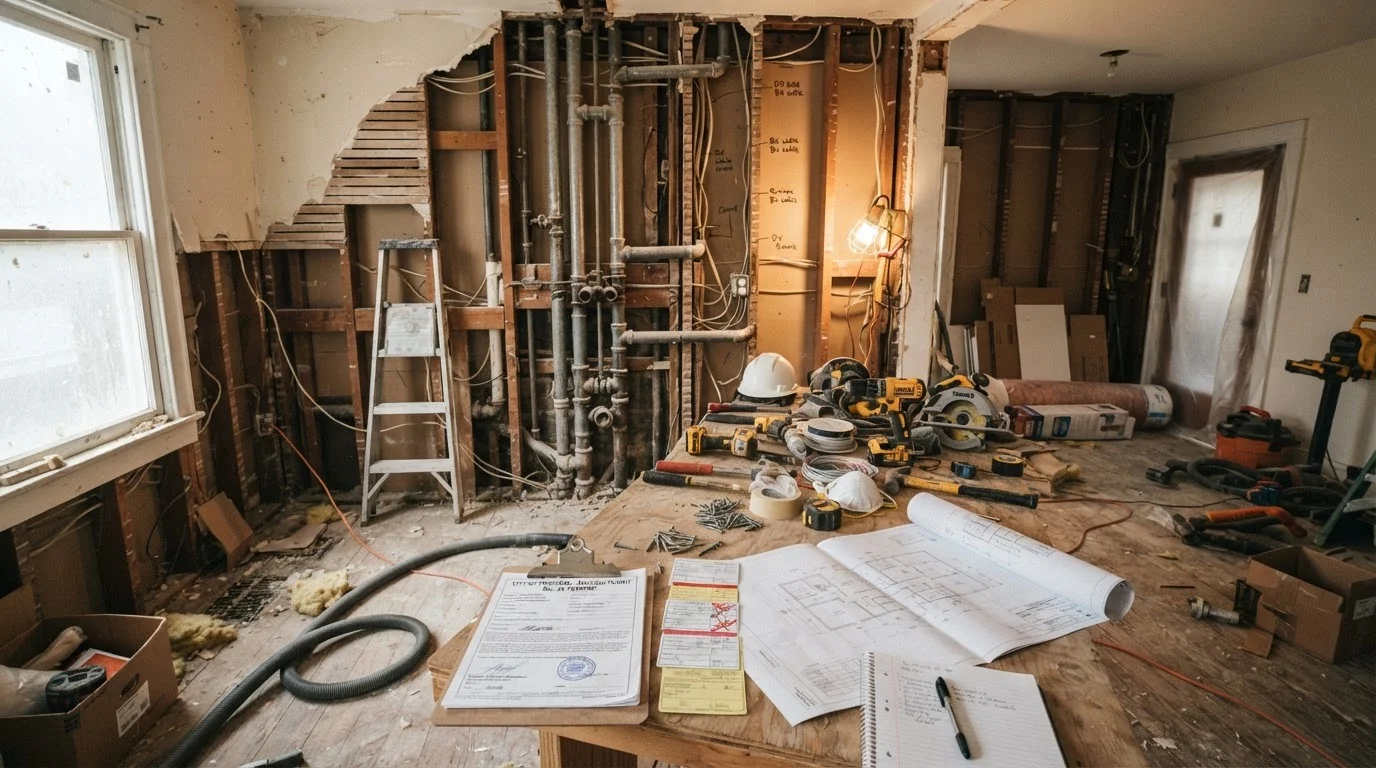

Why Financing Matters Before the First Nail
Renovation projects have a way of expanding in scope and cost once work begins. Choosing how to pay for the work before contractors arrive isn't just good planning — it shapes what you can realistically do, how much the project ultimately costs, and what financial risk you carry throughout. See our guide to hidden renovation costs for a realistic picture of what tends to be underestimated before work starts.
Financing a home improvement project is general financial decision-making, not a one-size-fits-all answer. Your equity position, credit profile, income stability, and the project's scope all factor in. This overview describes how each major financing type works so you can have an informed conversation with a licensed lender or financial professional.
Start with a realistic project budget
Before approaching any lender, get written estimates from at least two licensed contractors and add a contingency buffer — typically 10–20% — for unexpected costs. Knowing your realistic number helps you choose the right loan size and type, and prevents underborrowing mid-project.
Home Equity-Based Options
Homeowners who have built up equity — the portion of the home's value they own outright — have access to borrowing options that use that equity as collateral.
- Home Equity Loan: A lump-sum loan at a fixed interest rate, repaid in equal monthly installments over a set term. Predictable payments make budgeting straightforward. Because your home secures the debt, defaulting puts it at risk.
- Home Equity Line of Credit (HELOC): A revolving credit line you draw from as needed, up to an approved limit. Most HELOCs carry variable interest rates that can change with market conditions. To understand how revolving credit works differently from installment borrowing, see our overview of revolving vs. installment loans.
- Cash-Out Refinance: Replaces your existing mortgage with a larger one, with the difference paid to you in cash. This resets your loan term and rate — advantageous when rates have dropped since your original mortgage, potentially costly when they haven't.
All three options require a lender appraisal, adequate equity, and typically a minimum credit score. They generally offer lower interest rates than unsecured options, but the collateral requirement is a meaningful trade-off.
Personal Loans and Credit Cards
Not every homeowner has substantial equity, and not every project warrants tapping it. Unsecured options exist for a reason.
- Personal Loans: Fixed-rate, fixed-term loans that don't require collateral. Approval depends heavily on creditworthiness. Because no asset secures the loan, rates are typically higher than equity-based products — but your home is not at risk if repayment becomes difficult. Funding is often faster than mortgage-based products.
- Credit Cards: Practical for smaller purchases — materials, fixtures, appliances — especially when promotional zero-interest periods apply. Carrying a balance beyond a promotional period at standard credit card rates can become expensive quickly. They are generally not suited for financing large contractor fees.
If your credit history is thin or you're still building it, these foundational steps for building credit can help you understand where you stand and how to improve your borrowing position over time.
Government-Backed and Specialty Programs
Several programs are designed specifically to make renovation financing more accessible.
- FHA 203(k) Loan: A Federal Housing Administration loan that combines a mortgage (or refinance) with renovation funds into a single product. It can be used to purchase and renovate simultaneously or to refinance an existing mortgage while funding improvements. Eligibility and property requirements apply. For a broader look at how FHA-backed lending works, see our overview of FHA loan trade-offs.
- Title I Property Improvement Loans: FHA-insured loans made through approved lenders for smaller renovation projects. They don't require equity and have set loan limits.
- State and Local Programs: Many states, counties, and municipalities offer grants or low-interest financing for specific project types — energy efficiency upgrades, accessibility modifications, or historic preservation. Availability and eligibility vary significantly by location.
These programs involve more documentation and longer timelines than conventional loans, but may offer meaningfully better terms for qualifying homeowners.
Comparing Your Options: Key Questions to Ask
No financing type is universally superior. A lender or financial adviser can help you weigh the specifics of your situation. As a starting framework, consider:
- How much do I need, and how certain is that number? Projects with unpredictable scope may benefit from a flexible line of credit rather than a fixed lump sum. Before finalizing a budget, review what costs homeowners routinely underestimate.
- Do I have equity to access? If so, equity-based options generally offer lower rates — but carry collateral risk.
- What is my credit profile? Loan availability and interest rates are heavily influenced by your credit score and history. See our Credit & Debt hub for context on how credit works.
- How does this fit into my overall financial picture? Borrowing for renovations adds to your total debt load. Consider whether cash savings could cover part or all of the cost before taking on new debt.
- What will repayment actually cost? Use a loan estimate to compare total interest paid over the life of a loan, not just the monthly payment. Our plain-language guide to reading a Loan Estimate explains what to look for.
Home Equity
The portion of your home's market value that you own outright — calculated as the home's current value minus any outstanding mortgage balance.
HELOC
A Home Equity Line of Credit is a revolving borrowing facility secured by your home, allowing you to draw funds up to a set limit during a defined draw period.
Collateral
An asset pledged to secure a loan. If you default on a collateralized loan, the lender has a legal claim on that asset — in housing, typically your home.
Cash-Out Refinance
A mortgage transaction where you replace your existing home loan with a larger one and receive the difference in cash, which can be used for renovations or other purposes.
Unsecured Loan
A loan not backed by collateral. Personal loans are a common example — approval is based on creditworthiness, and no asset is at risk if you default, though consequences still apply.
FHA 203(k) Loan
A federally insured mortgage product that rolls renovation costs into a home purchase or refinance loan, allowing buyers or owners to fund improvements with a single loan.
This article is for general informational purposes only and does not constitute financial, mortgage, or legal advice. Lending products, eligibility requirements, and program availability change over time and vary by lender and location. Consult a licensed financial professional or mortgage adviser before making borrowing decisions specific to your situation.