
What Early Termination Actually Costs You
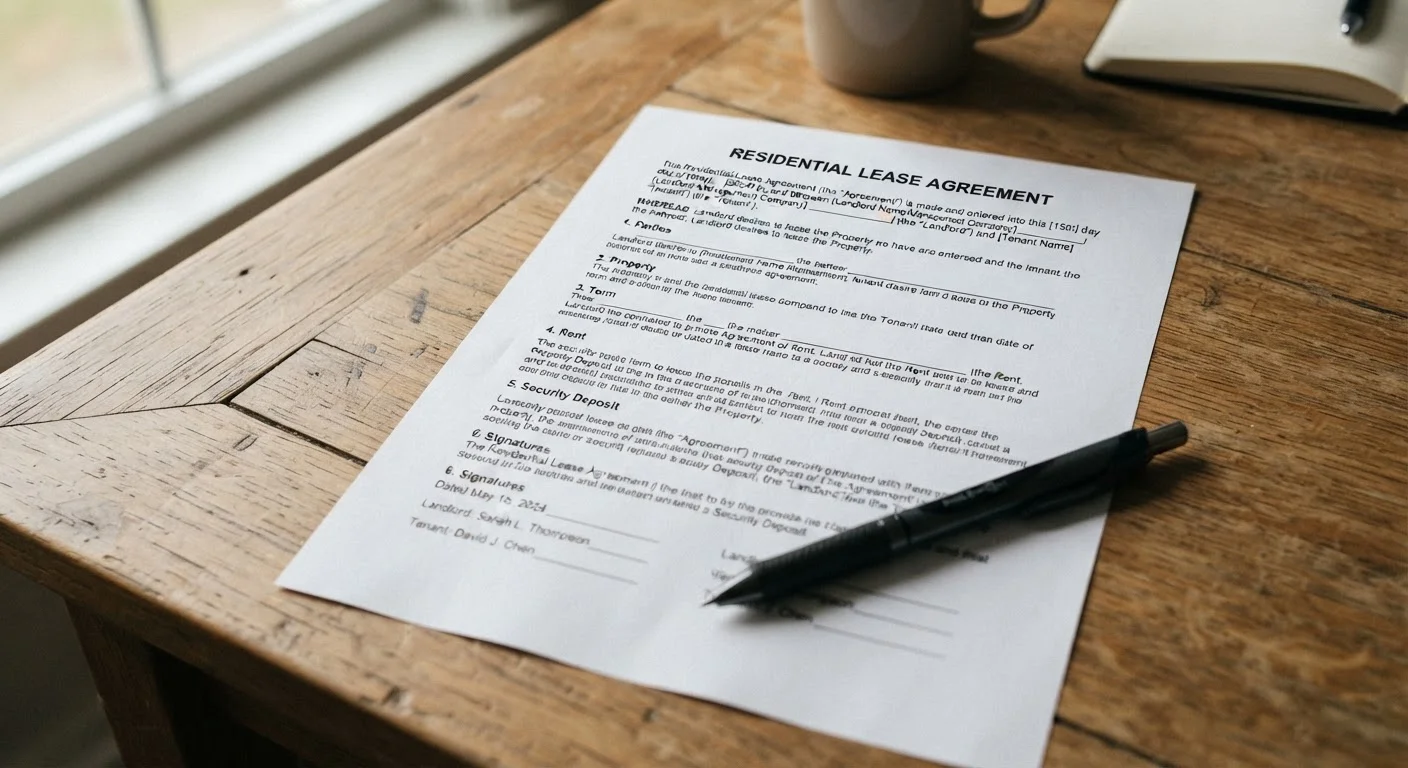
A fixed-term lease is a contract. When you sign one, you're committing to pay rent for every month listed — typically 12 months. Leave before that date and, absent legal protections or a landlord agreement, you may owe the remaining balance. That's the default legal exposure.
In practice, the actual cost depends on three factors:
- Your lease's early termination clause. Many leases include a buyout provision — commonly one to three months' rent — that lets you exit cleanly by paying a pre-set fee. If yours has one, that clause is your starting point. Review it carefully; the full breakdown of common lease clauses explains what these provisions typically require.
- Your landlord's duty to mitigate. In nearly every U.S. state, landlords are legally required to make a reasonable effort to re-rent the unit after a tenant leaves early. They cannot simply let the unit sit empty and send you a bill for 10 months of rent. Once a new tenant moves in, your liability for that period ends.
- Your security deposit. Landlords routinely apply the deposit against unpaid rent or damages when a lease breaks early. What remains, if anything, follows the state-specific rules on deposit returns and itemized deductions.
The gap between your worst-case exposure and what you'll realistically owe is often significant — but closing that gap requires you to act strategically, not just leave.
When the Law Protects You
Several legally recognized circumstances allow tenants to terminate a lease early without financial penalty. These are not loopholes — they are codified rights, though specifics vary by state.
Active Military Duty
The federal Servicemembers Civil Relief Act (SCRA) allows active-duty military personnel to break a lease without penalty if they receive deployment or permanent change-of-station orders. Written notice plus a copy of the orders is generally all that's required. Protections take effect 30 days after the next rent due date.
Domestic Violence, Sexual Assault, or Stalking
Most states extend early termination rights to survivors of domestic violence, sexual assault, or stalking. Typically, a tenant must provide written notice and documentation — a protective order, police report, or statement from a qualified professional. Requirements differ by jurisdiction, so verify your state's specific statute.
Uninhabitable Conditions
Landlords have a legal obligation to maintain rentals in a habitable condition — functioning heat, plumbing, structural safety. If a landlord fails to address a serious deficiency after proper written notice, many states allow tenants to terminate on the basis of constructive eviction: the premise is effectively unlivable. Document everything and consult a tenant's rights organization or attorney before invoking this right.
Landlord Harassment or Privacy Violations
Repeated illegal entry, harassment, or failure to maintain basic services can also give rise to termination rights in some states. Again, documentation is essential.
Local Tenant Advocacy Resources Can Help
Most cities and many counties have nonprofit tenant rights organizations that offer free or low-cost legal consultations. If you believe a legal protection applies to your situation — or if your landlord is refusing to cooperate — reaching out to one of these organizations before you act can save you significant money and stress. Many can review your lease and advise you on state-specific statutes at no charge.
How to Exit a Lease With Minimal Financial Damage
If no automatic legal protection applies to your situation, there are still several practical paths that can significantly reduce what you owe.
Read your lease before you do anything else
Locate the early termination clause, if one exists, and note the exact notice period required (commonly 30–60 days written notice). Also check for any automatic renewal language that could extend your liability if you miss a deadline. If you're uncertain what a clause means, the lease clause explainer is a useful reference.
Notify your landlord in writing as early as possible
The sooner your landlord knows you plan to leave, the sooner they can begin looking for a replacement tenant — which directly limits your ongoing liability. Send notice via email and certified mail. State your intended move-out date clearly and keep a copy of everything you send.
Negotiate a mutual termination agreement
Many landlords will accept a written agreement that allows you to leave by a specific date in exchange for a fee or forfeiture of the security deposit — especially in strong rental markets where re-renting quickly is realistic. Come to the conversation knowing your lease's termination fee (if any) as your baseline, and be prepared to offer something reasonable. Get the final agreement signed by both parties.
Offer to help find a replacement tenant
Some leases allow subletting (you find someone to take over your lease payments while you remain the leaseholder) or lease assignment (you transfer the lease entirely to a new tenant). Both require landlord approval in most cases, but offering a pre-screened, qualified applicant makes approval more likely and can resolve your obligation quickly.
Document the unit's condition at move-out
Conduct a thorough move-out walkthrough, photograph every room and fixture, and request a written move-out inspection report from your landlord. This protects your security deposit and establishes a clear baseline if there's a dispute about damages versus normal wear and tear. The same logic applies on move-in — see the pre-lease walkthrough checklist for what to document.
Whatever path you take, keep every communication in writing. Verbal agreements about lease termination carry almost no weight if a dispute goes to small claims court. Before you sign anything new, consider reviewing where tenants have negotiating leverage — the same principles apply mid-lease.
This article provides general information about tenant rights and lease law in the United States. It is not legal advice. Laws vary significantly by state and locality. Consult a licensed attorney or local tenant advocacy organization for guidance specific to your situation.