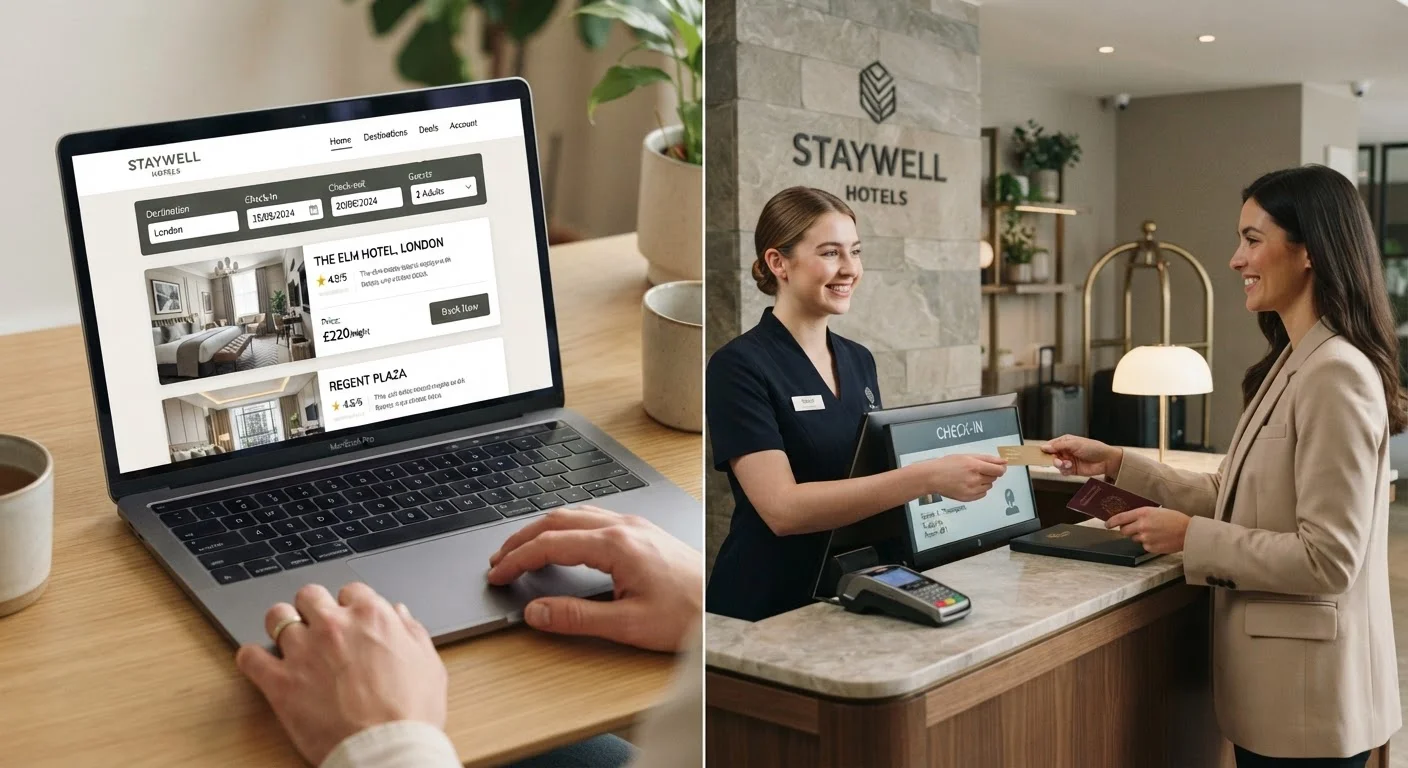

Understanding Your Options Before You Search
Before you type a single destination into a search bar, it's worth taking five minutes to define what you actually need from a hotel. That clarity saves time and prevents the paralysis that comes from wading through hundreds of listings.
OTA (Online Travel Agency)
A website or app that aggregates hotel listings from multiple properties, letting you search, compare, and book in one place. Examples include general travel booking platforms rather than a hotel's own website.
Refundable rate
A hotel room price that allows you to cancel your reservation by a set deadline and receive a full refund. Usually slightly higher than non-refundable rates.
Non-refundable rate
A discounted room price with no cancellation flexibility — if you cancel or don't show up, you typically forfeit the full amount paid.
Resort fee
A mandatory daily charge added on top of the room rate, often covering amenities like pool access, gym use, or Wi-Fi. Not always included in the advertised price.
Incidentals hold
A temporary authorization placed on your credit or debit card at check-in to cover potential extra charges like room service. It's released — not charged — after checkout if no extras are billed.
Star rating
A general shorthand for a hotel's level of service and amenities, ranging from one star (basic) to five stars (luxury). Ratings are not standardized across all platforms, so read reviews alongside them.
Start with three questions: Where do I need to be? (proximity to an event, airport, or neighborhood matters more than you think), What's my realistic budget per night?, and What amenities are non-negotiable? Free parking, a pet-friendly policy, or accessible rooms can eliminate many options quickly — and that's a feature, not a bug.
Hotel types range from large chain brands and boutique independents to extended-stay properties and all-inclusive resorts. Each serves a different traveler profile. If you're traveling for a single night on business, a chain hotel near the venue with reliable Wi-Fi may be ideal. A week-long family vacation might call for a suite with a kitchenette. Understanding the category before you search keeps comparisons apples-to-apples.
How to Search and Compare Hotels Effectively
Hotel search tools — often called OTAs — let you filter by dates, guest count, price range, star rating, and amenities. Use those filters aggressively; without them, results are sorted by algorithm, not your priorities.
When comparing prices, always look at the total price including taxes and fees, not the nightly headline rate. Resort fees, parking charges, and destination fees can add $30–$80 per night to a room that appeared inexpensive. Most booking platforms now display an "all-in" total before checkout, but it's worth verifying.
Check at least two or three different date combinations if your travel window is flexible. Shifting arrival by a day or two — particularly avoiding Friday and Saturday nights in leisure destinations — can produce noticeably lower rates. Midweek stays in business-heavy cities often run cheaper than weekends for the same reason.
For a clear picture of how your booking platform choice affects what you pay and what protections you have, see our article on booking direct vs. third-party sites. The short version: each path has genuine trade-offs worth understanding before you commit.
Reading a Hotel Listing Like a Pro
A hotel listing contains more useful information than most first-time bookers extract from it. Here's where to focus:
- Room type details: "King bed" and "two queens" are different products. Note square footage when listed, and check whether the description says city view or interior/courtyard — it affects your experience meaningfully.
- Cancellation policy: Listings will specify whether a rate is fully refundable, partially refundable, or non-refundable. Read this carefully. A $20 nightly discount on a non-refundable rate becomes expensive if your flight gets cancelled.
- Included vs. fee-based amenities: "Pool available" doesn't always mean free access. Same applies to breakfast, parking, and Wi-Fi — especially at resort properties.
- Guest reviews: Prioritize recent reviews (within the past year) and look for patterns across multiple reviewers rather than reacting to a single outlier. Consistent mentions of noise, cleanliness issues, or front-desk problems are reliable signals.
If the listing references a "resort fee" or "destination fee," check whether it's included in the displayed total or added at checkout. This is one of the most common sources of sticker shock for first-time bookers.
Making the Booking: What You'll Need
Once you've chosen a property and rate, the booking process itself is straightforward — but a few details matter.
Screenshot Your Confirmation
Don't rely solely on email delivery for your booking confirmation. Take a screenshot of the confirmation page immediately after booking and save it somewhere accessible offline — like your phone's camera roll. This is your fastest reference if there's a check-in issue or dispute.
You'll typically need: your full legal name (as it appears on your ID), a valid email address for the confirmation, travel dates, and a credit or debit card. Some properties require you to be at least 21 to check in, so verify the minimum age policy if you're a younger traveler.
Review the booking summary screen before confirming. Verify the dates, room type, and total charge one final time. Once you submit, save or screenshot your confirmation number — it's your primary reference for any changes, cancellations, or disputes.
If you're working with a limited travel budget overall, our budget travel guide for first-timers covers how accommodation fits into a broader, cost-conscious trip plan.
Navigating Your Actual Stay
Checking in is where first-time hotel guests sometimes feel uncertain. Bring a government-issued photo ID and the credit card used for booking — both are standard requirements at the front desk. You'll be asked to sign for an incidentals hold (a temporary authorization, not a charge) that the property releases after checkout.
Before leaving the front desk, confirm: check-out time, Wi-Fi login details, and the hotel's parking procedure if applicable. Once in your room, do a quick visual check — test the lights, verify the bathroom, and make sure the room matches what you booked. If something is off, call or visit the front desk immediately rather than waiting until departure.
During your stay, keep your room key card away from your phone — magnetic fields can deactivate it. At checkout, request an itemized bill and review it before signing. If you see a charge you don't recognize, ask for clarification at the desk before leaving the property; resolving disputes is faster in person than after the fact.
For travelers thinking longer-term about accommodation — whether a lease rather than a nightly stay — our first-time renter's guide offers a comparable walkthrough for a very different type of commitment.