What a Smart Thermostat Is Actually Doing
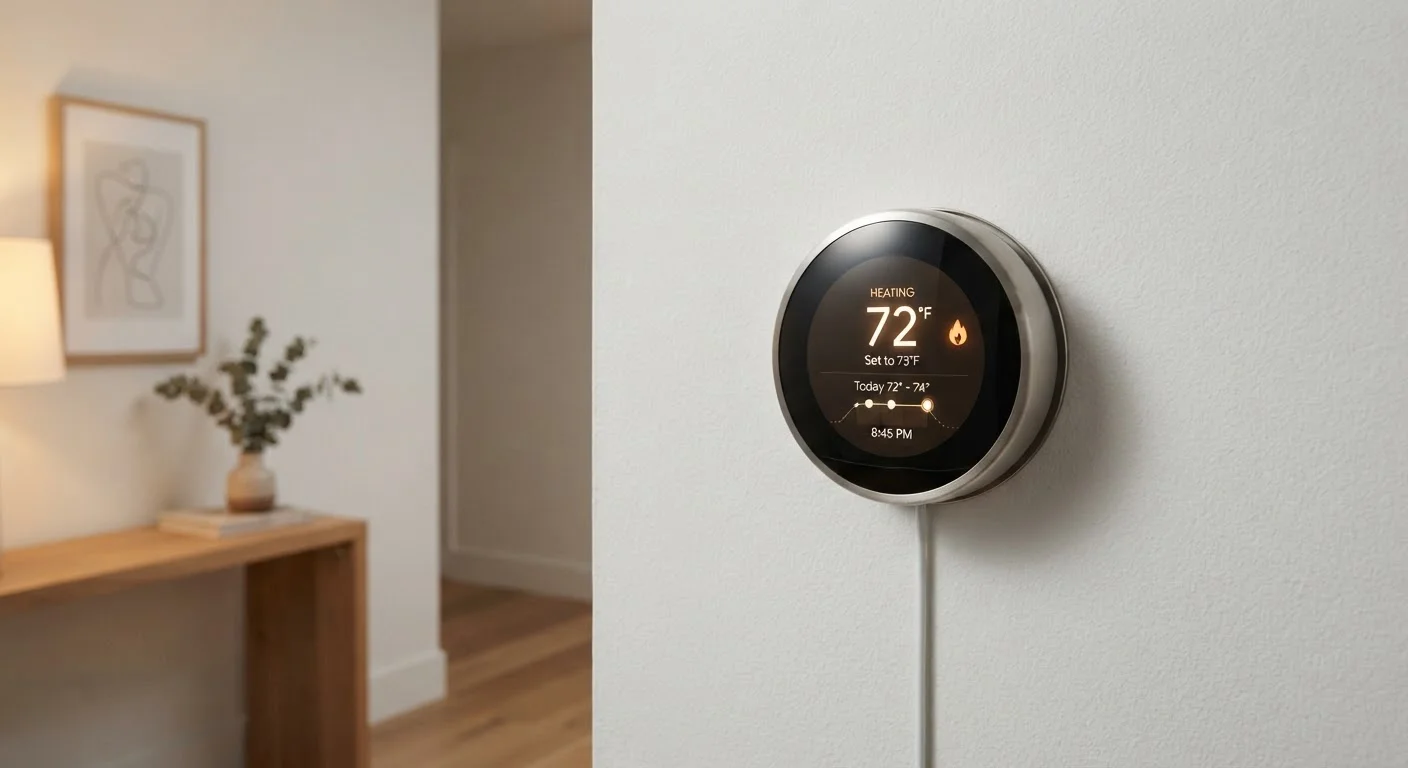
A conventional programmable thermostat follows a fixed schedule you enter manually — 68°F at 7 a.m., 62°F at 10 p.m. — and repeats it indefinitely regardless of what is actually happening in your home. A smart thermostat replaces that static approach with a dynamic model that observes, infers, and adapts.
At its core, the device is doing three things simultaneously: sensing what is happening in your home right now, recording a history of those observations, and inferring a pattern it can apply automatically in the future. The sensors involved typically include a built-in temperature probe, a passive infrared (PIR) motion detector that registers occupancy, and a humidity sensor. Many models also connect to external weather services to anticipate heating or cooling load before your HVAC system has to work harder to catch up.
Understanding this loop — sense, record, infer — is the foundation for understanding every other aspect of how these devices learn. If you want a broader grounding in smart home terminology, see our smart home glossary.
The Data Points Being Collected
The learning model is only as useful as the data feeding it. Here is what most smart thermostats track:
- Manual adjustments: Every time you raise or lower the temperature by hand, the thermostat logs the time, day of week, and magnitude of the change. Repeated adjustments at the same time signal a preference.
- Occupancy patterns: The built-in PIR sensor detects movement. When motion stops for an extended period, the device infers the home may be empty and can shift into an energy-saving setback mode.
- Geofencing data: If you grant location permission to the companion app, the thermostat receives signals based on your phone's GPS position. When your device leaves a defined radius around your home, the thermostat can shift to away mode; when you return within range, it begins preconditioning.
- Weather feed: External temperature and humidity data allow the device to pre-cool or pre-heat ahead of extreme conditions, smoothing out energy demand rather than reacting to it.
- HVAC run-time logs: The thermostat records how long your heating or cooling system runs per cycle, which helps it build accurate models of how quickly your home responds to set-point changes.
1–2 weeks
Typical learning period before autonomous scheduling
Most manufacturers document this initial observation window in their product specifications before the device begins applying inferred schedules automatically.
~10–15%
Estimated HVAC energy reduction with smart scheduling
The U.S. Department of Energy notes that setback strategies — reducing heating or cooling when a home is unoccupied — can meaningfully reduce HVAC energy use, though results vary by home and climate.
3+
Distinct sensor types in most smart thermostats
Temperature, motion (PIR), and humidity sensors are standard on most current smart thermostat models, with some adding ambient light sensors to infer occupancy more precisely.
All of this data is typically stored in two places: a local memory buffer on the device and a cloud account tied to the manufacturer's app. The cloud copy enables remote access, software updates, and in some cases, anonymized data aggregation used for product improvement — a practice that should be described in the device's privacy policy.
How the Learning Algorithm Actually Works
The term "learning algorithm" can sound intimidating, but the underlying logic is closer to pattern matching than to the complex neural networks associated with artificial intelligence in other domains. Most consumer smart thermostats use a combination of rule-based heuristics and lightweight supervised inference.
During the first one to two weeks, the device essentially watches and records without acting autonomously. It notes: Every weekday around 6:45 a.m., someone adjusts the temperature up from the overnight setback. Every Friday night, the house goes quiet around 11 p.m. After enough observations, it proposes a schedule — often visible in the app as a draft you can confirm or edit.
Refinement continues indefinitely. If you override the thermostat's automated setting on three consecutive cold mornings, it interprets that as evidence its model was wrong and revises the predicted preference upward. This feedback loop is the practical meaning of "learning": the algorithm updates its predictions based on new evidence rather than following a fixed rule forever.
Geofencing adds a real-time layer on top of the schedule model. Rather than waiting for a scheduled away period, the system detects departure dynamically and adjusts immediately — a meaningful efficiency gain for households with irregular schedules.
Privacy Considerations Worth Understanding
Occupancy data is, by nature, behavioral data. A detailed record of when your home is occupied or empty, combined with timestamps of your arrivals and departures, constitutes a meaningful picture of your daily life. This is worth understanding before enabling every feature a smart thermostat offers.
Key questions to consider:
- Where is your data stored? Review the manufacturer's privacy policy for retention periods, third-party sharing practices, and whether anonymized data is used for research or product development.
- What happens if you cancel your account? Confirm whether cloud-stored data is deleted upon account closure or retained.
- Is local processing available? Some newer devices emphasize on-device computation, meaning less data leaves your home. Check your device's documentation or settings.
- Can you export or delete your data? Many manufacturers, particularly those operating under state privacy regulations, provide data export and deletion tools within the app.
None of these questions are reasons to avoid smart thermostats — they are reasons to make an informed choice. The same principle applies when evaluating any automated home system: understanding what is being tracked puts you in a position to decide what tradeoffs are acceptable.