Why Smart Home Vocabulary Matters
Shopping for a smart home device without knowing the underlying terminology is a bit like reading a recipe written in a foreign language — the steps look straightforward until you realize you're missing critical context. Terms like hub, protocol, and latency appear constantly in product listings and setup guides, yet most documentation treats them as self-explanatory. They're not.
This reference guide cuts through that ambiguity. Whether you're troubleshooting a device that won't respond, wondering why your automation triggered at the wrong time, or just trying to decode a spec sheet, the definitions below give you a working vocabulary grounded in how these systems actually behave. For a deeper look at what happens when devices from different ecosystems collide, see why smart home devices stop talking to each other.
Hub
A central device that connects and coordinates multiple smart home gadgets. It translates between different wireless protocols and acts as the local brain of a smart home, reducing reliance on cloud servers for basic commands.
Protocol
A standardized set of communication rules that defines how devices send and receive data. Examples include Zigbee, Z-Wave, Wi-Fi, and Bluetooth — each with different trade-offs in range, power consumption, and mesh capability.
Mesh Network
A network topology where each device also acts as a signal repeater. This extends wireless coverage throughout a home without requiring a direct line-of-sight connection to a central router or hub.
Latency
The time delay between sending a command and receiving a response. High latency makes smart home devices feel sluggish; local processing typically reduces latency compared to cloud-dependent systems.
Local Processing
Command execution that happens on a local device — a hub, router, or onboard chip — rather than being routed through a remote server. Enables faster response times and continued function during internet outages.
Matter
An open smart home connectivity standard maintained by the Connectivity Standards Alliance (CSA). Matter-certified devices are designed to work across multiple major ecosystems without proprietary bridges.
Interoperability
The capacity for smart home devices from different manufacturers or platforms to communicate and work together reliably. Poor interoperability is one of the most common sources of smart home compatibility issues.
Automation Routine
A pre-programmed sequence of device actions triggered by a specific condition — such as a time of day, a sensor reading, or a voice command — without requiring manual input each time.
Ecosystem
The broader platform — including apps, voice assistants, and cloud services — through which a manufacturer ties its smart home devices together. Ecosystems vary in how openly they support third-party device integration.
IP Rating
A standardized rating (e.g., IP65) indicating a device's resistance to dust and water ingress. The first digit refers to solid-particle protection; the second to liquid ingress. Relevant when placing devices outdoors or in humid areas.
Pairing
The process of establishing a trusted connection between a smart device and a hub, app, or controller. Most devices enter a pairing mode when first powered on, making them discoverable to the controlling system.
Firmware
Low-level software embedded in a smart device's hardware that controls its core functions. Manufacturers release firmware updates to fix bugs, patch security vulnerabilities, and occasionally add new features.
Core Concepts: Networks, Protocols, and Processing
Smart home devices don't operate in isolation — they're always communicating through a network using a defined set of rules called a protocol. The four most common wireless protocols are Wi-Fi, Bluetooth, Zigbee, and Z-Wave. Wi-Fi connects devices directly to your router and is familiar but power-hungry. Bluetooth works over short ranges without a hub. Zigbee and Z-Wave create low-power mesh networks — systems where each device also relays signals to extend coverage — but typically require a dedicated hub.
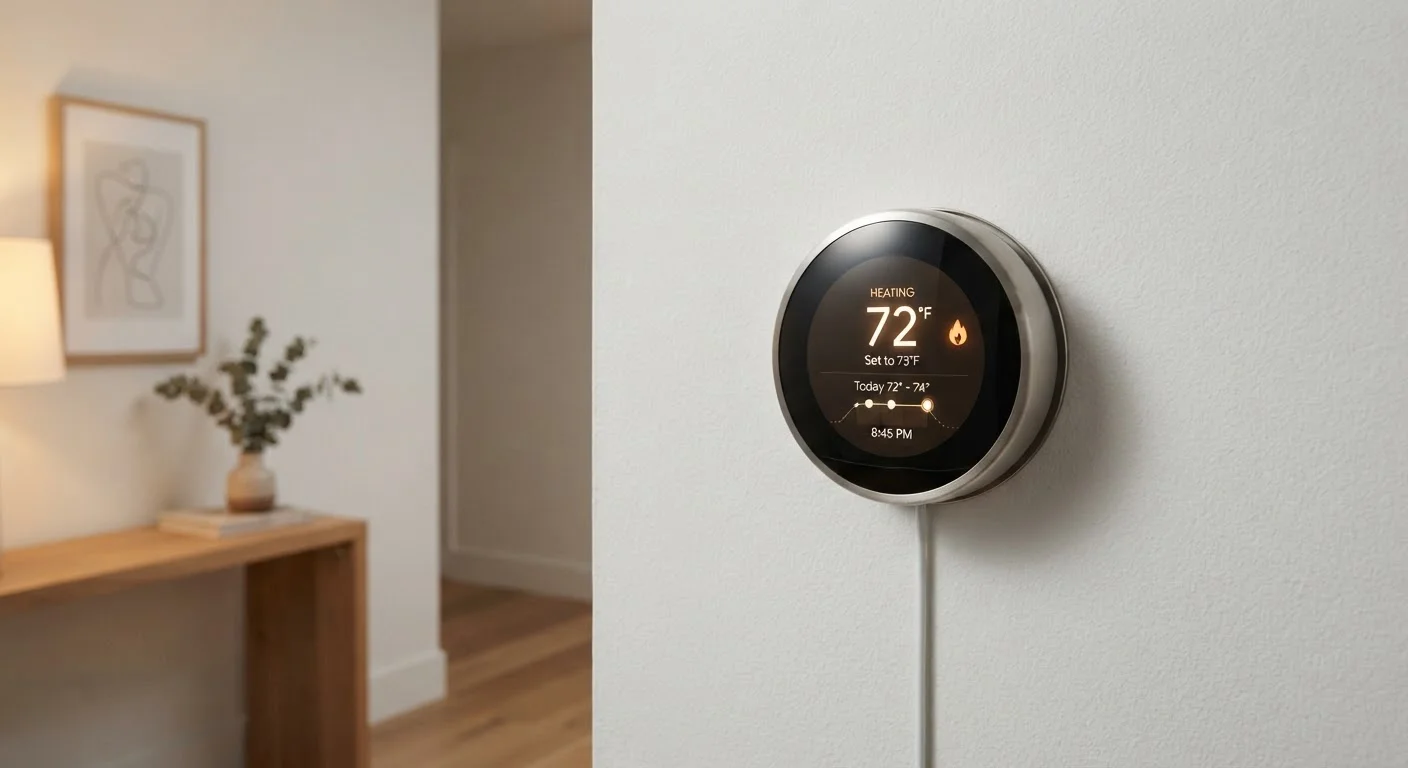
One concept that separates reliable setups from frustrating ones is local processing versus cloud processing. A device that processes commands locally — on a hub or onboard chip — can respond even when your internet is down. Cloud-dependent devices route every command through a remote server, adding both latency (response delay) and a single point of failure. Understanding this distinction is especially relevant when reviewing how smart thermostats collect and act on behavioral data — a topic explored in our article on smart thermostat learning algorithms.
| Most common smart home protocols | Wi-Fi, Bluetooth, Zigbee, Z-Wave, Matter (Connectivity Standards Alliance, 2023) |
| Matter standard launch year | 2022 (Connectivity Standards Alliance) |
| Typical Zigbee mesh range per hop | ~10–30 meters indoors (Zigbee Alliance specification documentation) |
| Local vs. cloud processing | Local = faster response; cloud = internet-dependent |
| IP65 rating means | Dust-tight + protected against low-pressure water jets (IEC 60529 standard) |
| Firmware update frequency | Varies; critical security patches may be issued within weeks of a discovered vulnerability |
Automation, Ecosystems, and Interoperability
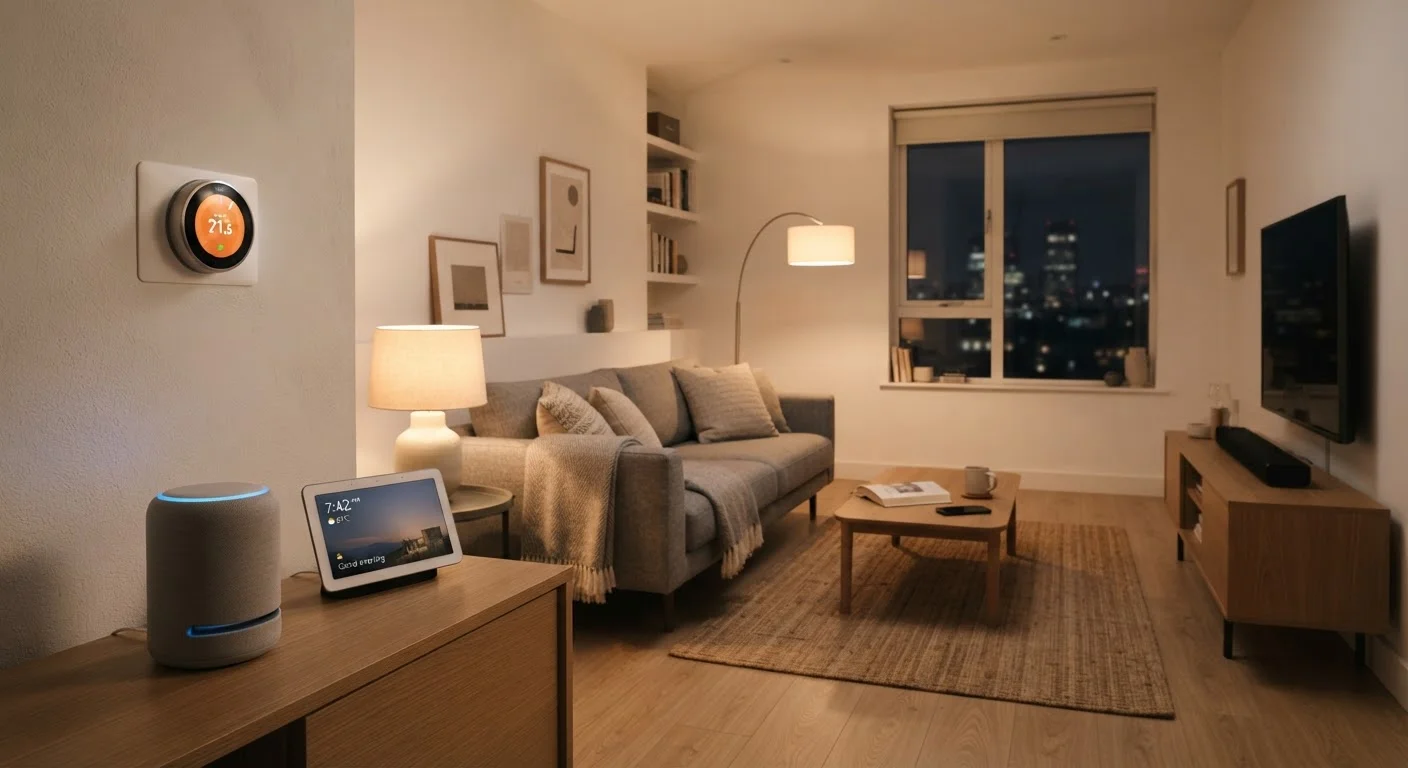
Beyond individual devices, smart homes depend on ecosystems — the broader platforms (such as those built around voice assistants or dedicated apps) that tie devices together. Ecosystems vary widely in how openly they communicate with devices from other manufacturers, which is why the concept of interoperability — the ability of devices from different vendors to work together — matters so much before you commit to a platform.
The industry's answer to fragmentation is Matter, an open connectivity standard launched in 2022 and maintained by the Connectivity Standards Alliance. Devices certified for Matter can communicate across major ecosystems without requiring brand-specific bridges. Paired with the concept of an automation routine — a pre-set sequence of actions triggered by a condition like time, sensor state, or voice command — Matter-compatible devices can form a genuinely cohesive system rather than a collection of siloed apps.
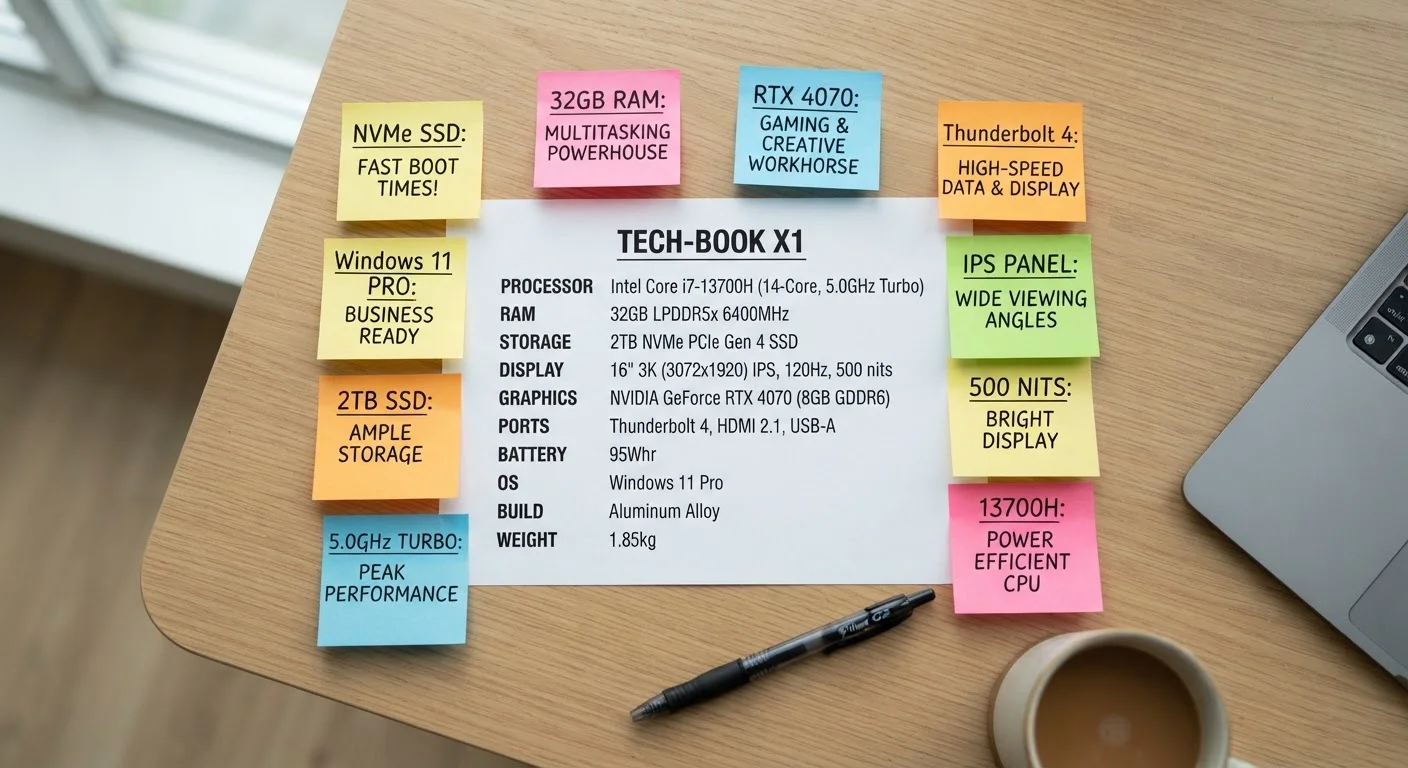
If you find the language of tech specs demanding in general, the same plain-English approach used here applies to computers and laptops — see our laptop specs glossary for a parallel reference.