The Processor: Your Phone's Brain
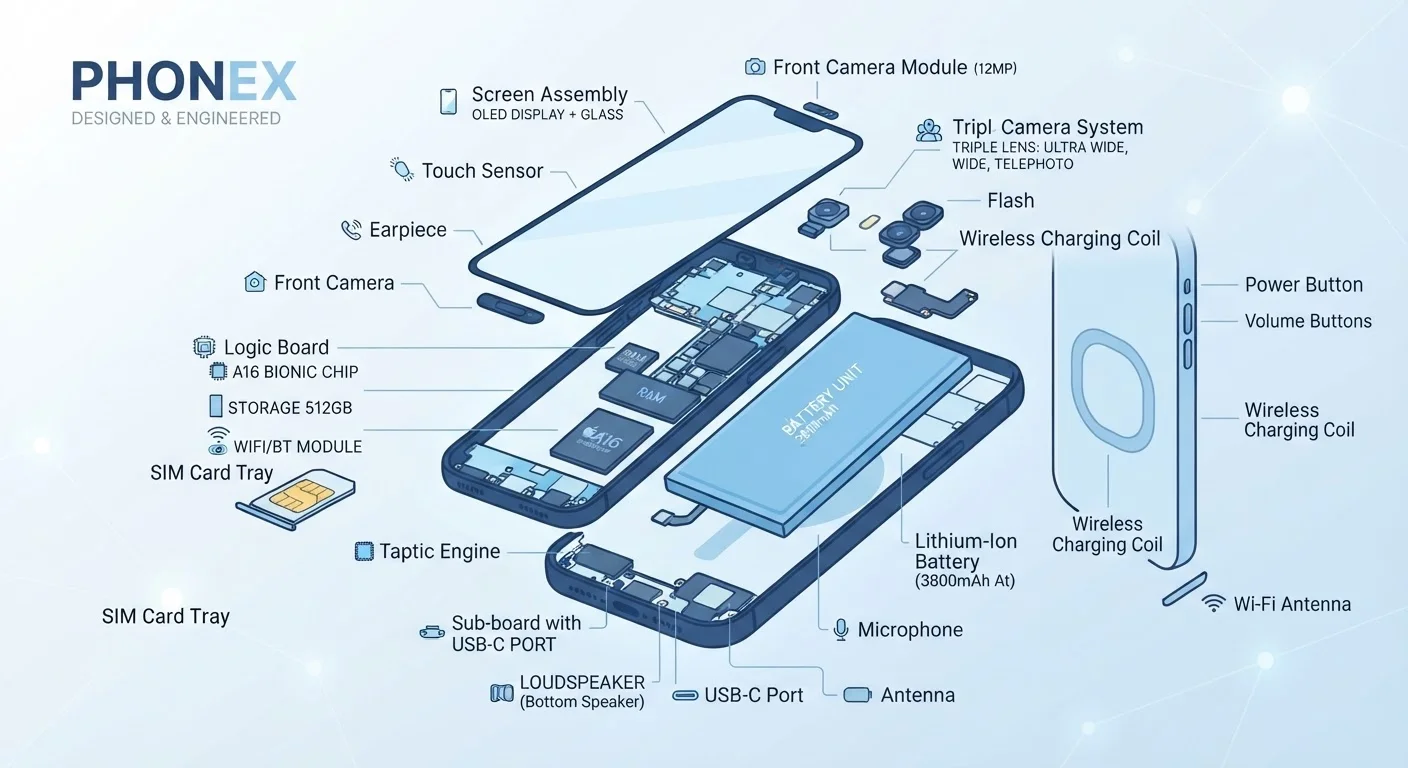
The processor — formally called a System on a Chip, or SoC — is the single most important piece of hardware in your phone. It handles every instruction your phone executes: opening apps, rendering video, running voice recognition, and managing wireless connections. All of this happens on one small chip roughly the size of a fingernail.
A processor's speed is measured in gigahertz (GHz), but raw clock speed doesn't tell the whole story. The number of processing cores matters too — most modern phone chips have multiple cores running at different speeds, with efficient low-power cores handling background tasks and high-performance cores kicking in for demanding work. This design extends battery life without sacrificing responsiveness.
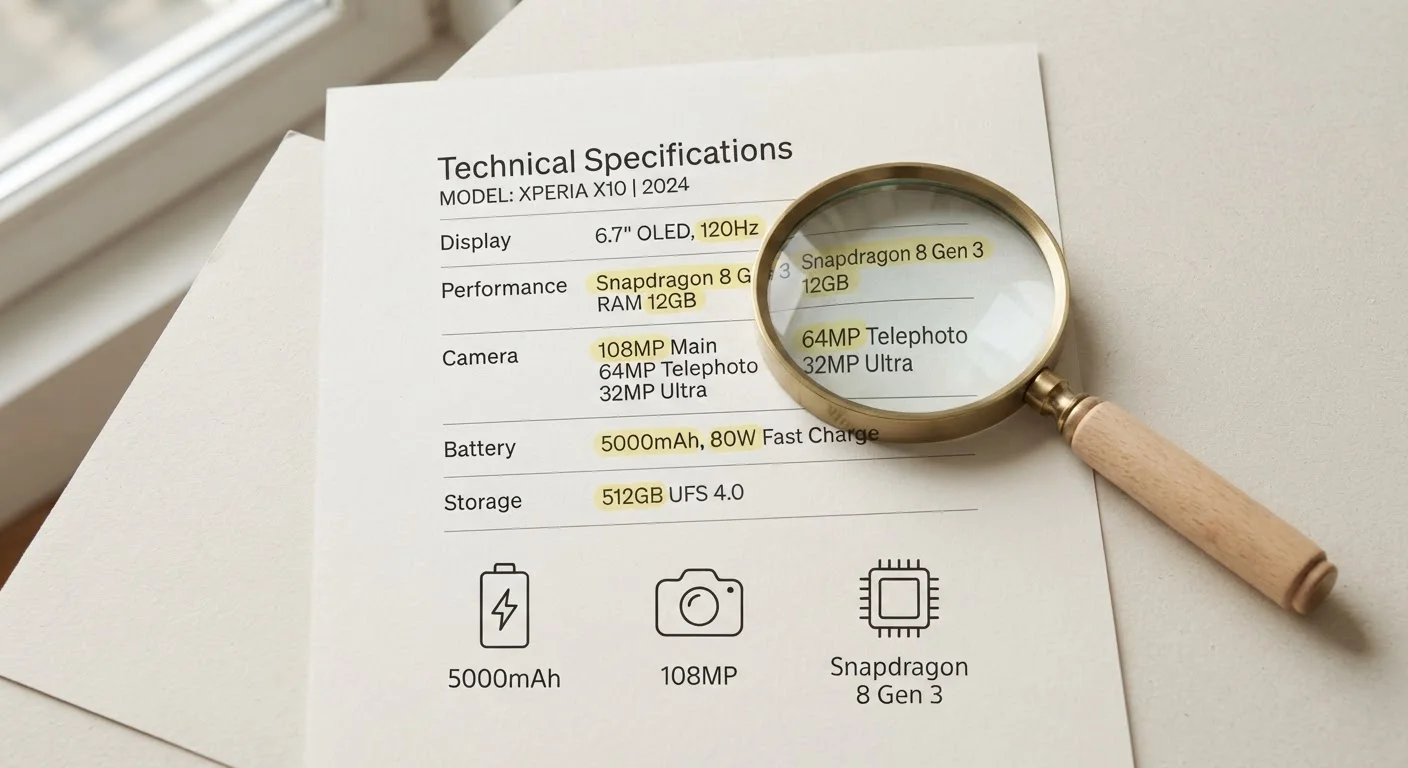
If you've ever noticed your phone feeling sluggish when running many apps at once, the processor is part of that equation — but so is RAM, which we'll cover next. For a deeper look at how these specs appear on product listings, see our guide to reading smartphone specs.
RAM and Storage: Working Memory vs. Long-Term Space
These two types of memory are frequently confused, but they do completely different jobs.
RAM (Random Access Memory) is your phone's short-term workspace. When you open an app, it loads into RAM so the processor can access it quickly. The more RAM your phone has, the more apps it can keep ready in the background — which is why phones with more RAM tend to feel snappier when switching between apps. A typical modern phone carries between 6 GB and 12 GB of RAM.
Internal storage is the long-term vault — where your photos, downloaded music, installed apps, and files live permanently. It's measured in gigabytes (GB) or terabytes (TB) and doesn't empty when you restart the device. Common configurations range from 64 GB to 512 GB.
6–12 GB
Typical RAM range in modern smartphones
Entry-level phones generally ship with 4–6 GB of RAM, while flagship devices commonly offer 8–12 GB for heavier multitasking demands.
~500 cycles
Typical lithium-ion battery charge cycle lifespan
Most smartphone batteries are designed to retain around 80% of their original capacity after approximately 500 full charge cycles, according to general industry guidance.
120 Hz
High refresh rate now common in mid-range phones
A display feature once reserved for flagship devices, 120 Hz refresh rates have become widely available across mid-range smartphone tiers in recent years.
Unlike RAM, storage speed also matters: newer phones use UFS (Universal Flash Storage) technology, which allows faster app installs, quicker photo saving, and smoother video recording compared to older eMMC storage standards.
The Display: More Than Just a Screen
The display is the component you interact with most directly, and its technology affects everything from color accuracy to how long your battery lasts.
Most modern smartphones use one of two panel types. LCD (Liquid Crystal Display) screens use a backlight behind the entire panel, which means even black areas of the screen are lit. OLED (Organic Light-Emitting Diode) screens generate light at the individual pixel level — so black pixels are literally off, saving power and producing deeper contrast.
Refresh rate is another display spec worth understanding. Measured in hertz (Hz), it describes how many times per second the screen redraws the image. A 60 Hz display updates 60 times per second; a 120 Hz display updates twice as often, making scrolling and animation feel noticeably smoother. Higher refresh rates do consume more battery, though many phones now dynamically adjust the rate based on what's happening on screen.
The Camera System: Hardware Meets Software
Modern phone cameras are a collaboration between physical hardware and sophisticated software — and neither half alone explains the results you see.
The image sensor is a light-sensitive chip that captures raw visual data through the lens. Sensor size matters: a physically larger sensor captures more light, which improves low-light performance. The lens aperture (expressed as an f-number like f/1.8) controls how much light reaches the sensor — a lower f-number means a wider opening and better performance in dim conditions.
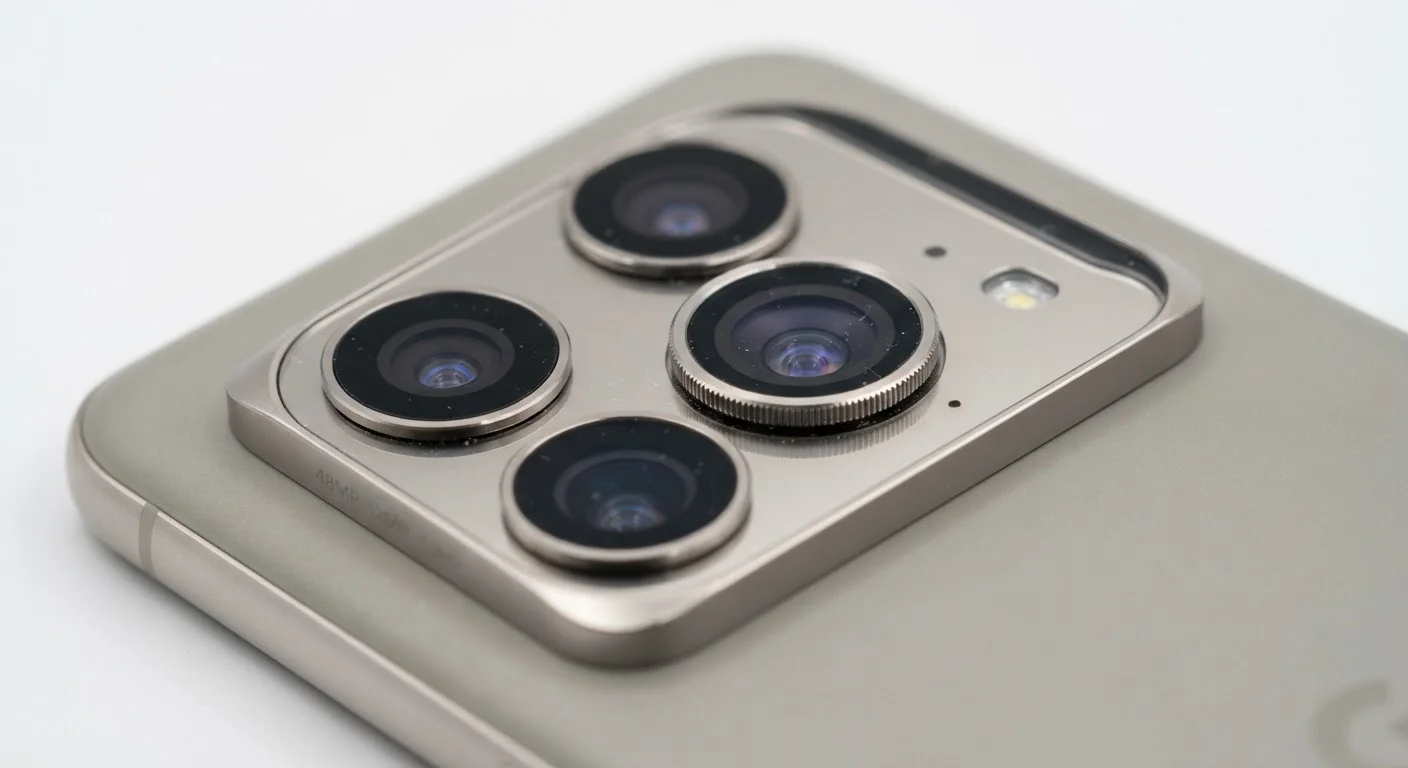
Most phones today include multiple camera modules — typically a wide, an ultrawide, and a telephoto lens — each optimized for different distances and scenarios. What happens after the light hits the sensor is equally important: computational photography uses the processor to stack multiple exposures, correct distortion, and enhance detail in ways that go well beyond what the optics alone could achieve. Our companion article on what your phone's camera app isn't telling you goes deeper on this topic.
The Battery and Everything Else
The battery is a lithium-ion cell measured in milliamp-hours (mAh). A higher mAh rating generally means more capacity — but battery life in practice also depends heavily on the processor's efficiency, display brightness, and how aggressively apps use cellular radios in the background.
Beyond the major components, several other pieces of hardware shape your daily experience:
- Modem: Handles all wireless communication — cellular (4G/5G), Wi-Fi, and Bluetooth. On most modern phones, this is integrated into the SoC.
- Gyroscope and accelerometer: Motion sensors that enable screen rotation, step counting, and augmented reality features.
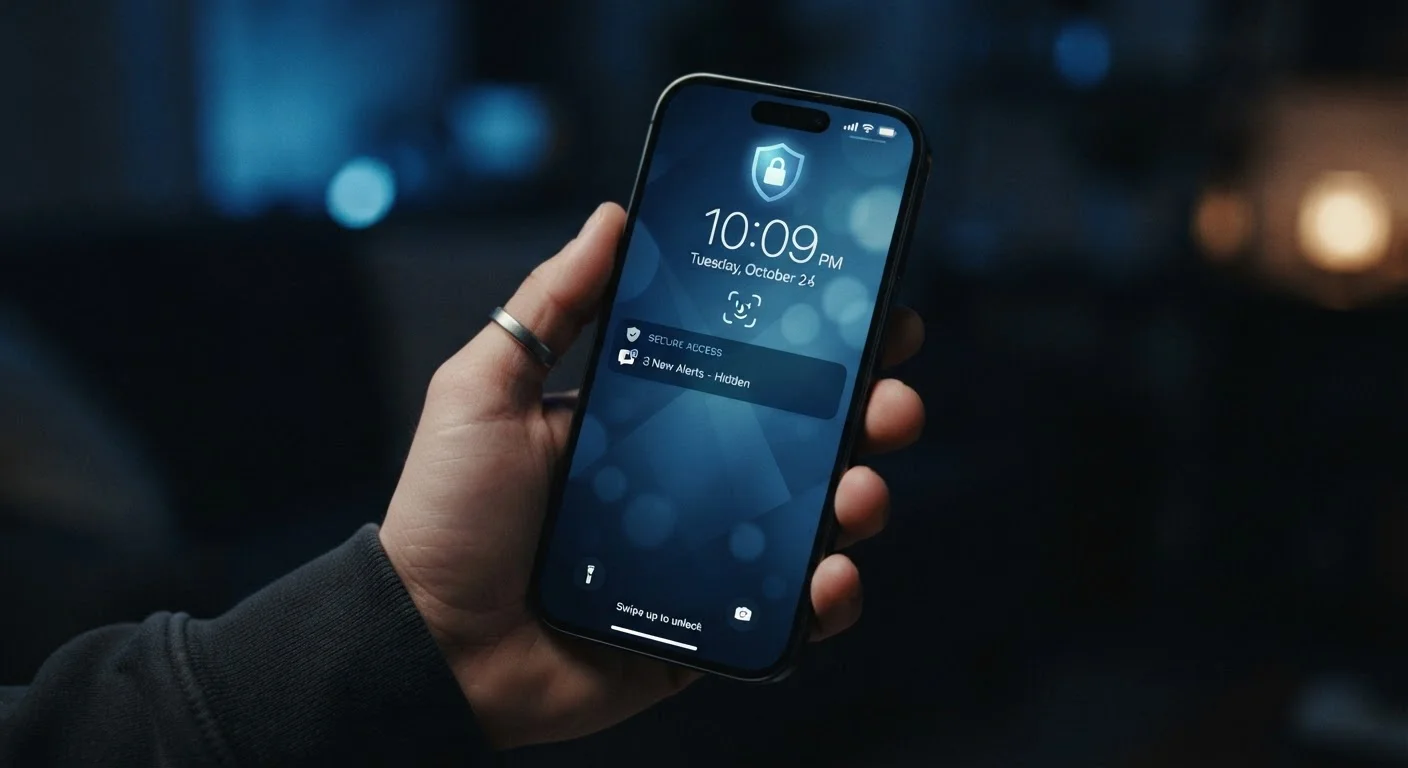
- Secure enclave: A dedicated chip or isolated processor region that stores biometric data (fingerprints, face data) and encryption keys separately from the main processor, so it can't be accessed by apps. For more on how this protects you, see how your phone's security features actually work.
- NFC chip: Enables short-range communication for contactless payments and data sharing.
If you're curious how phone hardware compares to what's inside a desktop or laptop, our beginner's map of PC components draws some helpful parallels.