A well-run home tournament keeps things fair and exciting. This checklist covers format, scheduling, scoring, and what to prepare in advance.
Key Takeaways
Choosing the right format — round robin, bracket, or Swiss — is the single most important planning decision.
Setting clear rules before the event prevents disputes and keeps the energy positive.
Scheduling breaks and tracking scores visibly keeps players engaged throughout the day.
Preparing your space and supplies in advance avoids mid-tournament scrambling.
A simple prize or recognition makes the event feel special without requiring a big budget.
Why a Little Structure Makes All the Difference
Casual game nights are great, but a home tournament adds a layer of friendly competition that keeps everyone invested from the first round to the final match. The difference between a chaotic afternoon and a genuinely fun event often comes down to preparation — knowing your format, communicating the rules clearly, and having the right supplies on hand before guests arrive.
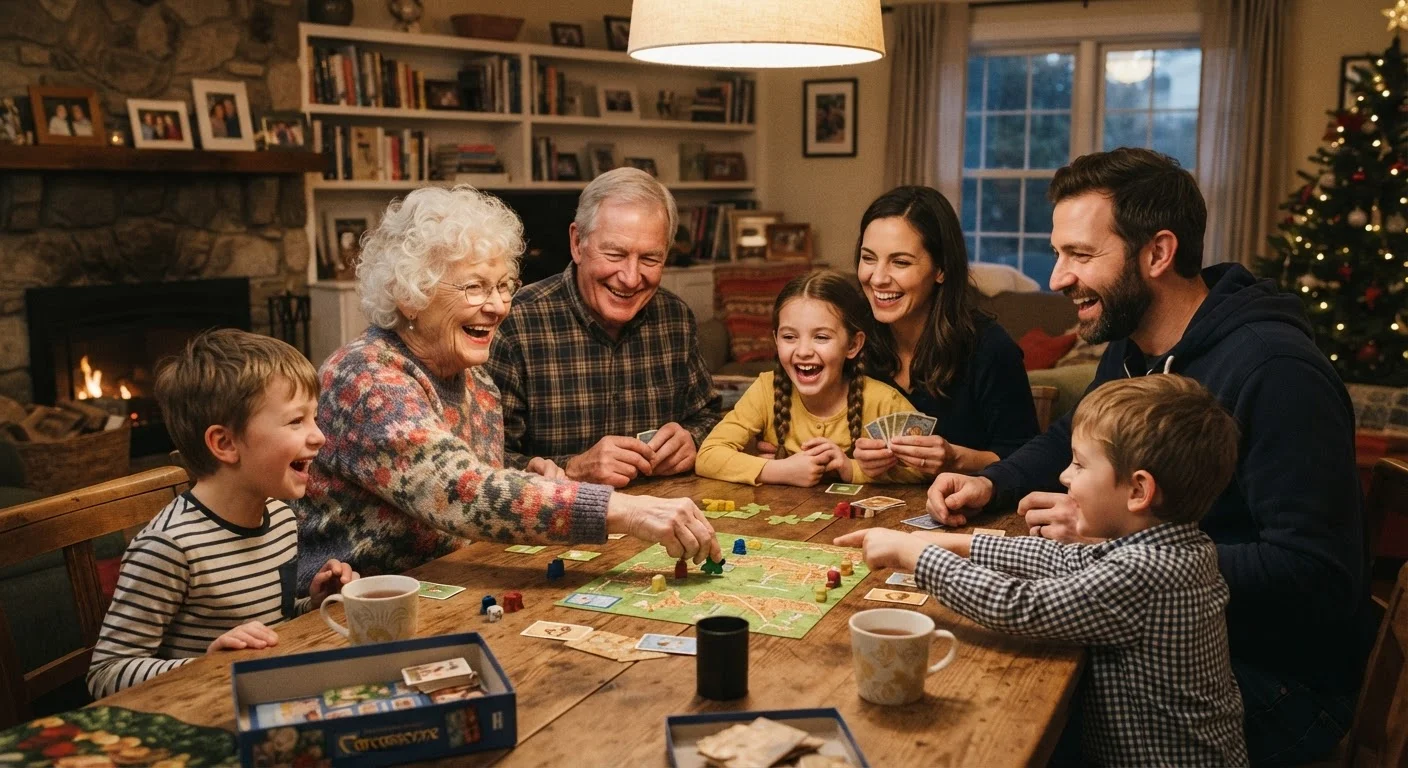
Whether you're planning a single-game bracket for eight players or a multi-game gauntlet for a larger crew, this checklist walks you through every decision worth making in advance. If your group spans a wide age range, you might also want to read our guide to playing games with mixed ages before finalizing your game choice.
Format & Game Selection
Choose a tournament format: round robin (everyone plays everyone) works well for six or fewer players; single-elimination brackets suit larger groups; Swiss-style pairings balance competitiveness and play time for medium-sized groups.Must
Select a game or games that work for your group size and skill mix — avoid games with very long setup or run times that will stall your schedule.Must
Confirm every player knows the rules before tournament day; send a rules summary or short video link in advance.Must
Decide whether you're running a single-game event or a multi-game points series and communicate this clearly on the invite.Should
Consider a warm-up or practice round for players who are newer to the chosen game.Nice to have
Scheduling & Timing
Estimate total play time per match, multiply by the number of rounds, and add buffer time — most hosts underestimate by at least 30 minutes.Must
Set a firm start time and communicate it clearly so players don't trickle in and throw off the bracket.Must
Schedule at least one 15-minute break between rounds for snacks, restrooms, and mental resets.Should
Build a tiebreaker rule into the schedule before the event starts rather than improvising when it happens.Should
Plan a 'loser's bracket' or casual side game to keep eliminated players engaged rather than waiting around.Nice to have
Space & Supplies
Set up one dedicated table per active match — players should never have to lean across each other or share cramped space.Must
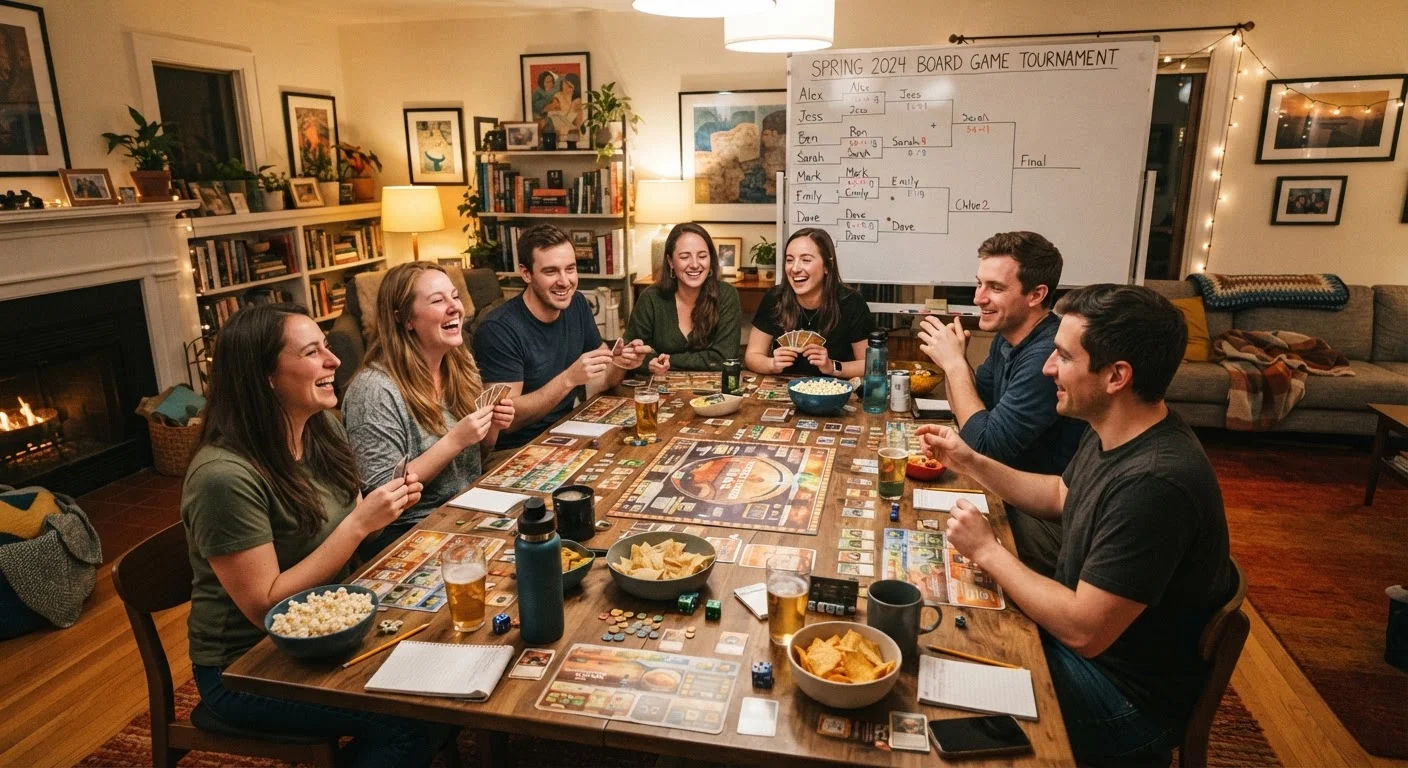
Print or write out the bracket or round-robin grid and display it prominently so all players can track standings.Must
Prepare all game components in advance: check for missing pieces, shuffle cards, and pre-sort any tokens or tiles.Must
Have pens, pencils, score sheets, and a timer or clock visible and accessible throughout the event.Should
Set up a separate snack and drink station away from the game tables to avoid spill risk.Should
Rules, Fairness & Disputes
Write down the official tournament rules — including tiebreakers, time limits per turn, and conduct expectations — and share them before play begins.Must
Designate a neutral 'referee' or rules arbiter to settle disputes quickly without derailing rounds.Must
Agree on a policy for accidental rule violations (warning vs. forfeit) before anyone has reason to invoke it.Should
Prizes & Recognition
Prepare a simple prize or recognition for the winner — a homemade trophy, a certificate, or first pick of the next game night theme all work well.Should
Consider a 'most improved' or 'best sport' acknowledgment so non-winners feel seen and appreciated.Nice to have
Take a group photo at the end to commemorate the event and make it feel like a real occasion.Nice to have
Setting Up Your Space and Keeping Score
The physical setup matters more than most hosts expect. Crowded tables, poor lighting, and lost score sheets can quietly drain energy from even the most enthusiastic group. Dedicate a few minutes before guests arrive to arrange seating so every player can reach the game comfortably, and post your bracket or round-robin grid somewhere everyone can see it — a whiteboard, poster board, or even a printed sheet taped to the wall works perfectly.
Don't Skip the Tiebreaker Rule
Ties are more common than most hosts expect, especially in shorter game formats. If you haven't decided in advance how to break them — sudden death round, highest score from a previous match, or a coin flip — you'll face a tense, time-wasting debate at the worst possible moment. Write your tiebreaker rule into the tournament sheet before a single game starts.
Scorekeeping transparency is one of the most underrated elements of a smooth tournament. When standings are visible, players stay motivated and disputes are less likely to arise. Appoint one person as the official scorer or rotate the role each round — just make sure it's clearly assigned before play begins.
Avoid the pitfalls that derail many casual competitive nights. Our look at why trivia nights fall flat covers pacing and fairness lessons that apply directly to any home tournament format.
Required
Bracket or Score Tracker
A printable or digital bracket sheet helps every player follow standings and keeps the host organized throughout the event.
Required
Whiteboard or Poster Board
A visible display for the running bracket or score table keeps all players informed and reduces questions between rounds.
Required
Game Timer or Phone Timer
Enforcing per-turn or per-round time limits keeps the tournament on schedule and prevents analysis paralysis from stalling play.
Required
Extra Pens and Score Sheets
Having spare writing supplies on hand means scorekeeping never grinds to a halt mid-round.
Optional
Spare Game Pieces or a Replacement Deck
A backup for missing components prevents a single lost token from derailing an entire match.
Hobbies & Leisure Editorial Team is the collective byline for our editorial team and contributor network. Articles published under this byline or an editorial pen name are researched, written, and reviewed according to our editorial standards for clarity, consistency, and independence before publication.
The content on this site is for informational purposes only and is not a substitute for professional advice. Always consult a qualified professional for guidance specific to your situation.