Why Mixed-Age Gaming Feels Tricky — and Why It Doesn't Have To Be
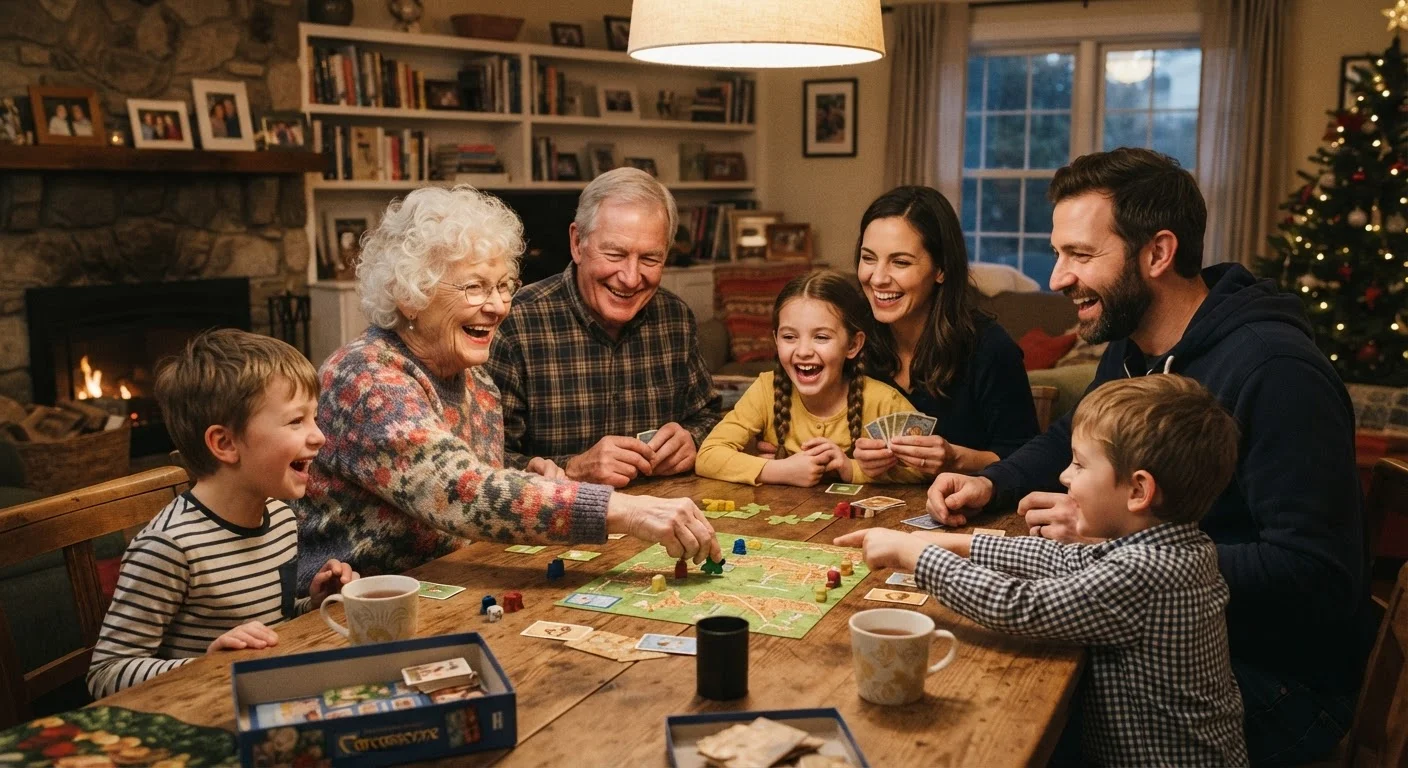
Getting a six-year-old, a teenager, a parent, and a grandparent excited about the same game sounds like a scheduling miracle. The real challenge isn't finding something everyone tolerates — it's finding something everyone genuinely enjoys. The gap in reading ability, strategy thinking, stamina, and competitive drive can feel enormous.
But here's the encouraging truth: the best mixed-age game sessions aren't about picking one perfect game. They're about applying a handful of smart strategies that make almost any game work better for a diverse group. Whether you're planning a holiday gathering or a regular Sunday ritual, these steps will help you create moments that stick.
For more on the social dynamics that shape how game night actually feels, see the unwritten rules of game night — those overlooked principles apply doubly when ages vary widely.
What you will need
How to Set Up and Run a Mixed-Age Game Session
Follow these steps before and during your game night to keep every generation at the table — and smiling.
Audit the ages and abilities in your group
Before you pull anything off the shelf, take a realistic inventory. Note the youngest player's reading level and attention span, the oldest player's familiarity with modern game mechanics, and any physical considerations (fine motor skills for small pieces, vision for small text). This isn't about limiting your options — it's about filtering them intelligently.
Choose a game with a simple core and room to grow
Look for games where the fundamental rules can be explained in under five minutes, but where there's still meaningful decision-making for experienced players. Avoid games that gatekeep fun behind complex rule sets or dense strategy — those reward the one person who read the manual and frustrate everyone else. Simple rules don't mean boring; they mean accessible.
Pre-read the rules and prepare a simplified summary
Designate one person to read the full rulebook before game night. Then write or memorize a one-paragraph plain-language summary of how to win and what a turn looks like. Reading rules aloud cold at the table while a six-year-old fidgets and a grandparent asks clarifying questions is a recipe for frustration before a single card is drawn.
Introduce optional rule modifications
Establish at the start which house rules, if any, you'll use. Common mixed-age modifications include: allowing younger players to ask one hint per round, letting teams of two share a turn, or adjusting winning conditions so the game ends sooner. Frame these as choices the group makes together, not compensations for weaker players.
Manage pace and energy throughout the session
Watch for signs of fatigue or frustration — slumping posture, distracted side conversations, or repeated rule questions that suggest confusion rather than engagement. Be ready to call a natural break, switch to a shorter filler game, or wrap up early if the energy dips. A session that ends on a high note is far more likely to become a tradition than one that grinds on past everyone's comfort.
Formats That Naturally Bridge the Age Gap
Some game structures are simply better suited to mixed-age play than others. Knowing which formats to lean on gives you a reliable shortlist to draw from.
- Cooperative games: When the whole table works together against the game itself, age-based skill gaps matter far less. Stronger players can support younger or less experienced ones without anyone feeling patronized. Cooperative board games flip the competition model in ways that genuinely suit multigenerational groups.
- Team play: Pair a child with a grandparent on the same team. The kid brings energy; the grandparent brings patience. Both contribute.
- Party-style formats: Word association, drawing, and trivia games with broad categories require no prior gaming knowledge and reward creativity over strategy. These scale well, too — check out party games that scale for formats that adapt when your headcount shifts.
- Gateway games: Games with a gentle learning curve that still reward repeated play are ideal entry points. Gateway games introduce modern mechanics without overwhelming anyone at the table.
Let Kids Teach the Rules Sometimes
If a child already knows a game, let them explain it to the group. It builds their confidence, keeps adults engaged through novelty, and flips the usual dynamic in a genuinely fun way. You may be surprised how well kids rise to the moment when given that responsibility.
Keeping Everyone Engaged Between Turns
Downtime between turns is where mixed-age sessions fall apart. Young children lose focus; older adults feel sidelined if turns take forever.
A few practical fixes: choose games where everyone has something to observe or react to even when it isn't their turn. Games with simultaneous elements — where everyone acts at once — almost eliminate this problem entirely. Keep snacks and drinks on the table so there's a natural social anchor. And if you're playing a longer game, build in a short break after the first hour.
Rotating who gets to choose the next game is a small act that carries big meaning. It signals that every generation's preferences matter — and it builds anticipation for next time. For the ambitious host, hosting a home board game tournament offers a structured format that keeps even larger mixed groups organized and excited.